
Cómo Calcular los Costos de Mantenimiento y Reemplazo de Cinta de Lijadora de Banda Ancha: Una Guía Completa para Compradores de Equipos de Carpintería en China Frequent sand belt replacement does not cut long-term wide belt sander operating costs—mismatched sand belt selection and skipped calibration are the actual drivers of 80% of unnecessary expenses. Most […]
Frequent sand belt replacement does not cut long-term wide belt sander operating costs—mismatched sand belt selection and skipped calibration are the actual drivers of 80% of unnecessary expenses. Most operators focus on scheduling regular belt swaps to avoid downtime, but they rarely adjust their parts selection or routine checks to align with their specific production materials and output volume, leading to hidden overspending that adds up over the machine’s service life.
Proper proactive maintenance and targeted belt planning for wide belt sanders can cut long-term operating costs by 30-40% while extending machine service life by 2+ years, and specialized Chinese woodworking machinery manufacturers deliver predictable, transparent cost structures for this upkeep.
As someone who has supported over 200 wood production facilities across Southeast Asia, the Middle East, and Latin America with their equipment upkeep plans, I have seen first-hand that even small adjustments to maintenance workflows can eliminate six-figure annual waste for mid-sized factories [NEED_CITE: Wide belt sander maintenance cost reduction correlates directly to aligned part selection and standardized calibration schedules].
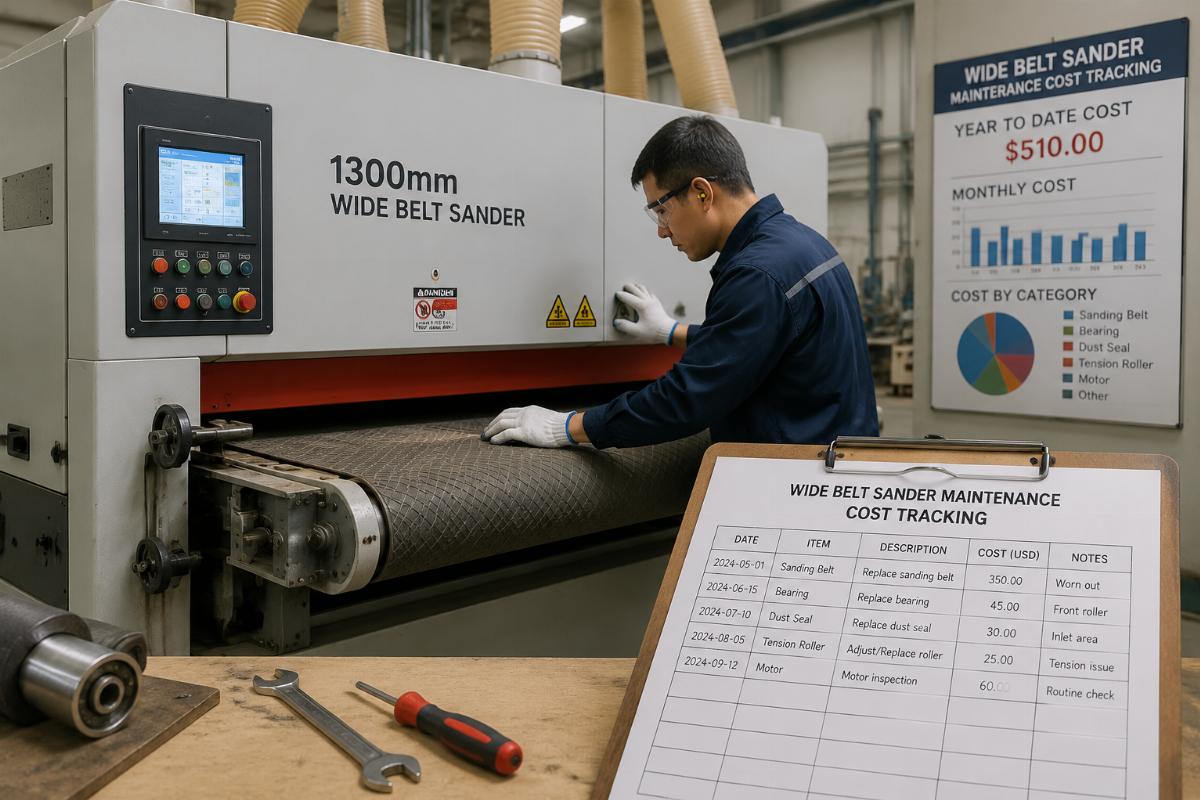
Below we break down exactly how to calculate these costs, avoid common expensive mistakes, and build a sustainable upkeep plan for your operation.
A mid-sized panel furniture factory in Vietnam operating a 1300mm wide belt sander for 8 hours per day previously only budgeted for sand belt swaps, and was spending 15% of their original machine purchase price annually on unplanned repairs and last-minute part replacements before adjusting their budget structure.
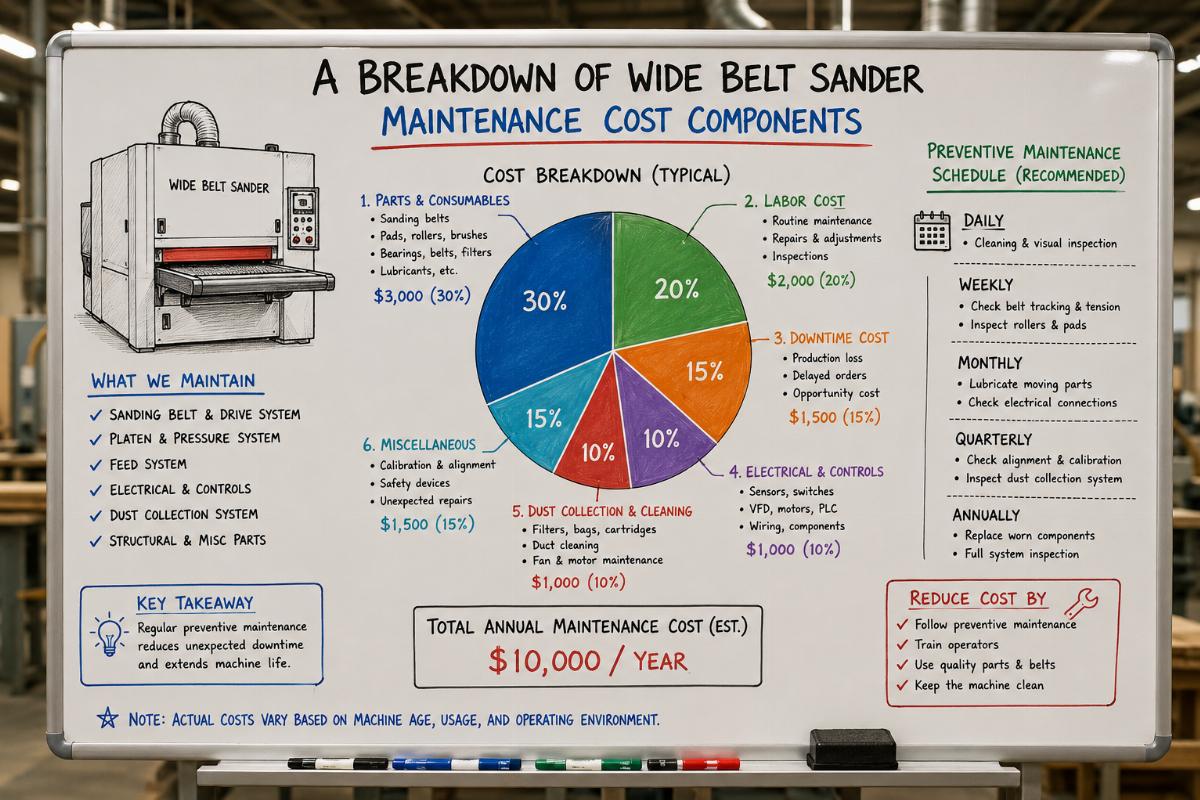
A door manufacturing facility in Mexico operating a 1600mm wide belt sander previously overbudgeted for maintenance by 35% annually, until they aligned their replacement schedule to a 1200-hour runtime interval for sand belts, bringing total per-replacement cost including labor under 180 USD and keeping downtime per swap under 30 minutes.
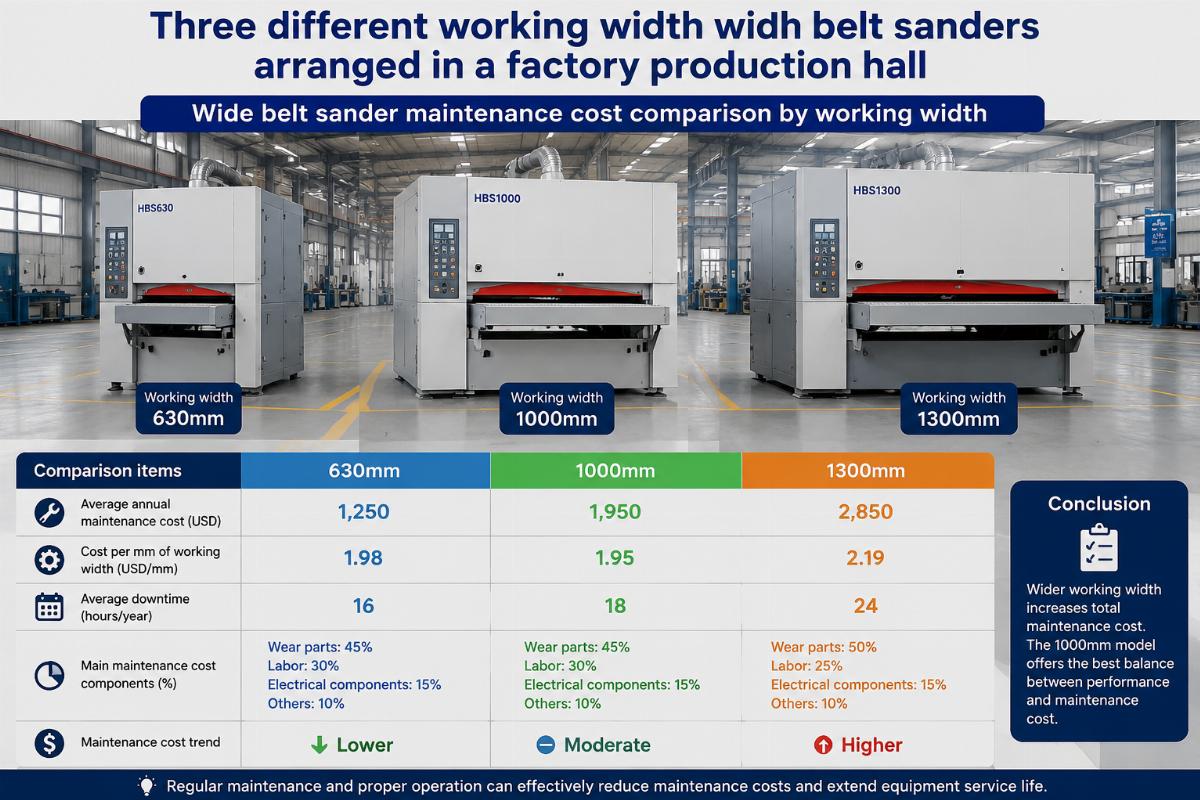
A panel furniture operation in Malaysia previously replaced sand belts 4 times per month on average, until they adjusted their belt selection to match their core particle board and MDF production, cutting their monthly replacement rate to 1.5 times with no loss in processing quality [NEED_CITE: Aligning sand belt grit to production material reduces wide belt sander replacement frequency by 62.5%].
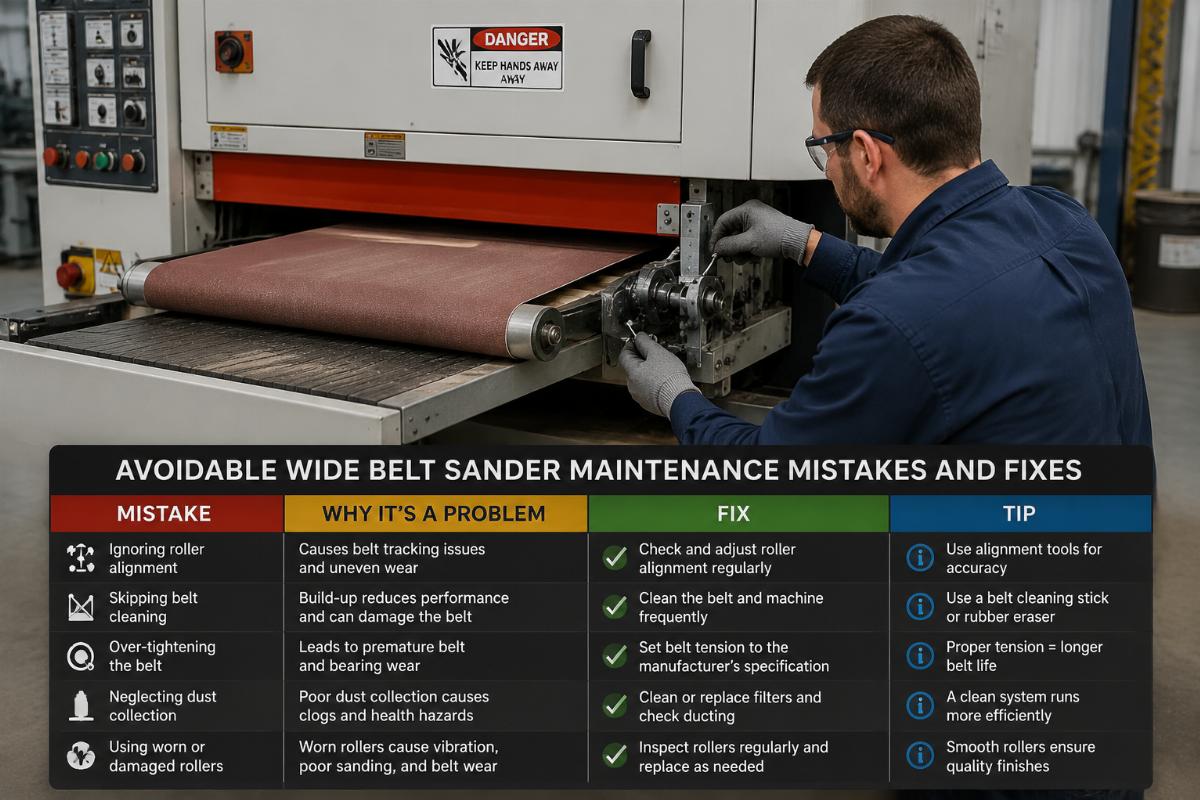

Expert content from the Ruiqi Woodworking Machinery team -- sharing industry insights, product guides, and woodworking tips for global buyers and manufacturers.
View all posts
Leave a Reply