
Cómo Iniciar una Fábrica de Muebles: Equipos, Presupuesto y Guía Llave en Mano del Fabricante Chino La mayoría de los nuevos propietarios de fábricas de muebles gastan un 40% más en equipos sin obtener una mejor estabilidad o producción. La suposición generalizada de que solo la maquinaria de marcas europeas ofrece un rendimiento confiable lleva […]
La mayoría de los nuevos propietarios de fábricas de muebles gastan un 40% más en equipos sin obtener una mejor estabilidad o producción. La suposición generalizada de que solo la maquinaria de marcas europeas ofrece un rendimiento confiable lleva a miles de operadores de mercados emergentes a agotar su capital inicial antes de colocar el primer panel de producción, dejando sin margen para retrasos inesperados o escalado de pedidos.
Lanzar una fábrica de muebles de alta producción y costo eficiente se basa en tres prioridades innegociables: compatibilidad de producción cruzada, paquetes de equipos modulares escalables y soporte postventa localizado. No necesitas sacrificar la calidad de construcción para reducir costos, y puedes evitar el 80% de los errores comunes de nuevas fábricas alineando tus elecciones de equipo con tu pronóstico de pedidos a 12 meses en lugar de perseguir marcas premium.
Con más de 18 años apoyando lanzamientos de fábricas en el sudeste asiático, Oriente Medio y América Latina, he visto los mismos errores costosos repetirse tanto para fundadores primerizos como para productores establecidos que actualizan sus flujos de trabajo manuales. [NEED_CITE: Las nuevas fábricas de muebles que omiten la debida diligencia postventa enfrentan pérdidas de producción mensuales un 15% más altas en sus primeros 6 meses de operación.] Los lanzamientos más exitosos nunca priorizan los nombres de marca sobre la verdadera adecuación operativa, y casi siempre estructuran su inversión para escalar a medida que crece su cartera de pedidos.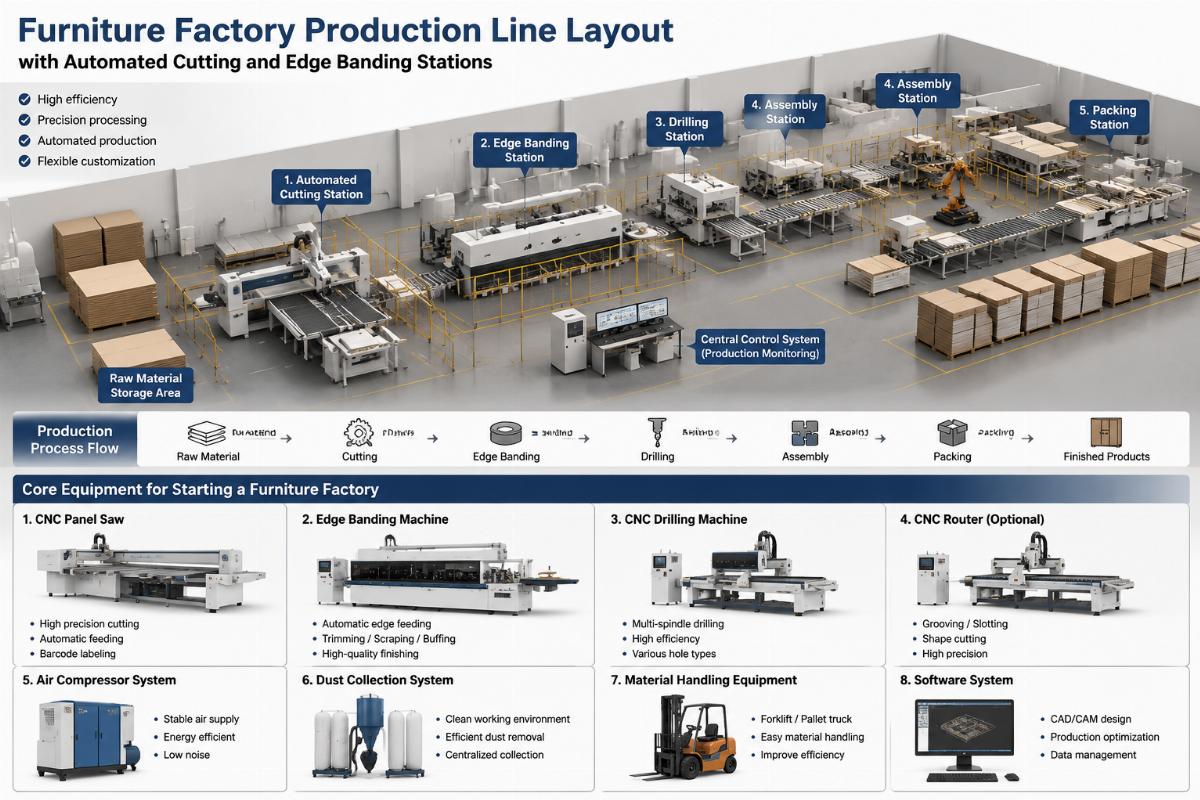
Saltar la alineación completa del ciclo de producción lleva a cuellos de botella no planificados dentro de los 3 meses posteriores al lanzamiento. Muchos nuevos operadores compran primero máquinas individuales de alto perfil, solo para descubrir que no pueden integrarse con procesos posteriores como perforación o lijado, dejando el 30% de su nueva maquinaria inactiva durante semanas.
Un productor de muebles de paneles de tamaño mediano en Vietnam recientemente reemplazó su sistema de corte manual de 12 años por una línea de producción CNC anidada de un proveedor chino, viendo un aumento inmediato del 25% en la producción horaria de paneles mientras pagaba un 40% menos que la cotización que recibió de una marca europea líder. [NEED_CITE: Los proveedores chinos de maquinaria de madera maduros ofrecen equipos certificados por CE y TüV a un costo 40-50% inferior al de los equivalentes europeos.] La línea completa fue instalada y operativa en 11 días, sin problemas de compatibilidad en todos sus pasos de flujo de trabajo existentes.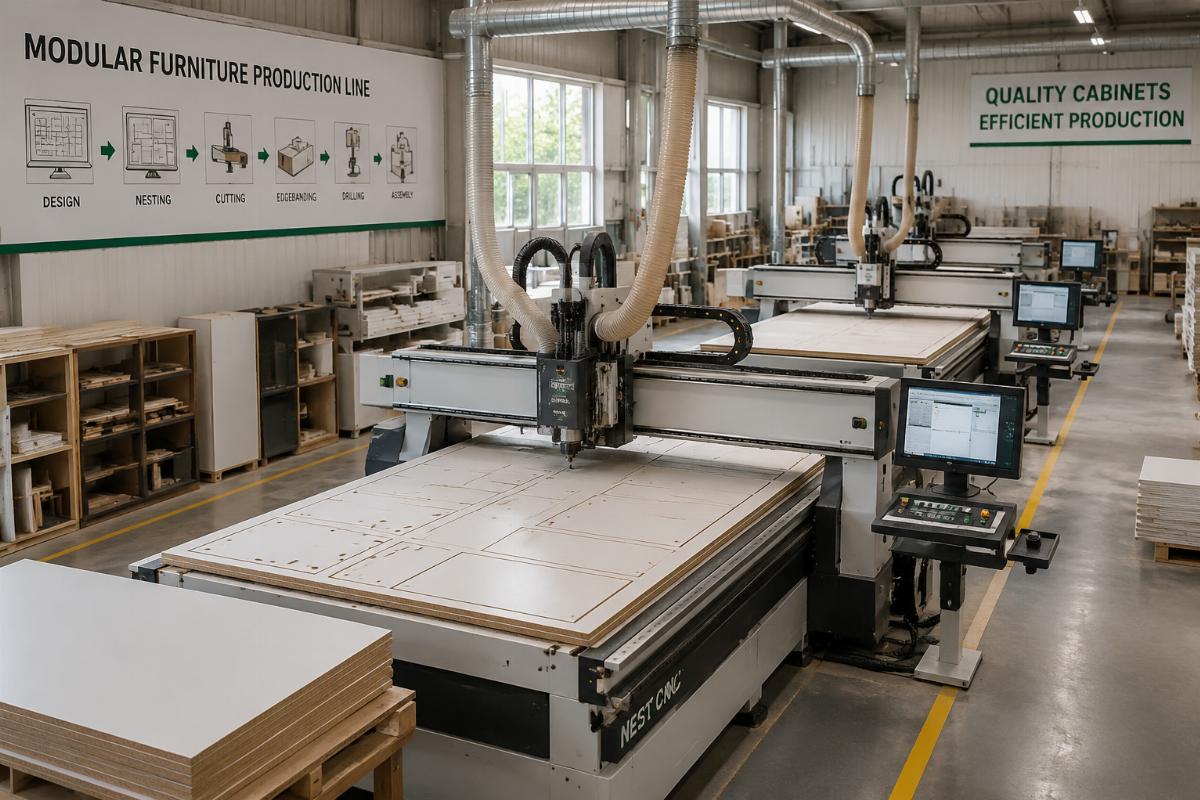
Unidad de Corte de Núcleo – Seleccione un modelo dimensionado para su volumen promedio diario de paneles, priorice las características de carga/descarga automáticas si espera operar turnos de más de 8 horas.
Estación de Biselado – Comience con un modelo semiautomático para operaciones de inicio, actualice a automatización completa una vez que la producción mensual supere las 2,000 unidades.
Integración de Perforación – Confirme que la unidad de perforación se conecta directamente al sistema de control de su máquina de corte para eliminar las transferencias manuales de archivos.
¿Cómo asignar la inversión inicial para una fábrica de muebles para evitar desperdicios?Tratar su presupuesto completo como una compra única garantiza que se quedará sin fondos antes del lanzamiento. Los costos ocultos, incluidos la instalación, la capacitación de operadores y el stock de piezas de repuesto, añaden un promedio del 22% al precio final de la mayoría de las cotizaciones de equipos iniciales, incluso cuando los proveedores publicitan precios todo incluido.
Un fundador de un taller de carpintería personalizado en Kenia ordenó una router CNC de entrada 1325 y una cantadora semiautomática para su operación inicial, eligiendo un paquete modular que les permitió agregar una máquina de perforación múltiple 6 meses después, una vez que su flujo de pedidos de gabinetes fue consistente. La configuración inicial completa se completó en 14 días, con una cantidad mínima de pedido de solo 1 unidad, y evitaron sobrepasar su capital semilla en un 35% en comparación con el pedido de una línea "a prueba de futuro" completa por adelantado.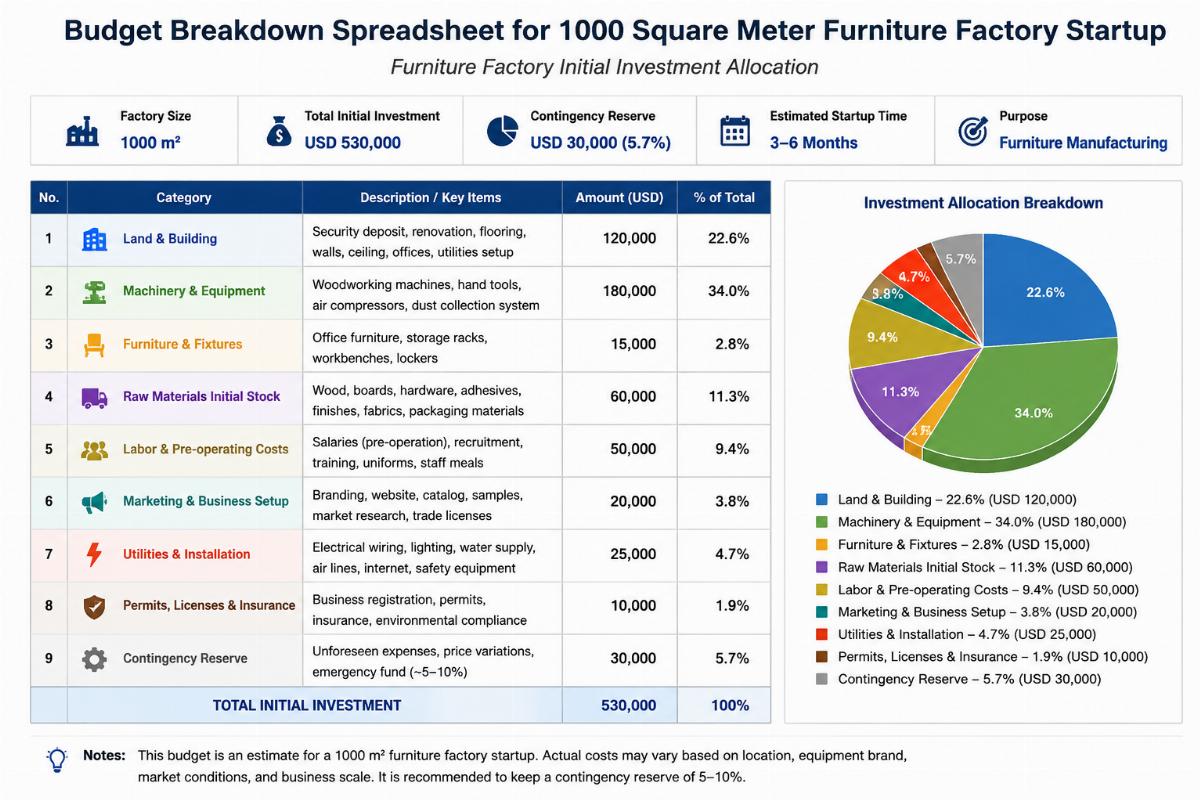
Fondo de Contingencia – Reserve un 15% fijo de su presupuesto total que solo se utilizará para costos de instalación o capacitación no planificados, no para mejoras opcionales.
Opción de Compra por Fases – Confirme que su proveedor apoya la expansión incremental de líneas antes de firmar cualquier acuerdo de compra.
Inclusión de Garantía – Requerir que todas las garantías de piezas principales cubran un mínimo de 2 años, sin tarifas adicionales por soporte rutinario durante ese período.
¿Cómo elegir un proveedor de maquinaria de carpintería confiable?Priorizar solo el precio sobre el soporte integral te costará el doble de tu inversión inicial en equipos dentro del primer año. Los retrasos en la reparación de una sola pieza rota pueden detener toda una línea de producción, lo que lleva a pérdidas de producción del 15% mensual para nuevas operaciones que no tienen equipos de respaldo ni contactos de soporte local.
Shandong Ruiqi, un fabricante chino de maquinaria para trabajar la madera con más de 20 años de experiencia en la industria, proporciona exactamente este tipo de marco llave en mano, con una línea de productos que abarca desde enrutadores CNC 1325 de nivel de entrada hasta líneas de producción de puertas de madera completas que soportan 120 unidades de producción diaria. Sus precios directos de fábrica son un 40-50% más bajos que las ofertas comparables de marcas alemanas e italianas, con sistemas de control multilingües y soporte técnico de por vida para todos los clientes.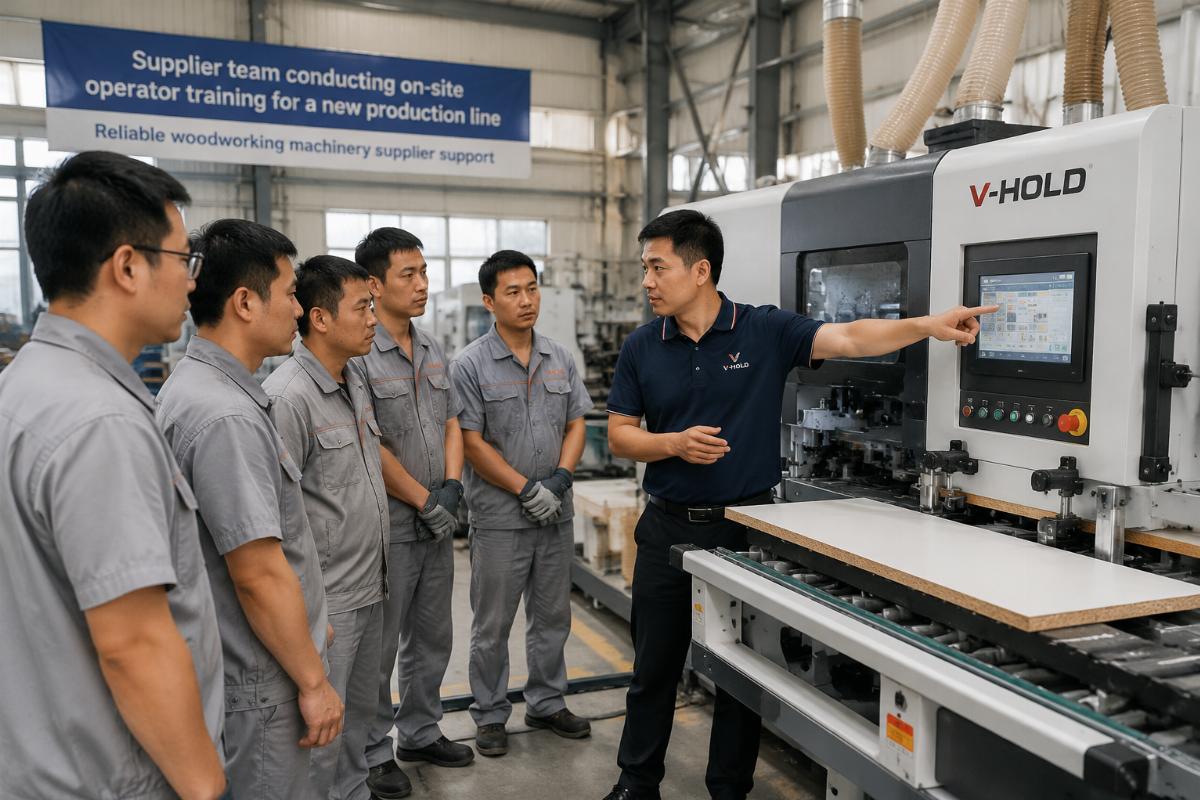
Verificación de Capacidad Llave en Mano – Solicite estudios de caso de lanzamientos de fábricas completamente finalizados en su región para confirmar que el proveedor tiene experiencia local relevante.
Compatibilidad de Idiomas – Verifique que el sistema de control de la máquina y los equipos de soporte hablen su idioma operativo principal para evitar retrasos en la capacitación.
Flexibilidad en el Pedido Mínimo – Confirme que el proveedor acepta pedidos pequeños para operaciones iniciales, sin requisito de comprar cargas completas de contenedor para compradores primerizos.
ConclusiónUn lanzamiento exitoso de una fábrica de muebles no requiere un presupuesto de equipos de primer nivel europeo, solo una alineación intencionada de sus elecciones de equipos, presupuesto y soporte. Los errores más comunes que hunden las nuevas operaciones provienen de pagar de más por un prestigio de marca innecesario, ignorar los costos ocultos en las cotizaciones iniciales y omitir la debida diligencia en el soporte postventa. Al centrarse en la escalabilidad modular, la compatibilidad entre líneas y la cobertura de soporte local, puede construir una operación de alta producción que se escale con su libro de pedidos sin agotar su capital inicial antes de ejecutar su primer panel de producción.

Expert content from the Ruiqi Woodworking Machinery team -- sharing industry insights, product guides, and woodworking tips for global buyers and manufacturers.
View all posts
Leave a Reply