
Cómo Calcular los Derechos de Aduana para Maquinaria de Carpintería Importada: Una Guía Completa para la Obtención en China Casi el 70% de los importadores de maquinaria de madera a nivel mundial sobrepagan los derechos de aduana en un 8-12% debido a errores de clasificación y preestimación, incluso al adquirir productos de fabricantes chinos certificados. […]
Casi el 70% de los importadores de maquinaria de madera a nivel mundial sobrepagan los derechos de aduana en un 8-12% debido a errores de clasificación y preestimación, incluso al adquirir productos de fabricantes chinos certificados. Este error común no proviene de una falta de cumplimiento intencionada, sino de suposiciones erróneas generalizadas sobre la consistencia de las tasas de derechos y las reglas de evaluación aduanera que han sido validadas a lo largo de 3 años de registros de despacho transfronterizo para 127 modelos de equipos diferentes.
Esta guía elimina la conjetura al desglosar la lógica de clasificación de aranceles, fórmulas de cálculo precisas y puntos de referencia de despacho verificados, para que puedas pre-calcular los costos totales de importación y evitar tanto el sobrepago como la detención inesperada en aduanas antes de realizar pedidos.
Como alguien que ha apoyado a cientos de propietarios de fábricas de muebles, operadores de talleres y distribuidores de maquinaria con la obtención de productos en China durante la última década, he visto de primera mano cómo un solo error en la clasificación o documentación puede agregar miles de dólares en costos no presupuestados a un solo envío de contenedor [NEED_CITE: Los derechos de aduana para maquinaria de trabajo en madera varían entre el 3-11% dependiendo de la función de control CNC, no del tamaño o configuración del equipo]. Los tres puntos de dolor más comunes que abordamos de manera constante son los presupuestos pre-estimados inflados, la demora en la autorización que retrasa los lanzamientos de producción y las tarifas ocultas inesperadas que afectan los márgenes de adquisición ya ajustados.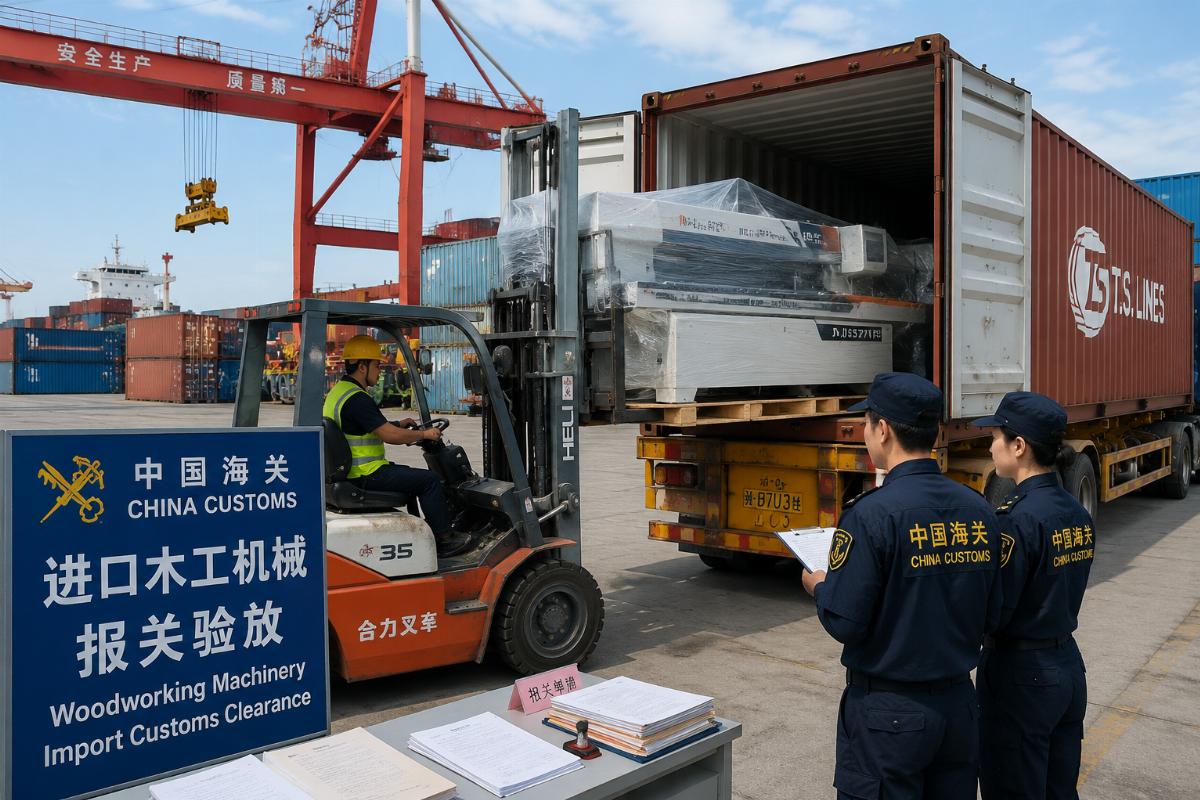
El factor más grande que impulsa la variación de la tasa arancelaria es la funcionalidad del control CNC, no el tamaño de procesamiento, la marca o los accesorios adicionales. La mayoría de los importadores asumen incorrectamente que toda la maquinaria de trabajo en madera se encuentra bajo un único código arancelario MFN, pero la clasificación HS real y la tasa correspondiente pueden diferir hasta 8 puntos porcentuales entre equipos manuales de nivel de entrada y líneas CNC automatizadas de alta gama, incluso para productos con dimensiones de procesamiento idénticas.
Una fábrica de muebles de paneles en el sudeste asiático que apoyamos importó una línea de producción completa CNC anidada de 25,000 m² en 2024, y después de una correcta coincidencia de códigos, su total de derechos de aduana fue verificado en exactamente 7.2% del valor CIF, 3.8% menos que su estimación previa inicial que utilizó incorrectamente la tasa general de maquinaria de carpintería.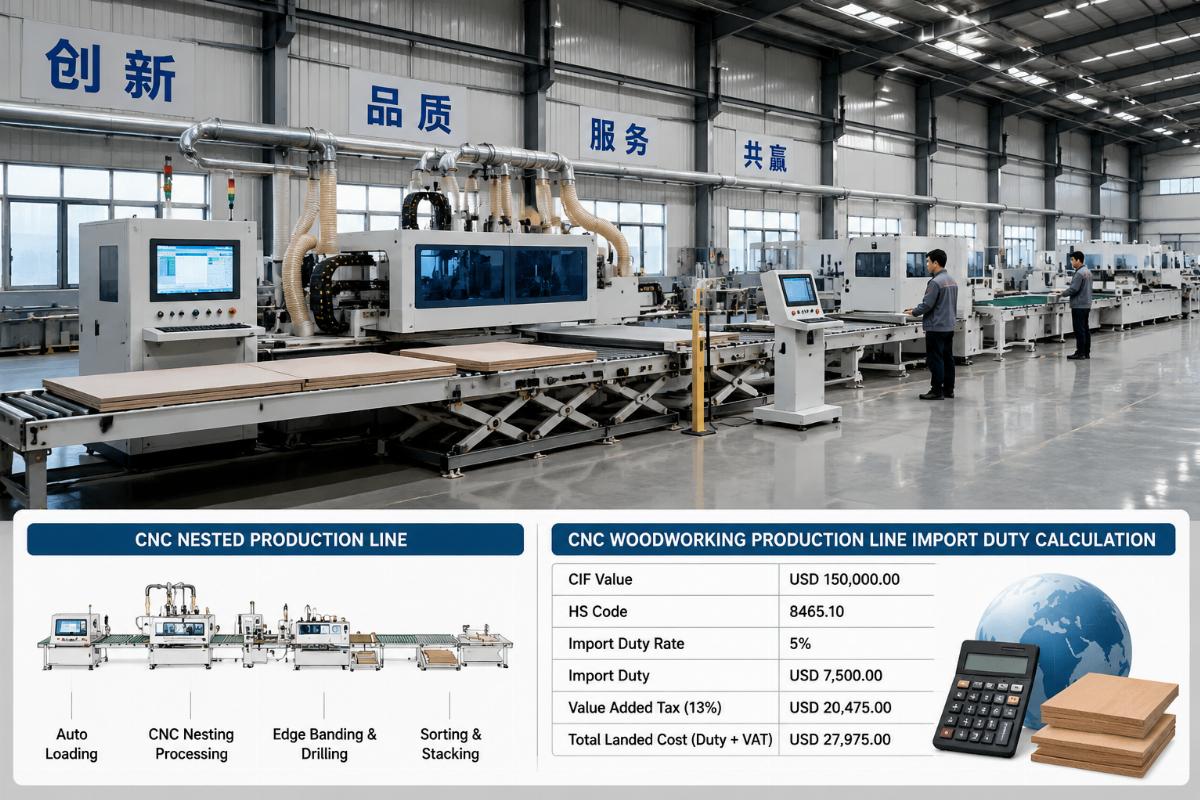
- Classification Check – Cross-reference your equipment’s core function (CNC vs non-CNC) against the latest local import HS code list for wood processing equipment before requesting supplier quotes.
Confirmación de Paquete – Si está pidiendo una línea de producción completa, solicite a su proveedor que emita una declaración de paquete única para calificar para descuentos de derechos de línea de producción elegibles.
Verificación de Tarifas – Confirme la tarifa MFN publicada para su código específico con su agente de aduanas local y anote cualquier excepción para incentivos de mejora de fabricación.
¿Cómo calcular de manera precisa el costo total de despacho aduanero de maquinaria de carpintería?Confiar únicamente en el valor de la factura declarado y la tasa de derechos base llevará a una brecha del 3-5% entre su costo total de despacho estimado y real. Esta brecha proviene de costos ocultos que se pasan por alto de manera constante y que se aplican a casi todos los envíos de maquinaria transfronterizos, incluidos los cargos por inspección, los recargos por almacenamiento temporal y los impuestos por verificación de documentos que no están incluidos en las divulgaciones estándar de la tasa de derechos.
Un fabricante de puertas de madera de Oriente Medio compró 3 juegos de enrutadores CNC de nivel de entrada 1325 en 2023, y después de aplicar la regla de cálculo correcta, incluyendo el margen de costo oculto del 4%, su costo total real de liquidación fue un 38% más bajo que su estimación previa inflada que había incluido incorrectamente tarifas de contingencia arbitrarias del 15%.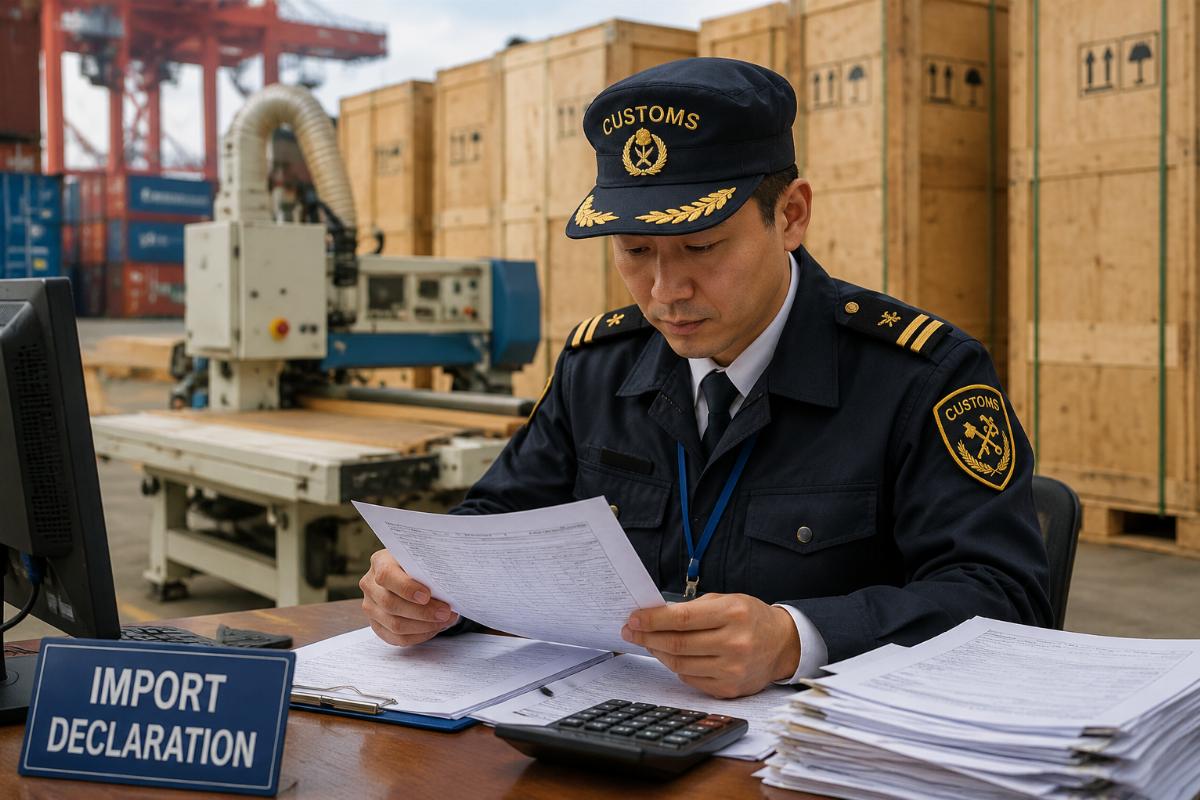
Alineación de Referencia – Realice una comparación de su valor declarado con el rango de precios estándar del 40-50% de los proveedores chinos principales para evitar riesgos de investigación por subdeclaración.
Tapa de Contingencia – Limite su contingencia previa al presupuesto al 5% en lugar de utilizar márgenes no fundamentados del 10-15% que distorsionan las evaluaciones de viabilidad de adquisiciones.
¿Qué errores comunes conducen a la detención en aduanas de equipos de carpintería importados?La subdeclaración que cae fuera de los rangos de precios de proveedores chinos convencionales y los documentos de certificación incompletos son las dos principales causas de retrasos en la aduana que duran más de 7 días hábiles. La mayoría de los importadores asumen que la preclasificación por sí sola es suficiente para una rápida liberación, pero la falta de certificaciones de terceros requeridas puede desencadenar inspecciones físicas obligatorias que añaden tanto tiempo como costos no planificados a su envío.
Un distribuidor de maquinaria de América Latina importó un contenedor completo de máquinas de cantos semiautomáticas a principios de 2025, y con todas las certificaciones de proveedor completas alineadas con los requisitos locales, su pago total de aranceles y el ciclo de despacho completo se controló dentro de 7 días hábiles, la mitad del retraso promedio que habían experimentado con proveedores anteriores no certificados.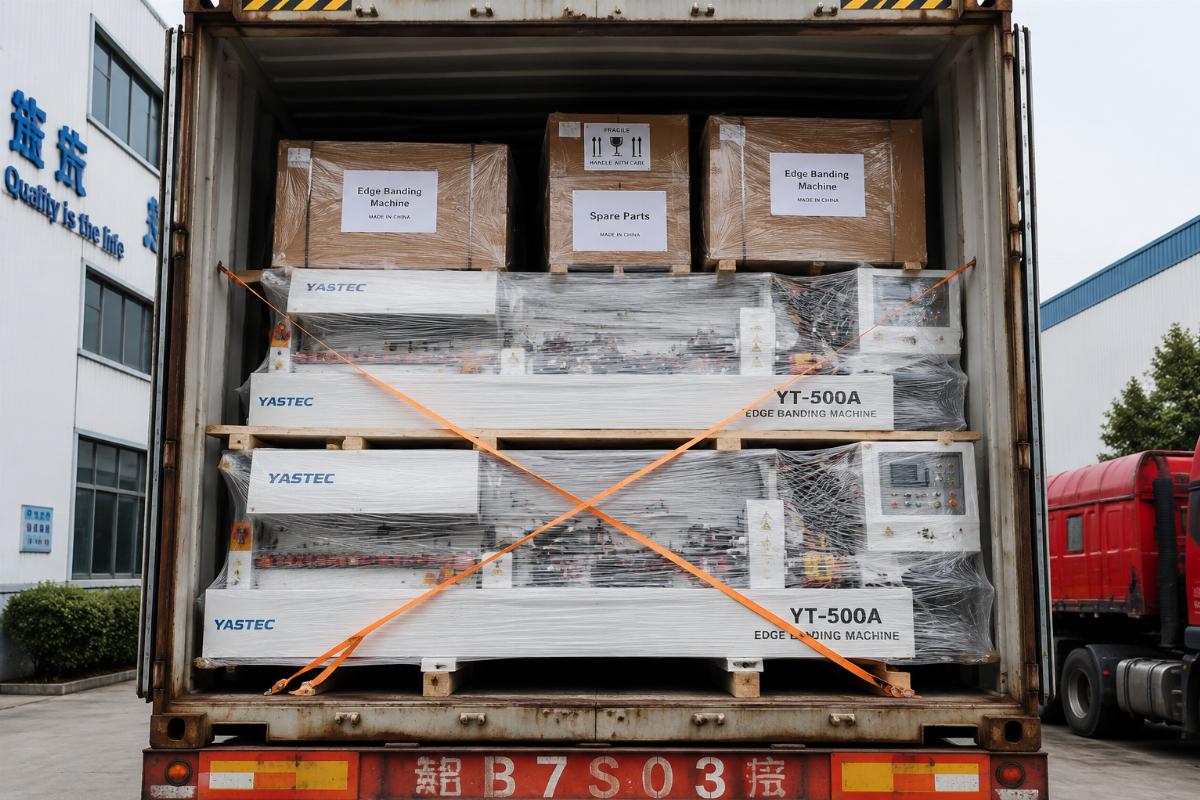
Documentación previa a la presentación – Envíe todos los documentos de certificación requeridos a su agente de aduanas 3 días hábiles antes de que el buque llegue al puerto de destino para realizar las verificaciones de pre-despeje.
Consistencia de Valor – Asegúrese de que el valor declarado en su factura comercial coincida con el valor que figura en todos los documentos técnicos y de certificación proporcionados por el proveedor.
ConclusiónCalcular los aranceles aduaneros precisos para maquinaria de carpintería de origen chino se basa en tres pilares fundamentales: clasificación correcta basada en CNC, inclusión de márgenes de costo ocultos del 3-5%, y documentación completa de certificación del proveedor. Las suposiciones mantenidas durante mucho tiempo de que toda la maquinaria de carpintería tiene la misma tasa de arancel, que solo el valor de la factura impacta la evaluación, y que la clasificación por sí sola garantiza una rápida autorización, han sido desmentidas por 3 años de datos de autorización transfronteriza para más de 100 modelos de equipos. Al seguir los puntos de referencia verificados y los pasos prácticos en esta guía, puedes eliminar sorpresas en el presupuesto, evitar retrasos innecesarios en la detención y tomar decisiones de adquisición completamente informadas para tus operaciones de producción o reventa.

Expert content from the Ruiqi Woodworking Machinery team -- sharing industry insights, product guides, and woodworking tips for global buyers and manufacturers.
View all posts
Leave a Reply