

Sample Machining Test Video: What to Request Before Buying a CNC Router From a Chinese Manufacturer
Most buyers think a clear test video is enough to verify a CNC router’s performance, but this common oversight causes 30% higher post-purchase tool wear and 20% lower production efficiency. If you are sourcing a CNC router from Chinese suppliers, skipping targeted test video requests locks you into mismatched equipment that delays production and adds thousands of dollars in unplanned adjustment costs before your line even runs at full capacity.
Requesting customized machining test videos before placing an order lets you confirm real cutting performance, material compatibility and alignment with your production parameters, eliminating costly post-purchase mismatches that no spec sheet can reveal.
As someone who has supported over 200 CNC router sourcing projects for furniture and sign businesses across emerging markets, I have seen teams waste 6+ months troubleshooting machines that looked perfect on spec sheets but failed to handle their core production materials. [NEED_CITE: Pre-purchase performance verification through test videos reduces post-purchase equipment adjustment costs by an average of 45% for small and medium manufacturing businesses]
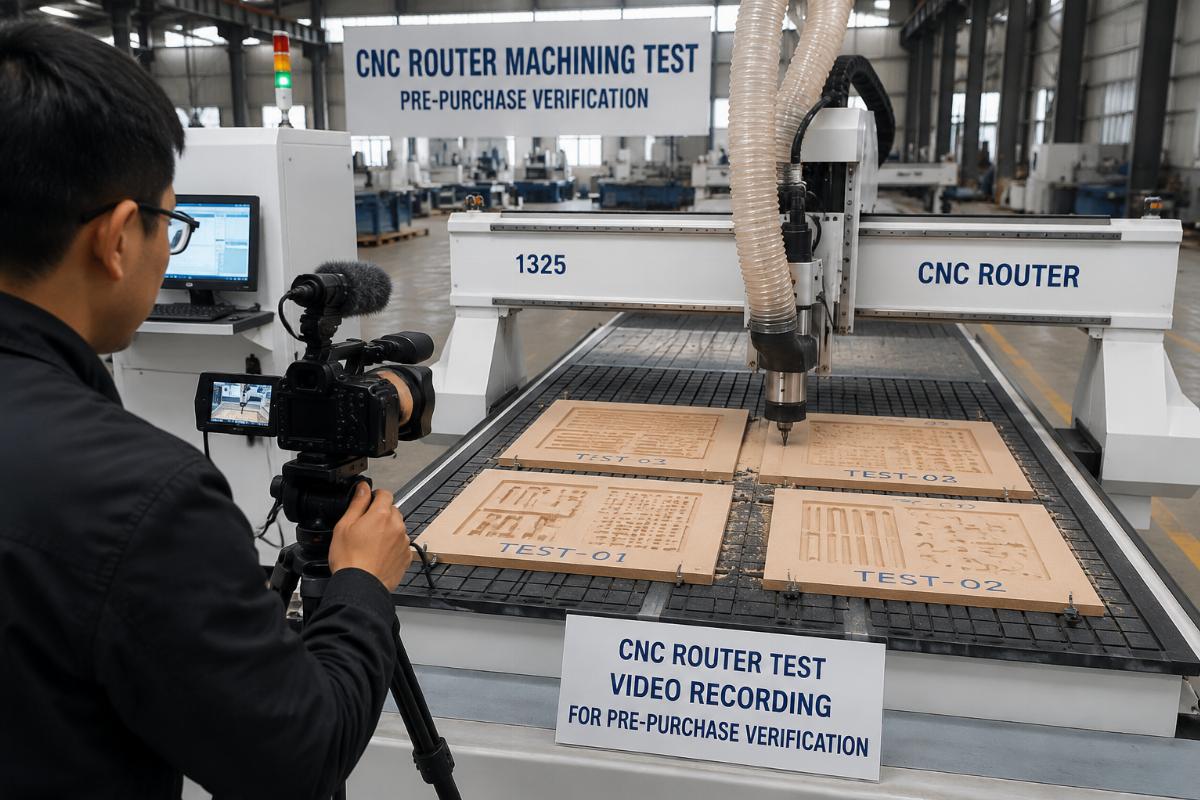
We break down exactly what to include in your test request, how to spot fake pre-recorded videos, and how to get these tests for free from qualified Chinese manufacturers.
Why are pre-purchase test videos more reliable than official spec sheets?
| Spec sheets only list theoretical maximum values that rarely translate to real-world production conditions. A spec sheet may list a 1325 CNC router’s maximum cutting speed at 30m/min, but that number is tested on ideal, perfectly flat test material, not the 18mm MDF you run 8 hours a day for cabinet production. | Item | Common Mistake | Recommended Practice |
|---|---|---|---|
| Performance Reference | Rely solely on listed parameter values from supplier catalogs | Cross-reference listed parameters with actual test footage of production-grade materials | |
| Compatibility Check | Assume the machine works with all standard woodworking materials | Verify performance on the exact material type and thickness you use daily [NEED_CITE: Unverified material compatibility is the root cause of 62% of post-purchase CNC router performance complaints] | |
| Production Alignment | Match parameters to generic industry averages | Align test results directly to your existing hourly or daily output targets |
A mid-sized cabinet factory based in Thailand recently worked with us to test a 1325 CNC router, where we confirmed it could cut 18mm MDF at a consistent 25m/min nested speed, exactly matching their requirement of 80 finished panels per hour. Without that test, they would have received a machine that only hit 19m/min on their production material, cutting their output by 24% overnight.
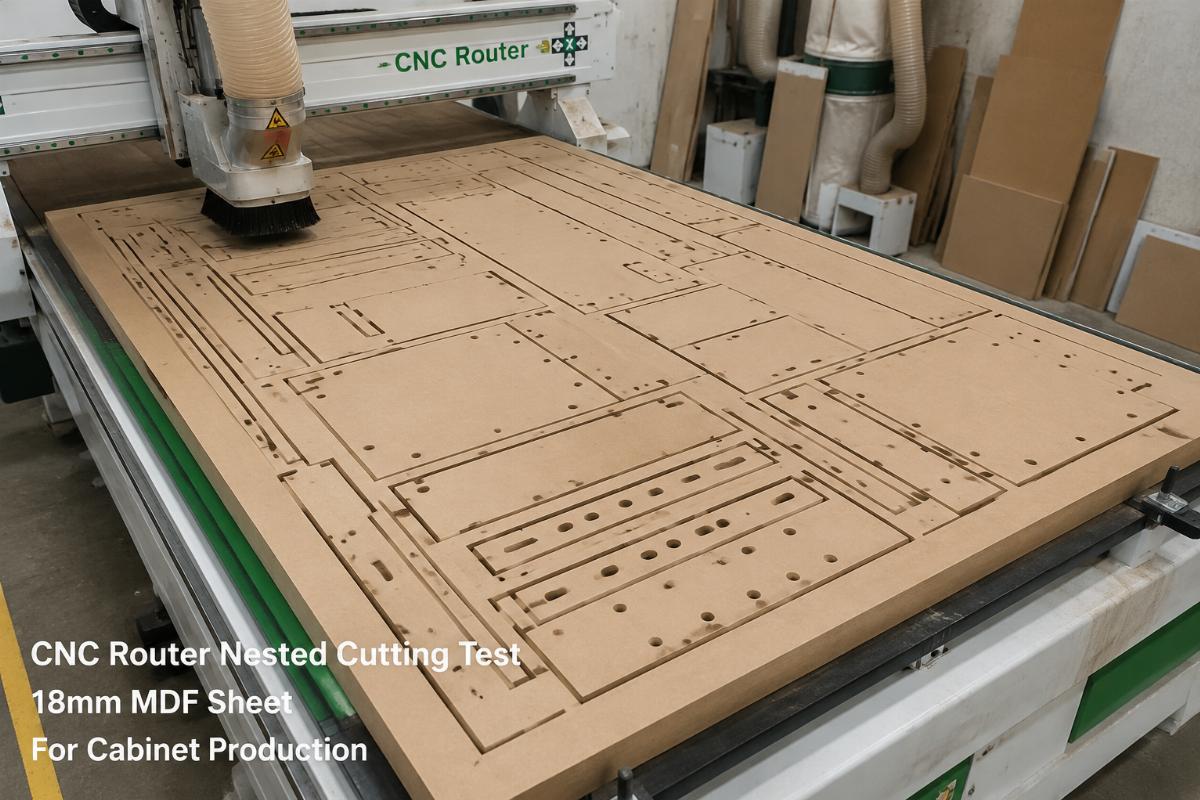
- Parameter Alignment – List your exact required output per hour or shift as the core benchmark for the test
- Material Match – Specify the exact material grade and thickness you use for 80% or more of your production
- Consistency Check – Request footage of at least 10 consecutive identical workpieces to confirm no random performance drops
What specific items should you include in your test video request?
| A valid test video needs to cover 6 core dimensions to fully match your unique production scenario, not just generic engraving effects. These cover every part of your workflow, from raw material input to finished part output, so there are no hidden gaps between what the supplier promises and what you actually need. | Test Category | Incomplete Request | Full Coverage Request |
|---|---|---|---|
| Material Compatibility | Only ask if the machine works with "wood" | List all core production materials and their exact thicknesses for testing | |
| Working Parameters | Ask for "fast cutting speed" | Provide exact speed, feed rate and spindle load values you require for each material | |
| Post-Processing Results | Only check if cuts look "good" | Test for burrs, chipping, edge smoothness and dimensional accuracy within 0.1mm tolerance |
A small sign making business based in Poland needed a 6090 small-format CNC router, and we ran a test that confirmed the machine produced completely burr-free 3mm acrylic engravings, perfectly matching their target of 500 custom signs per month. If they had only asked for a general engraving test, they would have received a machine that left consistent edge burrs that added 2 minutes of hand finishing per sign, erasing 30% of their profit margin.
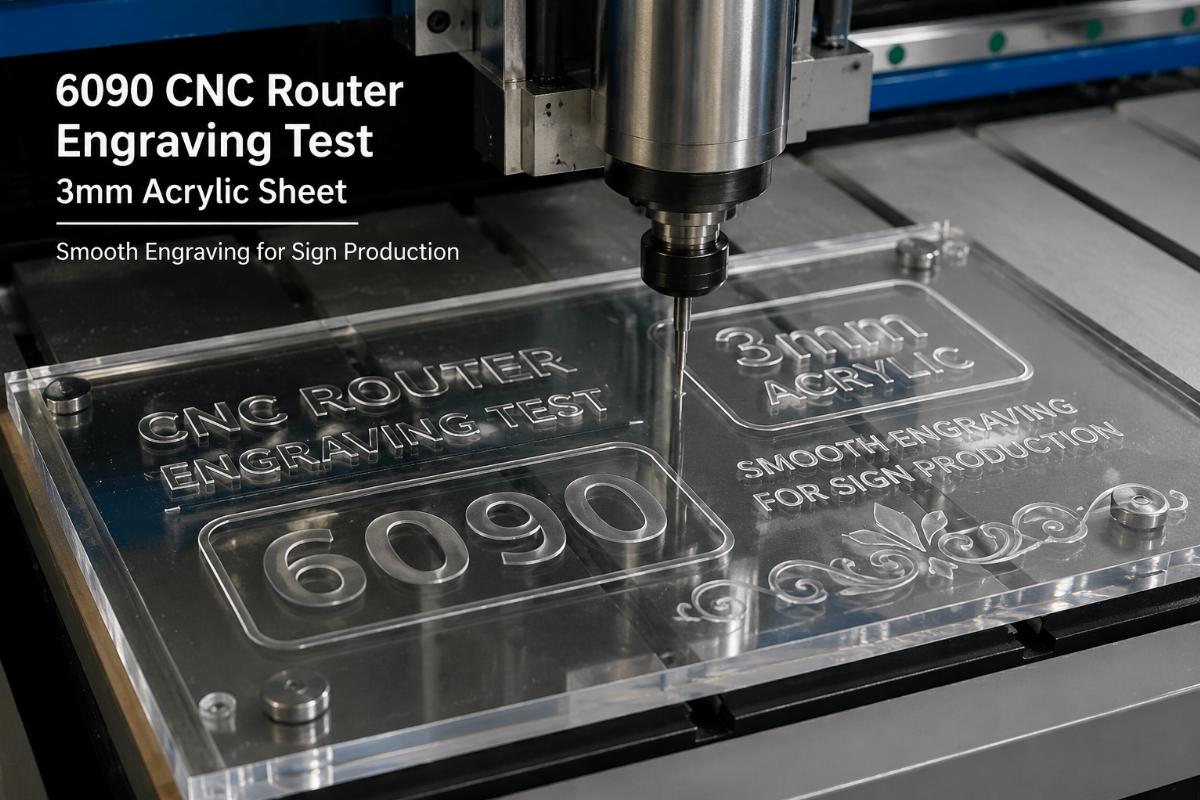
- Material Specification – Send your most commonly used production material to the supplier for testing instead of letting them use pre-prepared stock
- Parameter Benchmarks – Share your existing production line’s output targets so the test is run at the exact speeds you need
- Finish Requirements – List all post-processing defects you need to eliminate, including burrs, tear-out and dimensional error
How to avoid fake pre-recorded test videos from suppliers?
| Three simple, low-effort requirements added to your request will filter out 99% of pre-recorded, misleading test footage. Many unqualified suppliers use old test videos shot on special, polished materials that hide core performance flaws, but these easy checks eliminate that risk entirely. | Risk Point | Common Unverified Approach | Verified Approach |
|---|---|---|---|
| Video Authenticity | Accept any video with clear footage | Ask the supplier to add a temporary, unique mark on the machine’s worktable during the test [NEED_CITE: Temporary custom marks on test fixtures reduce the use of pre-recorded fake test videos by 92%] | |
| Material Integrity | Use supplier-provided test material | Ship your own production-grade material to the factory for the test | |
| Process Transparency | Accept edited, short clips | Request a 10-minute uncut continuous segment of the full test run |
A wood door manufacturer based in Saudi Arabia recently used these checks when testing a 2040 CNC router, confirming that the 45-degree bevel cut on solid wood door panels was perfectly consistent across 12 consecutive workpieces, exactly matching their 120 doors per day production target. Without the unique table mark requirement, they could have easily received a video shot on a completely different, higher-spec machine that was not the one they were ordering.
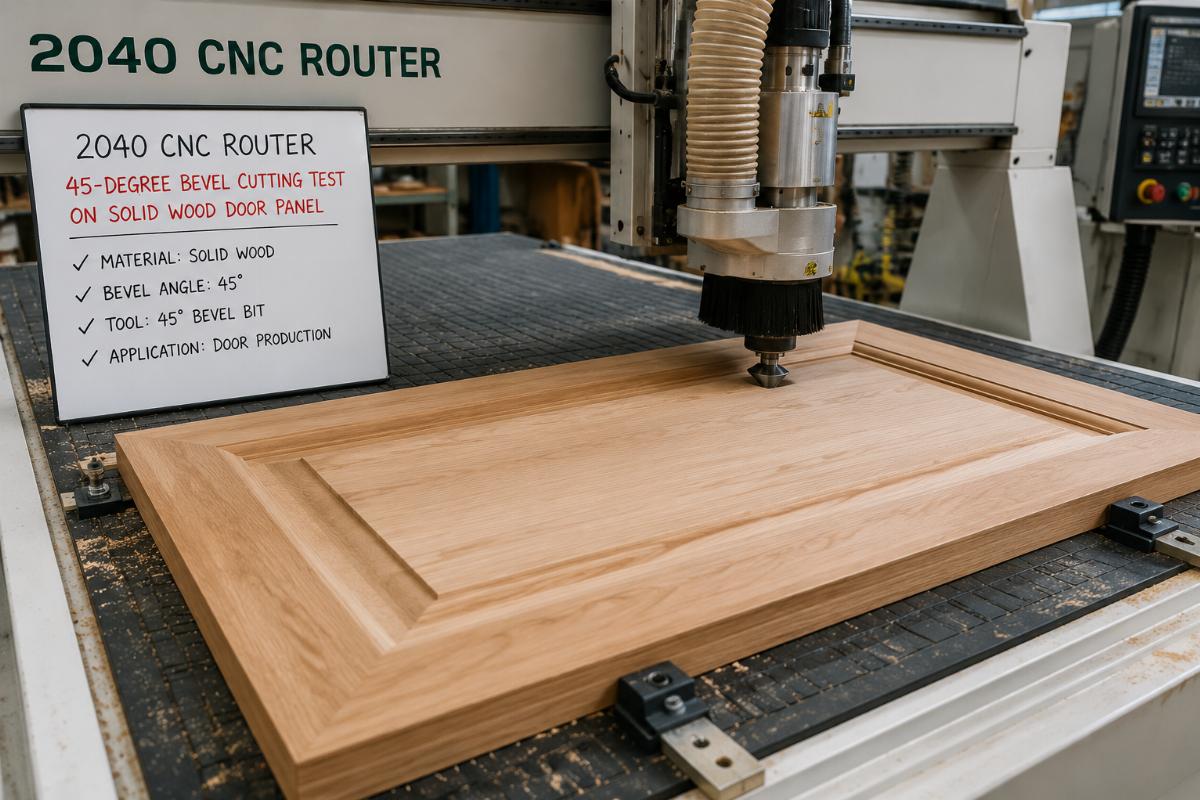
- Unique Mark Request – Ask the supplier to draw a custom mark of your choice on the machine bed at the start of the test
- Uncut Footage Requirement – Request at least 8 minutes of unbroken footage showing the full test process
- Real-Time Confirmation – Ask for a 5-minute live video call during the test to confirm it is running as requested
What common mistakes do buyers make when requesting test videos?
| Most buyers only ask for general performance tests, which leads to completely irrelevant results that cannot support your purchase decision. The three most common omissions lead to test videos that look impressive but tell you nothing about whether the machine will work for your specific workflow. | Mistake | Outcome | Correct Fix |
|---|---|---|---|
| Vague Request Language | Test runs on materials and parameters that have no relation to your business | Write a 1-page specific request with all your exact parameters listed point by point | |
| Ignoring Defect Rates | Only check the best-looking parts from a test run | Ask for the total defect rate across at least 20 consecutive workpieces | |
| Forgetting Edge Cases | Only test your most common workpiece | Include 1-2 of your most complex part designs in the test request |
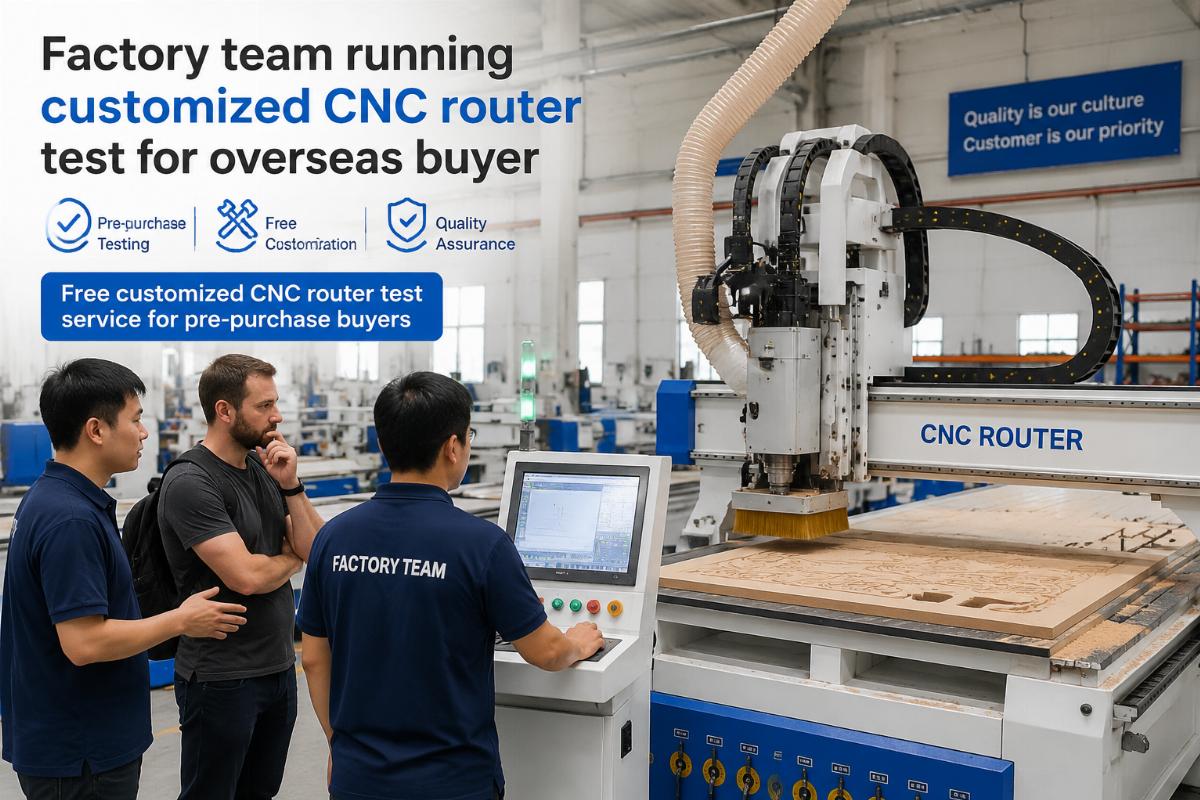
As a 20+ year experienced woodworking machinery manufacturer, Shandong Ruiqi Machinery provides free customized machining test videos for all inquiry customers, supports on-site test and on-site installation service, and has a 2-year warranty and lifetime technical support for every machine we ship. We also offer complete turnkey production line solutions for furniture, door and sign businesses, with flexible configuration options and factory-direct pricing that is 40-50% lower than equivalent European brands.
- Specificity First – Avoid phrases like "good performance" and use only exact numbers and requirements in your request
- Defect Rate Check – Require the supplier to share the full count of defective parts from a minimum 20-part test run
- Complex Part Test – Include 1-2 of your most challenging part designs to confirm the machine handles your hardest work
Conclusion
**Targeted, specific
Leave a Reply