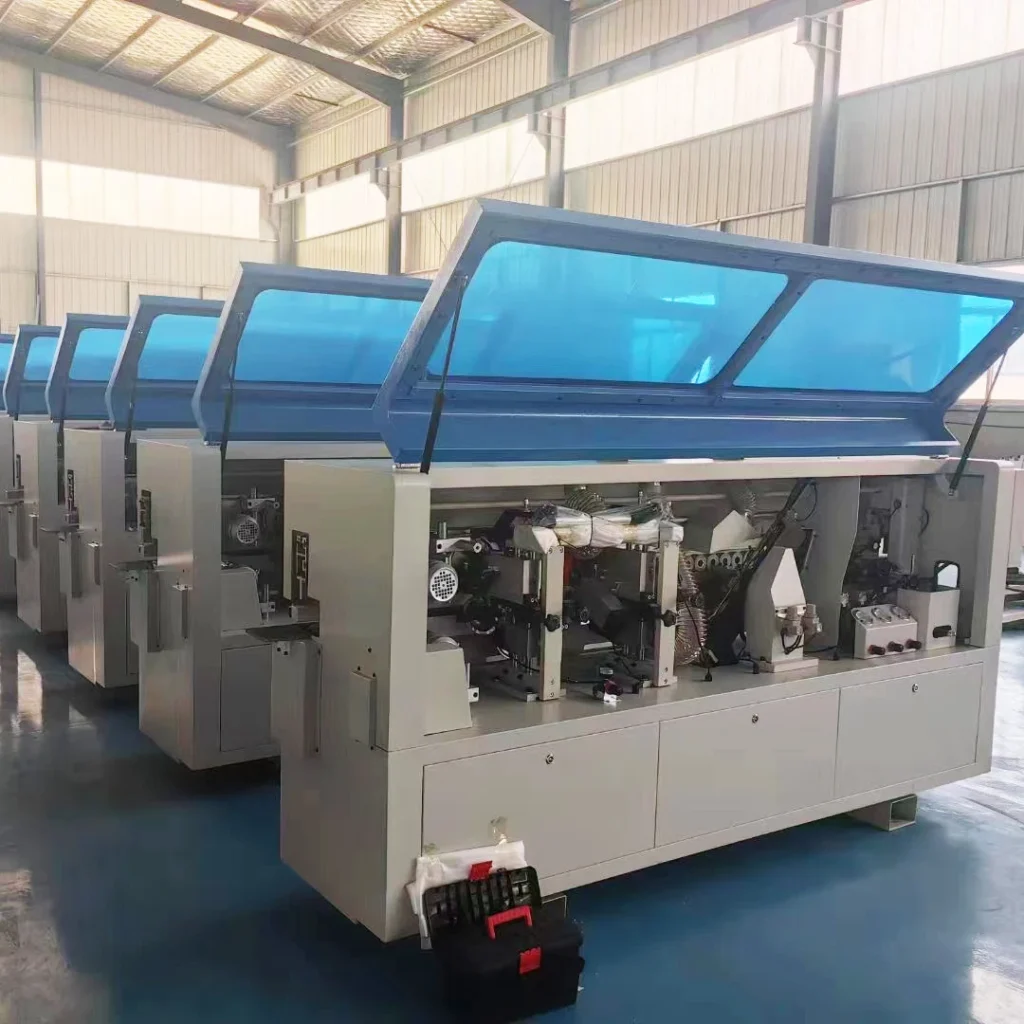
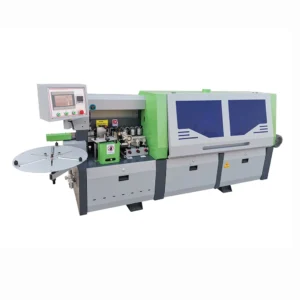
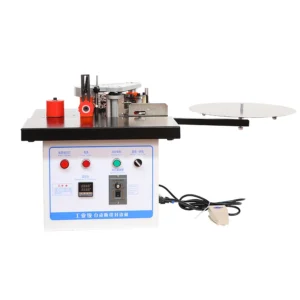
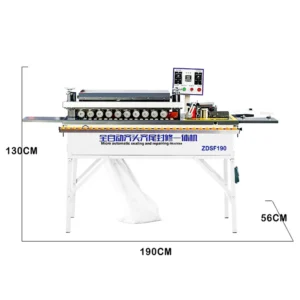
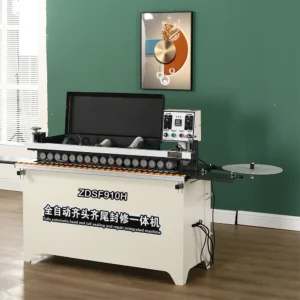
Precision-ground fuselage, OEM-ready — every ZDS280B and ZDS280C rolls off our Ningjin line with documented ±0.02 mm tolerance and a full private-label documentation package ready for your regional market.
Technical Specifications
| Parameter |
Value |
| Model |
ZDS280B / ZDS280C |
| Product Type |
Automatic Straight Line Edge Bander |
| Main Functions |
ZDS280B — Gluing, End Trimming, Fine Trimming, Buffing; ZDS280C — Gluing, End Trimming, Fine Trimming, Scraping, Buffing |
| Working Pressure |
0.6–0.8 MPa |
| Panel Thickness Range |
10–55 mm |
| Edge Thickness Range |
0.4–3 mm |
| Conveyor Belt Speed |
15 m/min |
| Min. Panel Width |
45 mm |
| Min. Panel Length |
80 mm |
| Voltage |
380V 3-Phase (50Hz/60Hz — confirm before production) |
| Total Power |
7.5 kW |
| Net Weight |
ZDS280B — 650 kg; ZDS280C — 800 kg |
| Overall Dimensions (L×W×H) |
ZDS280B — 2300×700×1250 mm; ZDS280C — 2800×700×1250 mm |
| Fuselage Structure |
14 mm national standard high-strength steel plate, frame-type, high-temperature quenching treatment |
| Conveyor Belt Guide Rail |
HT260 cast iron, precision-ground |
| Pneumatic System |
German Festo or Taiwan AirTAC cylinder and safety valve, AirTAC magnetic switch |
| Electrical Components |
Delixi/Chint air switches and contactors, Japanese Omron travel switches |
| Control Panel |
Standard panel (multilingual options available on request) |
| Scraping Station |
Included on ZDS280C only |
| Standards |
CE, ISO 9001 |
Application Suitability
| Application |
Material or Output |
| Custom furniture panel edge banding |
MDF, plywood, particleboard (10–55 mm thickness) |
| Cabinet door and carcass finishing |
PVC and veneer edge banding (0.4–3 mm) |
| Small-to-mid volume batch production |
Solid wood panels requiring single-side straight-line edge finishing |
| OEM-branded regional product lines |
Distributors stocking entry to mid-range edge banding equipment |
Why the Voltage Question Should Come Before the Price
Confirming local voltage and frequency in writing before production avoids weeks of dead time on the workshop floor.
I have watched a container-opened edge bander sit idle for three weeks because the buyer’s workshop ran 380V while the machine was wired for 440V. The transformer fix was expensive; the lost production time was worse [NEED_CITE: voltage and frequency standards by export market]. This OEM edge banding machine ships with voltage configurable from 110V to 440V, but only if the correct specification lands on the confirmation sheet before the fuselage goes into quenching. Every order we release to production carries a signed electrical confirmation — no assumptions, no generic defaults.

What Four-Stage QC Catches Before the Machine Leaves Ningjin
Incoming steel plate is checked against the 14 mm national standard thickness tolerance before any cutting begins. In-process inspection tracks each weld and every machined surface through the frame assembly. Finished-product testing runs the automatic edge bander through a full panel cycle, measuring trimming deviation at multiple points. Pre-shipment verification produces a factory test record with measurable tolerance data — that document goes into the crate alongside the machine.
Private-Label Packaging That Actually Looks Like Yours
An OEM partner in a different market does not need our logo on the control panel or our letterhead in the manual. We apply your brand identity to the fuselage badge, print operation and maintenance documentation in the target language, and match the packaging graphics to your existing product family. The electrical schematic carries your specified terminology so that your service team can trace circuits without translation guesswork [NEED_CITE: CE machinery directive requirements for industrial equipment].
How the Specs Translate to Daily Output
The 14 mm high-strength steel fuselage with high-temperature quenching treatment resists the harmonic vibration that causes edge chatter on lighter frames — this matters when the ZDS280C runs five stations simultaneously at 15 m/min. The HT260 cast iron conveyor guide rail, precision-ground to flatness, keeps the panel tracking straight through each trimming head so that the ±0.02 mm tolerance is not just a catalogue number but a repeatable result on every board. The ZDS280C adds a dedicated scraping station between fine trimming and buffing, which removes the micro-ridges that fine trimming alone can leave on PVC edge banding — the difference is visible under workshop lighting and measurable with a straightedge. Pneumatic actuation through Festo or AirTAC cylinders ensures consistent clamping pressure across the 0.4–3 mm edge thickness range, preventing the delamination risk that cheap solenoids introduce over thousands of cycles.
The Cost of a Specification That Was Never Verified
Distributors who accept a generic quotation without locking down the panel thickness range often discover that 10–55 mm does not cover the 8 mm backs their customers routinely send through. A machine without a scraping station forces operators to hand-scrape PVC edges — a slow, inconsistent step that erodes the throughput advantage the machine was supposed to deliver. And when the control panel arrives in a language the line operator cannot read, commissioning stalls until someone jury-rigs translated tape labels over each button [NEED_CITE: industrial machinery operator safety and labeling requirements].
Manufacturing Depth You Can Audit On-Site
Our fuselage welding, precision grinding, and assembly all happen under one roof in Ningjin — there is no third-party frame supplier to audit separately. The patented cutting mechanism is built in-house, so replacement trimmer heads ship from the same line that made the originals. Voltage and frequency customization is confirmed before production starts, not discovered after the machine arrives. Every unit passes through four QC stages with a documented test record that travels with the shipment. Factory visits are scheduled against the production calendar so you can watch your order move through each stage.
Documentation & Verification
- CE Declaration of Conformity matching the exact ZDS280B or ZDS280C configuration shipped
- ISO 9001 certificate covering the manufacturing batch and facility audit trail
- Electrical schematic with your specified voltage, frequency, and terminology
- Factory test record showing measured trimming tolerance on your panel thickness range
- Operation and maintenance manual printed in the agreed language before dispatch
- Packing photographs taken at container loading for shipment verification
Installation, Commissioning & Support
- Floor plan layout for 2300–2800 mm machine length plus operator clearance zones
- Dedicated 3-phase circuit rated for 7.5 kW with correct voltage and frequency match
- Machine arrives fully assembled; only conveyor infeed table requires on-site alignment
- First-run parameter setting for glue temperature matched to your edge banding material
- Spare parts list cross-referenced to Festo/AirTAC pneumatic and Omron electrical components
- Scheduled guide rail lubrication intervals based on HT260 material specifications
What We Need to Quote Your OEM Configuration
Send us the voltage and frequency standard in your target market, the control panel language your service team requires, and the logo and packaging artwork files. If you plan to stock both the four-station ZDS280B and the five-station ZDS280C, tell us the ratio so we can align the production batch. We will return a configuration proposal with full specification lock-in within one working day.
Frequently Asked Questions
Q: How is the ±0.02 mm tolerance verified before shipment?
A: Each machine runs a test panel cycle through all trimming stations. Measurements are taken at multiple points along the edge and recorded in a factory test report. That report, showing actual deviation values, ships inside the crate with the machine so your receiving team can verify on arrival.
Q: What OEM customization can you apply to these edge banders?
A: We apply your logo to the fuselage badge, configure voltage from 110V to 440V with the correct frequency, print the control panel overlay and manual in your chosen language, and match packaging graphics to your brand. All customizations are locked in a written confirmation before production begins.
Q: Can we visit the factory to inspect manufacturing and QC?
A: Yes. We schedule visits against the active production calendar so you can observe fuselage welding, precision grinding, assembly, and pre-shipment testing on machines similar to your order. We share the four-stage QC checklist in advance so your audit team knows what to expect at each station.
Q: Which components are sourced externally and from which brands?
A: The fuselage, cutting mechanism, and precision-ground guide rails are manufactured in-house. Pneumatic cylinders and safety valves come from German Festo or Taiwan AirTAC. Electrical switches and contactors are Delixi or Chint, and travel switches are Japanese Omron. All external components are listed in the spare parts documentation.
Q: What spare parts and technical training support do distributors receive?
A: Every shipment includes a spare parts list mapped to the exact component brands on your machine. We provide technical training for your service team covering pneumatic adjustment, trimmer head replacement, and electrical troubleshooting. Training can take place during your factory visit or via remote session after delivery.