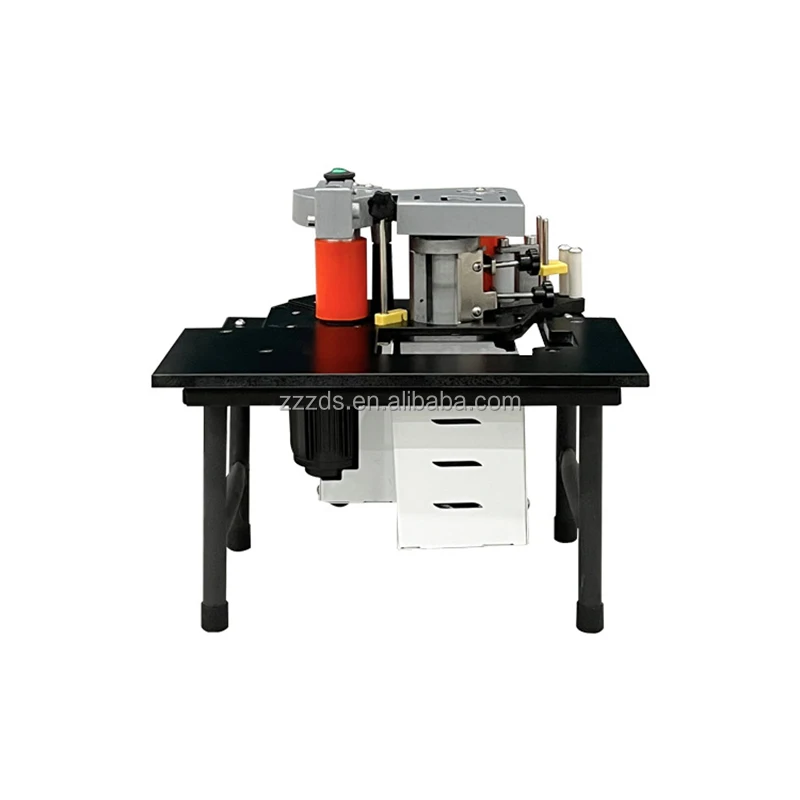
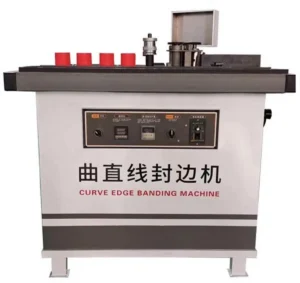
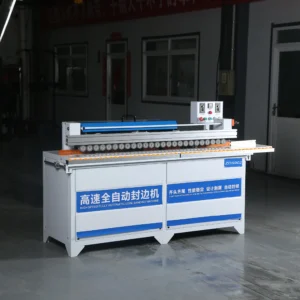
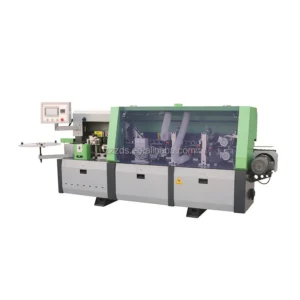
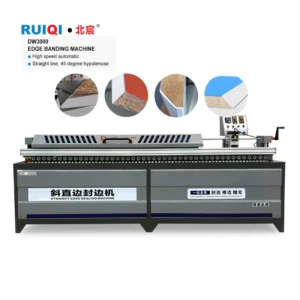
Built in-house with patented cutting mechanisms — every portable edge banding unit leaves our Ningjin facility with voltage verified against your local grid and logo customization applied before crate closure.
Technical Specifications
| Parameter |
Value |
| Product Type |
Portable Edge Banding Machine |
| Shape of Edge-banding Plates |
Curved, Straight and Special-shaped Sheet |
| Edge Thickness Range |
0.3–3mm |
| Edge Sealing Speed |
0–6 m/min |
| Edge Sealing Height |
7–60mm |
| Gluing Method |
Double-sided gluing |
| Glue Pot Volume |
1000ml |
| Machine Weight |
14kg |
| Plug Options |
EU / AU / UK / USA / CN |
| Logo Customization |
Available |
| Voltage & Frequency |
Configurable — confirm with manufacturer |
| Rated Power (kW) |
To be confirmed with manufacturer |
Application Suitability
| Application |
Material or Output |
| On-site joinery and small workshop edge sealing |
MDF and plywood panels with PVC edge banding |
| Curved and special-shaped furniture components |
Veneer and PVC banding stock 0.3–3mm thick |
| Cabinet door and drawer front finishing |
Particleboard and plywood substrates |
| Mobile installation and field repair work |
Compact panels requiring double-sided gluing |
Why Voltage Must Be Settled Before the Purchase Order
A portable edge banding machine quoted without confirmed local voltage arrives as dead weight on the workshop floor.
In my years placing equipment across Southeast Asian markets, I have watched distributors lose entire shipments because the supplier defaulted to 220V/50Hz while the destination grid runs 110V/60Hz. The motor hums, the glue pot never reaches bonding temperature, and the machine sits idle while a replacement is sourced weeks later [NEED_CITE: voltage and frequency standards by export market]. When you source a Portable Edge Banding Machine OEM factory direct, the electrical configuration should be the first line on the quotation, not an afterthought.
How OEM Production Translates to Market Fit
Regional distributors need a portable edge bander that carries their own brand and arrives ready for local electrical standards. Our manufacturing line handles custom logo application, branded packaging, and plug configuration matched to the destination country as standard steps in the production sequence. This means your catalogue can list a Portable Edge Banding Machine OEM factory configuration that your sales team can pitch without worrying about field-adapter failures or rewired plugs.
Private-Label Flexibility From a Dedicated Woodworking Facility
The production floor handles single-unit samples through to batch runs, with each unit moving through our four-stage QC sequence — incoming material check, in-process assembly inspection, finished product verification, and pre-shipment testing with factory test records. Distributors evaluating manufacturing depth can request sample processing tests on their preferred banding stock [NEED_CITE: CE machinery directive requirements for industrial equipment]. The 14kg machine weight keeps freight costs predictable across markets, and double-sided gluing ensures consistent adhesive coverage regardless of which operator runs the machine.
Reading the Specs That Actually Matter in Production
The 0.3–3mm edge thickness range covers standard PVC and veneer banding stock used in most panel furniture production, allowing one machine to handle multiple material types without changeover downtime. The 7–60mm edge sealing height accommodates typical panel thicknesses found in cabinet and shelving applications, though buyers should confirm their specific substrate dimensions before ordering. Double-sided gluing applies adhesive to both the panel edge and the banding material simultaneously, which matters when bonding to particleboard where single-sided application often leaves starved joints. The 0–6 m/min feed speed range allows operators to slow down for curved profiles where precision matters and speed up on straight runs where throughput counts.

What Happens When the Machine Arrives Without Documentation
Units that show up without an electrical schematic leave electricians guessing at wiring, and an operation manual in the wrong language means operators run the machine by feel rather than by specification [NEED_CITE: industrial equipment safety documentation requirements]. The glue pot overheats, banding delaminates within days, and the distributor spends weeks fielding complaints instead of selling. These are not defects — they are preventable gaps in the documentation chain that our pre-shipment verification process is designed to close.
Why Sourcing Here Reduces Distributor Risk
Our in-house manufacturing means specification changes are handled on the production floor rather than passed through a trading company. The Portable Edge Banding Machine OEM factory workflow includes voltage confirmation documents and factory test records generated before the crate is sealed. Private-label packaging and custom logo application are standard line items, not special requests that delay production. Engineer-led configuration means the quotation accounts for your market’s electrical standards and banding material preferences from the first draft, reducing the back-and-forth that stretches lead times.
Documentation & Verification
- Electrical schematic with voltage and frequency matched to your destination market
- Factory test record showing edge sealing performance on specified banding stock
- Operation and maintenance manual produced in the language your operators read
- Spare parts list with OEM part numbers for local inventory planning
- Packing photographs documenting machine condition before crate closure
- CE declaration of conformity where applicable to your market
Installation, Commissioning & Support
- Single-phase power supply required — confirm voltage and dedicated circuit before delivery
- 14kg unit requires no foundation; place on stable workbench in dry indoor environment
- Glue pot filled with appropriate hot-melt adhesive and heated to working temperature before first run
- Edge thickness and feed speed settings adjusted during commissioning for your specific banding stock
- Operators trained on double-sided gluing procedure and curved-profile feed technique
- Wear parts and consumables identified in spare parts list with reorder lead times confirmed
Before You Request a Quote
Send us the voltage and frequency standard for your market, the edge banding material types your customers most commonly use, and whether you need custom branding on the machine body and packaging. If you are evaluating this unit as part of a larger distributor catalogue, let us know the other models you carry so we can align documentation formats and spare parts logistics across your product range.
Frequently Asked Questions
Q: What OEM customization options are available for the portable edge bander?
A: Logo application on the machine body, custom color on select components, plug type matched to your market (EU/AU/UK/USA/CN), and private-label packaging are all configurable. Specify your branding requirements at quotation stage so production scheduling accounts for logo tooling and packaging print runs.
Q: How do you confirm voltage and frequency for our destination market?
A: Voltage and frequency are confirmed in writing before production begins. We provide an electrical schematic showing the exact configuration, and the factory test record verifies performance at that specification. This eliminates the common failure mode of machines arriving with incompatible electrical systems.
Q: What does the pre-shipment verification process include for portable units?
A: Each unit undergoes functional testing with your specified edge thickness and banding material. The factory test record documents glue temperature stability, feed speed performance, and bonding quality. Units are then photographed in packed condition with crate markings matching your shipping documentation.
Q: What spare parts ship with the machine, and how do we order replacements?
A: Standard spare parts and consumables are listed in the delivery documentation. For distributors maintaining local inventory, we provide OEM part numbers and lead times for reorders. Critical wear parts can be included in the initial shipment or ordered separately based on your service planning.
Q: Can specifications be tailored for regional safety and certification requirements?
A: Yes. Where your market requires specific safety standards or certification marks beyond CE, share the requirements at inquiry stage. Engineering reviews compatibility with the base machine design and confirms which modifications are feasible within production lead times.