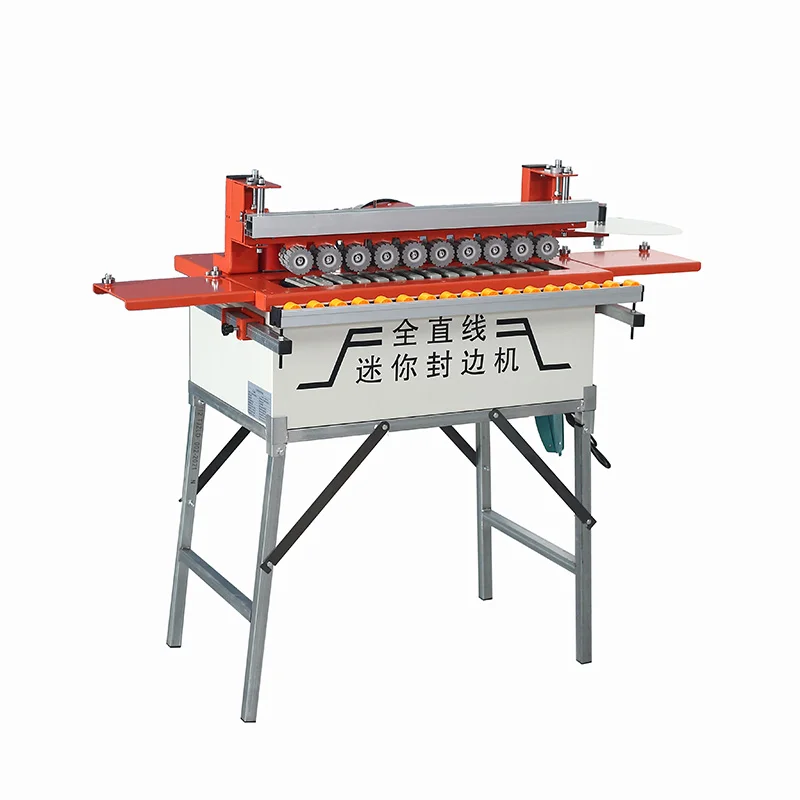
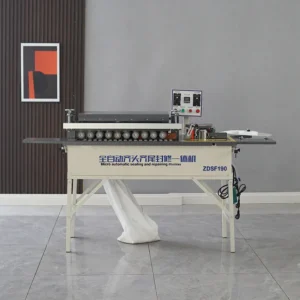
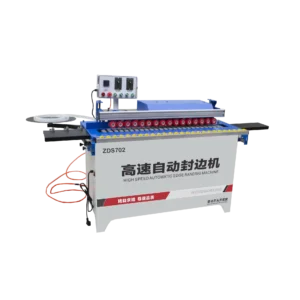
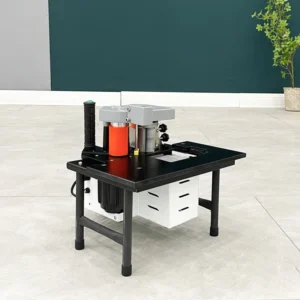
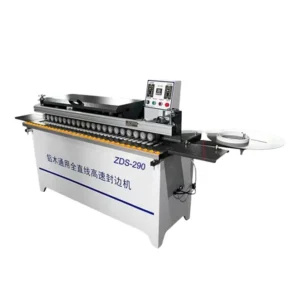
Precision Assembled Components — Every ZDS750 portable edge bander undergoes four-stage quality control from incoming material inspection through pre-shipment verification, ensuring distributors receive machines built to documented tolerances rather than catalog claims.
Technical Specifications
| Parameter |
Value |
| Model |
ZDS750 |
| Product Type |
Semi-Automatic Edge Banding Machine |
| Rated Voltage |
220V (configurable from 110V to 440V) |
| Heating Power |
800W |
| Plate Feeding Power |
60W |
| Belt Feeding Power |
25W |
| Edge Banding Speed |
0-6m/min |
| Rated Air Pressure |
0.4-0.6 MPa |
| Strip Thickness Range |
0.5-2mm |
| Sheet Thickness Range |
7-50mm |
| Glue Capacity |
1000ml |
| Heat-Up Time |
5-8 minutes |
| Widening Bracket Extension |
300mm |
| Overall Dimensions (L×W×H) |
120×50×50cm |
| Machine Weight |
50kg |
| Pressure Beam Construction |
One-piece aluminum alloy, double row of pressure wheels |
| Pressing Rollers |
2 elastic profiling pressing rollers |
| Curve Edge Banding |
Supported (gluing device rotates 180°) |
| Control Panel Design |
Inner recessed for special-shaped edge banding |
| Key Features |
Automatic tape breaking, bending and straightening, automatic board feeding, portable compact footprint |
Application Suitability
| Application |
Material or Output |
| Small joinery workshop production |
MDF, particleboard, and plywood panels for custom furniture |
| On-site curved panel edging |
Solid wood panels and shaped boards requiring 180° gluing head rotation |
| Startup furniture factory mechanization |
PVC and veneer edge banding strips from 0.5mm to 2mm thickness |
| Low-volume custom cabinet production |
Boards from 7mm to 50mm thickness with straight and curve capability |
| Mobile edge banding for installation sites |
Compact 50kg unit transported to job locations for finish carpentry |
Why Voltage Confirmation Must Precede the Purchase Order
Machines shipped without verified local electrical specifications arrive as dead weight, costing distributors weeks of delayed commissioning and frustrated end-users.
I watched a Middle Eastern customer wait three full weeks for a transformer retrofit because the voltage frequency was never confirmed before production. The semi-automatic edge bander sat in its crate while the workshop electrician sourced compatible equipment locally. That delay cost the distributor credibility that no discount could recover. Now every edge banding machine OEM factory order goes through electrical specification verification before the first component is pulled from inventory [NEED_CITE: voltage and frequency standards by export market]. The ZDS750 supports configuration from 110V to 440V, but that range only matters if the correct setting is documented on the electrical schematic and confirmed against the buyer’s local supply infrastructure.
Component Sourcing and Assembly Verification
The one-piece aluminum alloy pressure beam on the ZDS750 is machined in-house rather than sourced as a welded assembly, maintaining straightness tolerances that directly affect edge adhesion quality. This manufacturing decision gives the edge banding machine OEM factory control over a component that competitors often outsource without inspection documentation. Double-row pressure wheels distribute clamping force evenly across the strip width, preventing the localized pressure variations that cause visible glue lines on porous substrates like particleboard.
Private Label Capability and Distributor Configuration
OEM partners ordering the ZDS750 can specify custom logo placement, control panel language, and packaging that aligns with their regional brand positioning. The edge banding machine OEM factory produces units in single quantities through large production runs, with each configuration documented in the factory test record before shipment. Distributors building an entry-level product tier for joinery workshop customers benefit from this flexibility, stocking machines pre-configured for their market’s voltage standard and operator language rather than retrofitting after import [NEED_CITE: CE machinery directive requirements for industrial equipment].
Specification Interpretation for Production Reality
The 7-50mm sheet thickness range means this machine handles everything from thin cabinet shelving stock to thick worktop panels, but feed speed must be adjusted downward as board thickness increases to maintain glue transfer consistency. The 800W heating element reaches operating temperature in 5-8 minutes, which suits intermittent production schedules where the machine cycles on and off throughout the day rather than running continuous shifts. Strip thickness capability from 0.5mm to 2mm covers both thin veneer for visible furniture faces and thicker PVC for high-wear surfaces like kitchen cabinet edges. The 300mm stretchable bracket extension allows large-format panels to be supported without auxiliary tables, reducing the floor space requirement in compact workshops. Curve edge banding capability through 180° gluing device rotation means one machine platform handles both straight cabinet sides and arched headboard profiles.

The Hidden Cost of Underspecified Entry-Level Equipment
Distributors who stock edge banders without confirming the production volume expectations of their end-users face warranty claims that the machine was never engineered to support. The ZDS750 suits low-volume workshops transitioning from manual to mechanized edging, but pushing it into high-throughput environments leads to premature wear on the feed mechanism and inconsistent glue temperature recovery between boards. Buyers who discover tolerance claims only after panels fail assembly have no recourse when the specification sheet lacked verifiable measurement methods. Selecting equipment based on price alone, without matching throughput ratings to actual workshop demand, creates a cycle of machine replacement that erodes distributor trust [NEED_CITE: typical failure modes in underspecified woodworking machinery].
Manufacturing Depth That Supports Distributor Relationships
In-house machining of the pressure beam and pressing roller mechanisms means replacement parts remain available years after initial sale, supporting distributor after-sales service capability. Four-stage quality control covering incoming material, in-process assembly, finished product, and pre-shipment verification provides documentation that distributors can share with their own customers as confidence evidence. Voltage customization from 110V to 440V with confirmed electrical schematics eliminates the commissioning delays that damage distributor reputations in export markets. Engineer-led configuration recommendations ensure that the edge banding machine OEM factory ships units matched to the distributor’s documented customer requirements rather than generic stock specifications. Factory visits are welcomed, allowing distributor technical teams to verify manufacturing processes before committing to inventory purchases.
Documentation & Verification
- CE declaration of conformity for European market entry compliance
- ISO 9001 certificate covering manufacturing quality management systems
- Electrical schematic with confirmed voltage and frequency for your target market
- Factory test record documenting glue temperature stability and edge adhesion on your specified panel thickness
- Operation and maintenance manual in the agreed language for end-user training
- Spare parts list with part numbers supporting distributor inventory planning
Installation, Commissioning & Support
- Compact 120×50×50cm footprint requires minimal floor space allocation in small workshops
- 220V single-phase power connection with dedicated circuit recommended for heating element stability
- Portable 50kg weight allows two-person positioning without forklift equipment
- 0.4-0.6 MPa air supply connection required for automatic tape breaking and pressing roller actuation
- Initial heat-up cycle of 5-8 minutes before first board run to stabilize glue temperature
- Elastic profiling pressing rollers inspected and adjusted during factory pre-shipment verification
Inquiry Guidance for Production Matching
Provide your target customer profile including typical board materials, panel thickness range, and expected daily production volume so we can confirm this model suits your market segment. Specify the local voltage and frequency standard for your territory, along with preferred control panel language for operator accessibility. Indicate whether you require custom logo application, branded packaging, or specific documentation formats for your import compliance requirements.
Frequently Asked Questions
Q: What OEM customization options are available for distributor branding and market adaptation?
A: Custom logo placement, voltage configuration from 110V to 440V, multilingual control panels, and branded packaging are all available. Each customization is documented in the production specification sheet and verified during pre-shipment inspection. Single-unit orders through bulk production runs are supported, allowing distributors to test market response before committing to inventory volumes.
Q: How does the four-stage quality control process verify edge banding performance before machines ship?
A: Incoming material inspection verifies aluminum alloy beam straightness and pressing roller elasticity. In-process checks confirm glue pot heating element function and feed motor speed consistency. Finished product testing runs actual board samples through complete edge banding cycles. Pre-shipment verification documents glue temperature stability, strip adhesion quality, and automatic tape breaking function on the specific unit being exported.
Q: What manufacturing lead time should distributors plan for single-unit versus bulk OEM orders?
A: Single-unit OEM orders with custom voltage and logo specifications follow typical multi-week production schedules including quality control verification at each stage. Bulk production runs benefit from component batching efficiencies but still maintain individual unit testing through all four QC stages. Distributors planning seasonal inventory builds should confirm current production queue status when placing orders.
Q: How does component sourcing depth on this portable model compare to full-function automatic edge banders?
A: The one-piece aluminum alloy pressure beam and elastic pressing rollers are machined in-house on the ZDS750, matching the manufacturing control applied to larger models. The difference lies in automation complexity rather than component quality standards. Distributors can assure customers that portable models receive the same inspection documentation and tolerance verification as full-production-line equipment.
Q: What spare part support and technical training is provided to distributor service teams?
A: A complete spare parts list with numbered components supports distributor inventory planning for common wear items. Technical documentation includes electrical schematics, assembly diagrams, and troubleshooting guides in the agreed language. Distributor service teams can arrange factory training visits to observe assembly procedures and learn diagnostic techniques for field support calls.