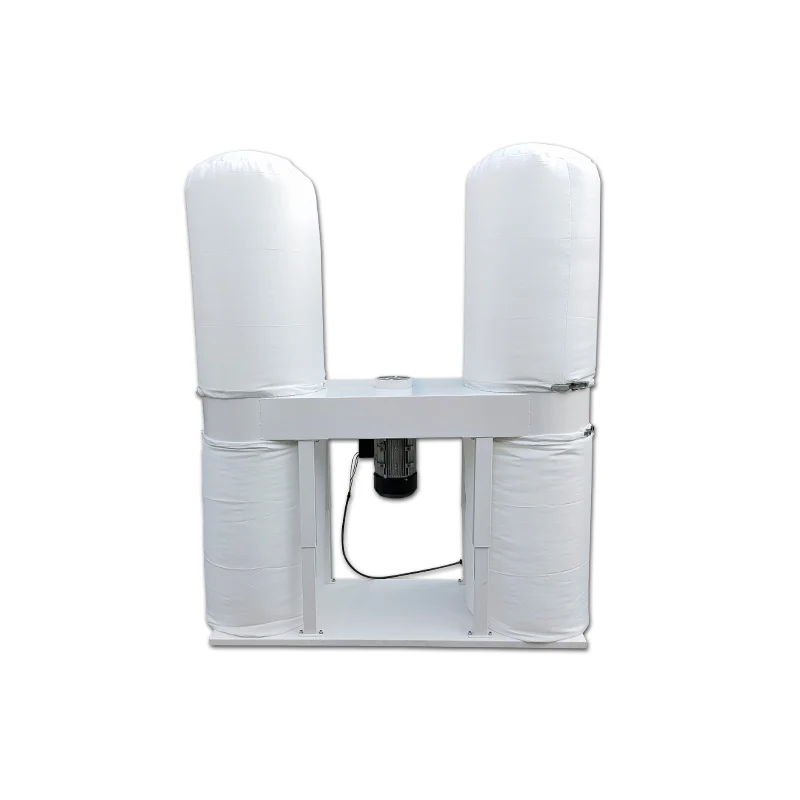
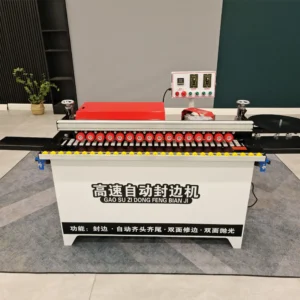
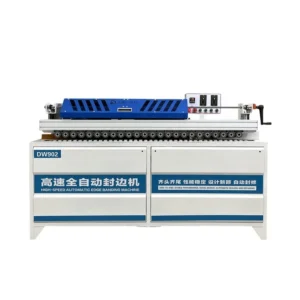
Integrated Auxiliary Equipment Sourcing — Dust extraction systems manufactured alongside the primary woodworking machines they serve, eliminating port mismatches and airflow incompatibilities that plague piecemeal procurement.
Technical Specifications
| Parameter |
Value |
| Product Type |
Woodworking Dust Collector |
| Filtration Method |
Bag filter with diversion device for large particle separation |
| Dust Collection Mechanism |
Mobile bag inlet, gravity hopper for coarse chips, fabric bags for fine dust |
| Voltage & Frequency |
Customizable plug options (EU, USA, AU, UK); exact voltage and frequency to be confirmed |
| Language Options |
Chinese and English standard; Spanish, French, and other languages customizable |
| OEM/Customization |
Custom logo printing and build-to-drawing production supported |
| Packing |
Wooden box packaging |
Application Suitability
| Application |
Material or Output |
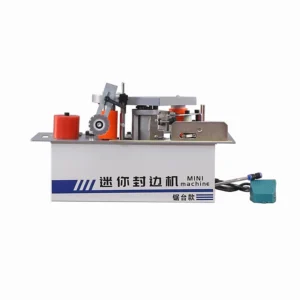
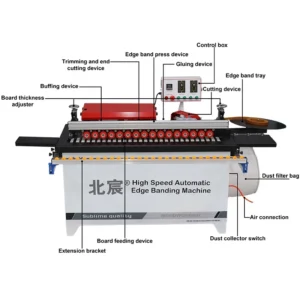
| Edge banding station dust extraction |
PVC, veneer, and ABS edge banding trim waste and adhesive particulate |
| Sliding table saw and panel saw chip removal |
MDF, plywood, particleboard, and solid wood sawdust and offcuts |
| Slotting and boring machine cleanup |
Fine bore dust and routed groove debris from panel processing |
| Small workshop general extraction |
Mixed wood dust from multi-station joinery and furniture assembly |
Why Port Sizing Matters More Than Horsepower
A dust collector mismatched to the machine’s extraction port diameter will underperform regardless of motor rating. When I first started specifying extraction systems for overseas panel plants, I watched a high-capacity collector fail to keep up with a single sliding table saw — not because the fan was undersized, but because the connecting duct was choked down to fit a smaller port adapter. The Woodworking Dust Collector OEM manufacturer you select should verify port compatibility across every machine in your line before building the unit [NEED_CITE: industrial dust extraction duct sizing standards for woodworking]. Buying the collector from the same factory that builds your edge banders and saws means the port diameters, static pressure requirements, and airflow volumes are already engineered to match. This eliminates the guesswork that leaves fine MDF dust settling on finished panels and clogging downstream filter media within days of startup.

Single-Source Compatibility Across the Production Line
Auxiliary equipment is often an afterthought in factory planning, sourced separately once the primary machines are installed. This fragmented approach creates friction at every junction — adapters that leak, hose runs that restrict flow, and static pressure drops that leave fine particulate airborne. When the Woodworking Dust Collector OEM manufacturer also produces the edge banders, sliding table saws, and slotting machines the collector serves, the extraction specifications are designed as a unified system. Port diameters align without reducers. Airflow calculations account for the actual chip volume and dust fineness each machine generates. The result is a dust extraction setup that performs as intended from the first shift, not one that requires field modifications and replacement ductwork after commissioning.
Private-Label and Build-to-Drawing Capability
For distributors and importers building a branded equipment portfolio, the ability to source dust collectors with custom branding from the same factory supplying primary machines simplifies the supply chain considerably. Logo printing, custom color schemes, and documentation carrying your brand identity are standard OEM options. Build-to-drawing production is available when standard configurations do not fit the target market’s requirements — whether that means adapting the hopper geometry for a specific panel thickness range or configuring the control panel in the local language. The engineering team reviews drawings and confirms manufacturability before production begins, reducing the back-and-forth that delays container loading [NEED_CITE: OEM manufacturing documentation requirements for industrial equipment exports].
Filtration Design and Airflow Distribution
The bag filtration system uses a diversion device at the inlet to separate large chips and coarse particles before they reach the filter media. Heavy debris falls directly into the hopper under gravity, while fine dust is carried upward and captured on the bag surfaces. This pre-separation extends the service interval for bag cleaning and replacement — a practical advantage in high-volume MDF processing where fine flour-like dust can blind filter fabric rapidly. The multi-warehouse bag layout distributes airflow evenly across all filtration zones, preventing localized overloading that reduces suction at the furthest machine port. Bag filter systems of this type are standard in woodworking applications where dry dust is the primary contaminant and where wet extraction methods would introduce moisture into panel substrates [NEED_CITE: bag filter versus cartridge filter selection for fine wood dust]. The diversion device specifically addresses the problem I encountered early in my career: a central system specified for standard particleboard failing catastrophically when the client switched to high-density MDF, because the finer dust loaded the filter media far faster than the original design anticipated.
The Cost of Overlooking Extraction During Line Planning
Dust collectors specified after the primary machines arrive often end up undersized, with insufficient static pressure to pull fine dust from the furthest extraction point. I have seen workshops where operators disabled dust hoods on slotting machines because the collector could not maintain suction across three simultaneous stations — creating an airborne dust hazard and leaving residue that interfered with adhesive bonding on the edge bander downstream. The rework costs from contaminated glue lines and the health implications of respirable MDF dust are not typically factored into equipment purchase decisions [NEED_CITE: occupational exposure limits for wood dust in furniture manufacturing]. Sizing the collector correctly from the start, based on the actual machines and materials in the production plan, avoids these compounding operational failures.
Why Procurement Depth Matters for Auxiliary Equipment
The manufacturing facility covers 10,000 square meters with engineering and production teams dedicated to the full woodworking machine range — not just primary processing equipment. A four-stage quality control process covers incoming material inspection, in-process assembly checks, finished product verification, and pre-shipment testing, applied to dust collectors with the same rigor as CNC panel saws. Patented cutting mechanisms on the primary machine line inform how extraction ports and dust volumes are specified for auxiliary equipment. Voltage and plug customization is confirmed against the destination market’s electrical standards before the motor is wound, preventing the scenario where a 380V unit arrives at a 220V facility. Factory visits are welcomed, and clients are encouraged to witness the pre-shipment test on their specific dust collector before it is crated for export.
Documentation & Verification
- CE declaration of conformity covering the dust collector product line and motor assembly
- ISO 9001 certificate applicable to auxiliary equipment manufacturing processes
- Electrical schematic and voltage confirmation document matching your local grid specification
- Factory test record with photographs showing filtration performance before crating
- Operation and maintenance manual in the agreed language with spare parts list
- Packing photographs and customs documentation support for wooden box export shipment
Installation, Commissioning & Support
- Foundation requirements depend on hopper capacity and bag filter height — confirm floor loading before placement
- Dedicated electrical circuit required matching the confirmed voltage and frequency specification
- Unit ships fully assembled in wooden crate — position and connect ductwork to machine extraction ports
- First-run commissioning includes verifying airflow balance across all connected machine stations
- Filter bag inspection and cleaning schedule established based on your specific panel material mix
- Spare filter bags and diversion hopper wear parts available through the same supply channel as primary machine components
Before You Request a Quote
To specify the correct dust collector configuration, we need to know which woodworking machines it will serve and the materials being processed — MDF, particleboard, plywood, or solid wood each generate different dust profiles. Confirm your local voltage and frequency so the motor can be wound to match. If you are planning a complete production line, share the machine list so extraction ports and total airflow can be calculated as an integrated system rather than an afterthought.
Frequently Asked Questions
Q: What can be customized under the OEM and private-label arrangement?
A: Logo placement, unit color, control panel language, and documentation branding are all configurable. Build-to-drawing production is supported when standard hopper or bag configurations do not match your market requirements. The engineering team reviews custom specifications and confirms feasibility before production scheduling begins.
Q: How is the dust collector matched to specific woodworking machines?
A: Each machine model in the product range has known extraction port diameters and airflow requirements. The collector is sized based on how many stations it serves simultaneously and the dust fineness your materials produce. This ensures static pressure is sufficient at the furthest port under normal operating conditions.
Q: How do you confirm voltage and plug compatibility before production?
A: Your local voltage, frequency, and plug type are confirmed during the quotation stage and documented in the electrical schematic. The motor is wound and the control panel configured to match before assembly. This prevents the situation where equipment arrives and cannot be powered without an external transformer.
Q: What spare parts support is available for distributors?
A: Replacement filter bags, hopper wear components, and diversion device parts are stocked and available through the same ordering channel as primary machine spares. Technical training on bag replacement and system maintenance can be arranged for your service team during factory visits or via remote guidance.