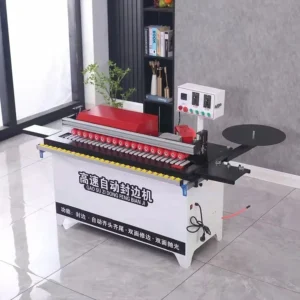
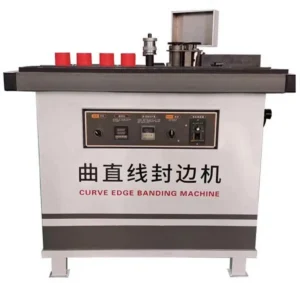
In-house manufacturing depth — every portable edge banding machine leaves our Ningjin facility with voltage verified against the buyer’s local grid, eliminating the field failures we used to see when specifications were assumed rather than confirmed.
Technical Specifications
| Parameter |
Value |
| Product Type |
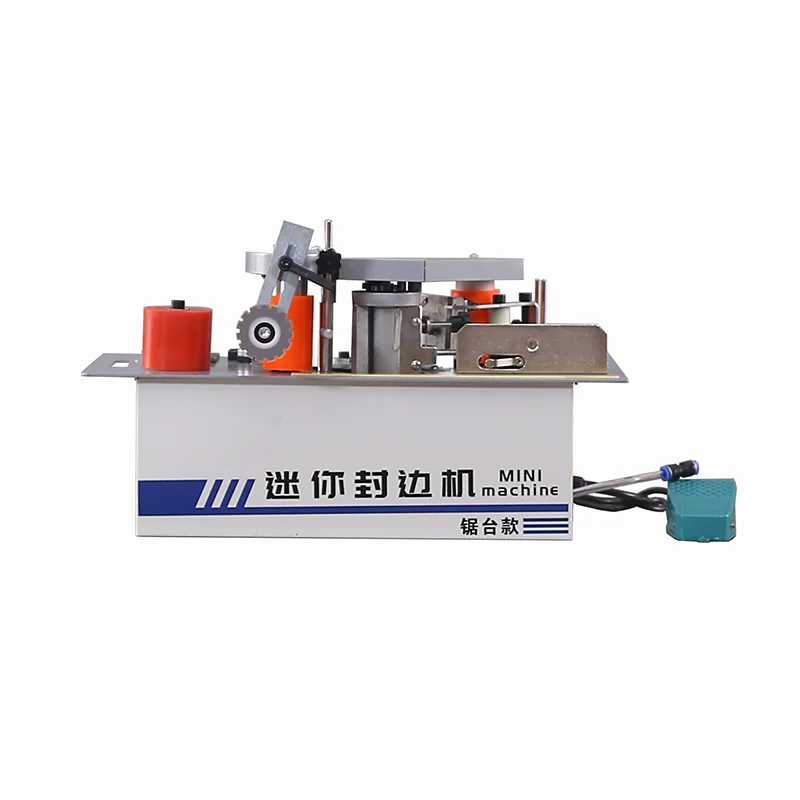
Portable Automatic Edge Banding Machine |
| Voltage |
220V (configurable from 110V to 440V) |
| Rated Power |
825W |
| Air Pressure Requirement |
0.4–0.6 MPa |
| Glue Pot Capacity |
1000ml |
| Heating Time |
5–10 min |
| Feed Speed |
0–10 m/min |
| Edge Pattern Capability |
Curves, straight lines, special shaped lines |
| Overall Dimensions (L×W×H) |
50×30×27 cm |
| Net Weight |
13.5 kg (source value — verify against manufacturer catalog) |
| Trimming Stations |
Corner trimming |
| Assembly State |
Assembly required (KD packing for some parts) |
Application Suitability
| Application |
Material or Output |
| Small workshop edge banding |
MDF, particleboard, plywood panels |
| On-site furniture installation finishing |
Solid wood and veneered substrates |
| Curved and shaped panel edges |
PVC and veneer edge banding strips |
| Low-volume repair and rework |
Pre-cut panels requiring fresh edge treatment |
| Corner trimming operations |
Completed edge-banded panels |
Why the Voltage Question Must Come Before the Quotation
Confirming local voltage and frequency at the inquiry stage prevents the most expensive mistake in portable edge banding machine OEM sourcing.
I watched a small automatic edge bander ship to West Africa with 380V wiring because nobody checked. The customer connected it to a 220V single-phase supply. The control board burned out within minutes. A replacement board took three weeks to arrive by courier, and the workshop sat idle the entire time. That is not a manufacturing defect — it is a process failure. [NEED_CITE: common causes of electrical failure in exported machinery]
When a distributor stocks a portable edge bander configured for the wrong grid, every unit in that batch becomes a liability. The portable edge banding machine OEM conversation has to start with voltage, frequency, and plug type before anyone discusses feed speed or glue pot size.
Sourcing the Build, Not Just the Brand
A portable edge banding machine OEM arrangement means the distributor is buying manufacturing capability, not just a finished product off a shelf. Our facility builds the cutting mechanism in-house under proprietary patents, and that same mechanism goes into every unit whether it ships under our name or yours. The precision-ground components pass through a four-stage inspection before assembly. For a distributor evaluating a new product line, the question is whether the factory controls its own tolerances or assembles purchased sub-components.
What Private Label Actually Involves
OEM marking on a portable edge bander covers more than a logo plate. We configure the control panel language to match the end-user market, adjust the voltage and frequency at the motor and transformer level, and prepare documentation in the target language. A distributor placing a first trial order can request a single unit with full branding and specification alignment to validate the market before committing to a larger run. [NEED_CITE: typical OEM customization scope for small woodworking machinery]

How Feed Speed, Glue Pot, and Air Pressure Interact on the Shop Floor
The 0–10 m/min feed speed range on this portable edge banding machine is deliberately wide because curved edges require slower feed than straight runs. At the lower end of the range, the operator can follow a tight radius without the band lifting. The 1000ml glue pot reaches working temperature in 5–10 minutes, which matters when a carpenter needs to band a single replacement panel on a job site rather than running a production batch. The 0.4–0.6 MPa air pressure requirement falls within what a standard workshop compressor delivers, so there is no need for a dedicated air supply. The corner trimming station handles the end cuts that would otherwise require a separate hand tool. Together, these specifications define a machine meant for intermittent use across varied edge profiles, not continuous production-line duty.
The Hidden Cost of Skipping Factory Verification
A distributor who orders a batch of portable edge banders based on a catalog page alone may discover on arrival that the actual glue application pattern differs from what was demonstrated. The edge banding material may not adhere properly to certain substrates because the glue temperature range was never matched to the banding stock the distributor plans to sell. I have seen portable machines arrive with control panels in a language the local technicians cannot read, delaying commissioning until someone translates the interface. [NEED_CITE: import machinery documentation requirements by market] These problems are not defects — they are specification gaps that a pre-shipment factory test would have caught.
What Manufacturing Depth Means for Your Order
Our four-stage quality control covers incoming material, in-process assembly, finished product, and pre-shipment verification. Every portable edge banding machine we build is tested on actual panel stock before crating.
Voltage and frequency are confirmed against the buyer’s written specification and photographed at the terminal block before the enclosure is closed.
OEM logo placement, private label artwork, and custom packaging are handled within the same production run rather than outsourced to a third-party printer.
Factory test records include the specific panel thickness and edge banding material used during verification, giving the distributor documentation they can pass to their own customers.
Documentation & Verification
- CE declaration of conformity covering the portable edge bander’s electrical and mechanical safety scope
- Factory test record showing glue temperature and edge adhesion on your specified panel material
- Electrical schematic with voltage and wiring confirmed against your local grid standard
- Operation manual translated into the language your end-user market requires
- Pre-shipment packing photographs showing your OEM branding and crate condition
Installation, Commissioning & Support
- 825W rated power draws from a standard single-phase outlet; no dedicated circuit required in most workshop installations
- Compact 50×30×27 cm footprint fits on a standard workbench without floor anchoring
- KD packing requires on-site assembly of feed table and glue pot housing before first use
- Initial 5–10 minute heating cycle should run without banding material to verify glue flow temperature
- Corner trimming adjustment requires a test panel in your actual substrate thickness before production use
- Air connection at 0.4–0.6 MPa needs a standard workshop hose and quick-connect fitting
What We Need to Prepare Your Quotation
Send us the target market voltage and frequency so we can confirm motor and transformer configuration. Tell us which edge banding materials your customers use most — PVC, veneer, or melamine — so we can set the glue pot temperature range accordingly. If you are evaluating this machine for private label distribution, let us know your branding requirements and the order quantity you are considering for the first production run.
Frequently Asked Questions
Q: What OEM and private label customization is available for this portable edge bander?
A: We apply your logo, configure the control panel to your target language, and adjust all documentation to your branding requirements. Voltage and plug type are set to your destination market before production begins. A single sample unit can be produced with full OEM marking so you can evaluate the finished product before committing to a larger batch order.
Q: Can voltage and frequency be customized for my target market before production?
A: Yes. We configure from 110V to 440V based on your written specification. Every unit is tested at the configured voltage before dispatch, and we photograph the terminal wiring and nameplate for your records. This verification step exists because we have seen machines destroyed in the field when voltage was assumed rather than confirmed at the order stage.
Q: How is manufacturing quality verified before shipment?
A: Our four-stage process covers incoming material inspection, in-process assembly checks, finished product testing, and pre-shipment verification. For this portable edge bander, the pre-shipment stage includes a live edge banding test on panel material matching your specification. We record the results and share them with you before the machine is crated.
Q: Can I visit the factory or request a sample processing test before placing a bulk order?
A: Factory visits are welcome at our Ningjin facility, and we can run your specific edge banding material and panel stock on the machine during your visit. If travel is not practical, we conduct the sample test remotely and provide video and photographs of the edge quality, glue line, and corner trimming result on your material.