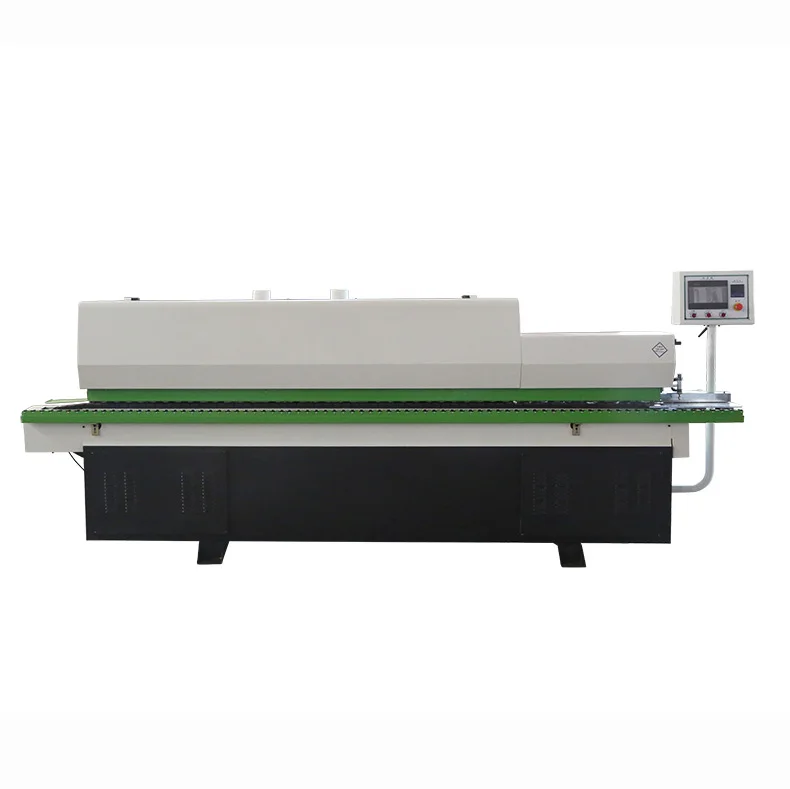
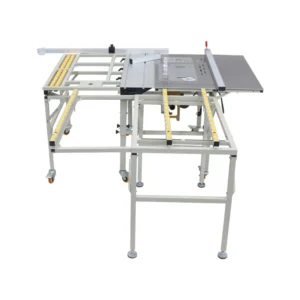
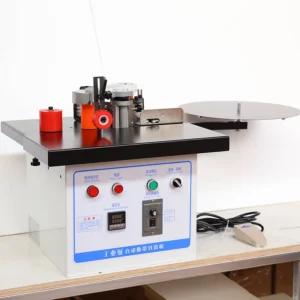
In-house assembly with named components — every cylinder, motor, and guide rail on the ZDS368A is sourced from traceable brands, not anonymous bulk suppliers, so a distributor opening the panel door can verify exactly what is inside.
Technical Specifications
| Parameter |
Value |
| Product Type |
Automatic Edge Banding Machine |
| Model |
ZDS368A |
| Main Functions |
Gluing, End trimming, Rough trimming, Fine trimming, Scraping, Buffing |
| Working Pressure |
0.6-0.8 MPa |
| Panel Thickness Range |
10-55 mm |
| Edge Thickness Range |
0.3-3.5 mm |
| Conveyor Belt Speed |
18 m/min |
| Min. Panel Width / Length |
40 mm / 60 mm |
| Voltage |
380V-3HP (configurable from 110V to 440V) |
| Rated Power |
8.5 kW |
| Net Weight |
1500 kg |
| Overall Dimensions (L×W×H) |
4200×1000×1500 mm |
| Frame Construction |
14mm national standard high-strength steel plate, frame-type structure, high-temperature quenching treatment |
| Conveyor Guide Rail Material |
HT260 cast iron |
| Conveying Motor |
Customized Taiwan brand with thermal protection system |
| Head Guide Rail |
Taiwan brand |
| Pneumatic System |
German Festo or Taiwan AirTAC cylinder and safety valve, AirTAC magnetic switch |
| Electrical Components |
Delixi/Chint air switches and contactors, Japanese Omron travel switches |
| Key Features |
In-house manufacturing, four-stage QC, full OEM and private label capability |
Application Suitability
| Application |
Material or Output |
| Custom cabinet door production |
MDF and particleboard with PVC or ABS edge banding (0.3-3.5 mm) |
| Panel furniture factory lines |
Melamine-faced chipboard requiring end, rough and fine trimming |
| Workshop joinery output |
Plywood shelving and solid wood panel components up to 55 mm thick |
| Contract furniture manufacturing |
High-volume runs of desks and wardrobes with consistent edge finish |
Why the Tolerance Claim Matters When Panels Reach the Assembly Bench
A stated tolerance is only as valuable as the verification process behind it, and that verification must happen before the machine leaves the factory floor.
Distributors who import woodworking machinery face a specific risk: panels processed on the edge bander pass visual inspection at the machine, but fail at the assembly station when drilled holes and dowel joints do not align within acceptable gaps. This misalignment often traces back to frame flex or guide rail wear that accumulates over production hours, not to a single visible defect. An automatic edge banding machine OEM factory that controls its own quenching process and precision grinding can document the tolerance chain from raw steel to finished panel, rather than passing a trading company’s general claim [NEED_CITE: edge banding tolerance verification standards for panel furniture assembly].
Sourcing Depth That a Distributor Can Audit
When a regional distributor evaluates whether to add an edge bander to their catalogue, the question is not only what the machine does today but whether its component supply chain will hold up across container-load orders. The ZDS368A is built on a frame-type structure using 14mm high-strength steel plate that undergoes high-temperature quenching, a process that stabilizes the frame against long-term deformation under continuous production loads. Every automatic edge banding machine OEM factory claims rigidity; here the distributor can visit the quenching line and inspect the weld seams before the frame enters assembly.
Pneumatic and Electrical Traceability for After-Sales Confidence
The pneumatic circuits use German Festo or Taiwan AirTAC cylinders paired with AirTAC magnetic switches, and the electrical panel is populated with Delixi or Chint contactors and Japanese Omron travel switches. For a distributor’s service team, this means replacement parts are available through established industrial channels in most markets rather than requiring a proprietary spares shipment. Component traceability also simplifies warranty diagnosis — when a station misfires, the technician identifies a specific brand and model of cylinder rather than an unmarked part [NEED_CITE: industrial pneumatic component availability across Southeast Asian and Middle Eastern markets].
How Feed Speed and Trim Stations Interact on the Shop Floor
The 18 m/min conveyor belt speed, driven by a Taiwan-brand motor with thermal protection, sets the tempo for all six downstream stations. At this feed rate, the glue application window, end trimming cut, and fine trimming pass each have a fixed dwell time against the panel edge. The HT260 cast iron guide rail maintains lateral stability so the trimming cutters engage the banding material at a consistent depth. For PVC edge banding at the thicker end of the 0.3-3.5 mm range, the operator may adjust conveyor speed downward to allow the scraping and buffing stations sufficient contact time, a trade-off that the fixed-speed specification does not capture but the variable-frequency drive accommodates in practice. Panel thickness from 10 mm to 55 mm means the same machine handles thin drawer sides and thick worktop panels without a guide rail changeover.

What Happens When a Distributor Skips the Voltage Conversation
Machines quoted without confirming local voltage and frequency arrive at the port unusable — a 380V-3HP unit shipped to a market running 220V three-phase will not start, and rewinding the motors on-site costs more than the original freight. Beyond voltage, the control panel language matters: an operator who cannot read the station labels will stall commissioning while the distributor scrambles for translated decals. These are not engineering failures but configuration failures, and they happen when the seller is a trader who never asked the factory to check the destination market’s electrical standards before production began [NEED_CITE: voltage and frequency standards by export market].
Why a Distributor Sources This Model Here
The manufacturing process is visible: frame welding, quenching, precision grinding of the HT260 rail, and four-stage QC from incoming material through pre-shipment verification. OEM customization extends to logo placement, control panel language, and voltage specification from 110V to 440V as standard configuration rather than a special request. The product family includes entry-level through full-function models, so a distributor can offer customers a growth path without introducing a second supplier. Engineer-led configuration recommendations are formalized within 24 hours, giving the distributor a documented basis for their own quotation to end buyers. Factory visits are welcomed at any stage, allowing the distributor’s technical team to witness assembly and test procedures firsthand.
Documentation & Verification
- CE declaration of conformity referencing the ZDS368A model and its specific safety components
- ISO 9001 certificate covering the manufacturing and QC process for this unit
- Electrical schematic with confirmed voltage and frequency for the destination market
- Factory test record run on the buyer’s specified panel thickness and edge banding material
- Operation and maintenance manual produced in the language agreed at order confirmation
- Spare parts list identifying brand and model numbers for each replaceable component
Installation, Commissioning & Support
- Foundation requires level concrete floor accommodating 4200×1000 mm footprint with access clearance on both long sides
- Dedicated 380V three-phase circuit rated for 8.5 kW continuous draw with confirmed frequency match
- Machine ships as a single skid unit; guide rails and trimming heads are pre-aligned at the factory
- First-run commissioning includes station-by-station parameter adjustment for the specific edge banding material in use
- Operator training covers conveyor speed adjustment, glue pot temperature settings, and cutter replacement intervals
- HT260 guide rails require periodic lubrication per the maintenance schedule; spare Festo cylinders listed in the parts manual
What to Include in Your Inquiry
Provide the panel materials and edge banding types your customers process most frequently, along with the local voltage and frequency standard. Specify whether your market requires a particular control panel language or custom branding on the machine enclosure. If you plan to conduct a sample processing test before committing to a container order, send representative panel and banding samples so the factory can run the ZDS368A under conditions that mirror your end users’ workshops.
Frequently Asked Questions
Q: What can be customized under an OEM or private label agreement?
A: Logo placement on the machine body, enclosure color, voltage and frequency configuration from 110V to 440V, and control panel language are all available as standard OEM options. The factory provides updated artwork proofs and electrical schematics reflecting your specifications before production begins, so there are no surprises when the unit arrives at your warehouse.
Q: Can I arrange a factory audit or sample test before placing a bulk order?
A: Factory visits are welcomed to inspect frame welding, the quenching process, and the assembly line. For sample processing tests, send your actual panel stock and edge banding material so the ZDS368A runs under realistic conditions and you can evaluate trim quality and edge adhesion on your own substrates.
Q: How do I verify the component brands on my specific machine?
A: Every Festo or AirTAC cylinder, Omron travel switch, and Taiwan-brand motor carries its own manufacturer label, and the electrical schematic lists each component by brand and model. During the pre-shipment inspection, you or your appointed third-party inspector can photograph these labels against the packing list and parts manual.
Q: Is there a minimum order quantity for OEM-configured units?
A: Single-unit orders are accepted for stock configurations, and OEM customization including logo and voltage is available from small runs through container-load quantities. The engineering team provides a formal quotation within 24 hours of receiving your specification, so you can compare the cost structure across different order volumes.
Q: What inspection records accompany the machine at shipment?
A: Each ZDS368A ships with a pre-shipment test record documenting performance on the agreed panel thickness and banding material, along with packing photographs, the electrical schematic, and a signed QC checklist covering all four inspection stages from incoming material through final verification.