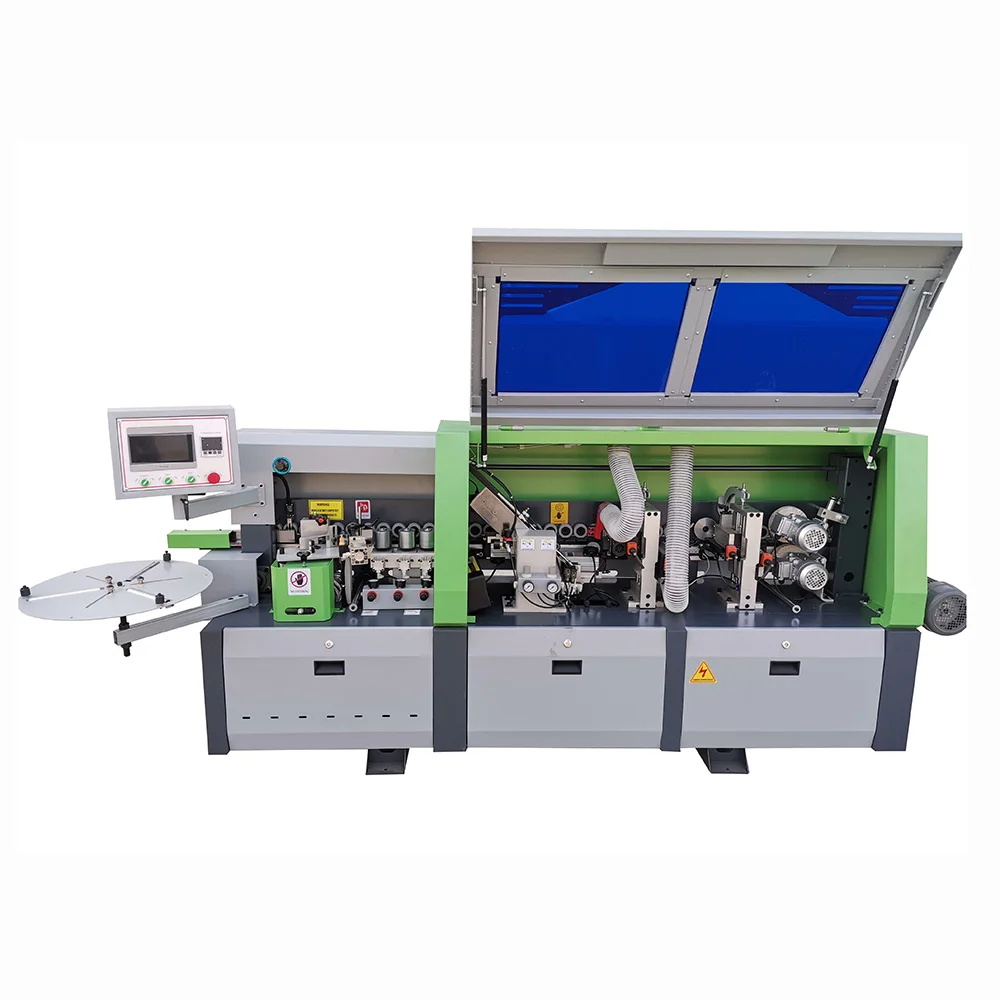
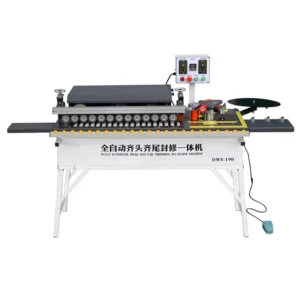
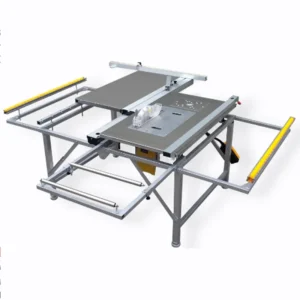
Verified Tolerance Before Dispatch — every ZDS280D edge bander leaves our Ningjin facility only after passing a four-stage inspection against its ±0.02 mm target, with documented test records specific to your panel material.
Technical Specifications
| Parameter |
Value |
| Model |
ZDS280D |
| Product Type |
Automatic Edge Banding Machine |
| Main Functions |
Gluing, End Trimming, Fine Trimming, Scraping, Buffing |
| Rated Power |
7.5 kW |
| Voltage & Frequency |
380V, 3-phase (configurable from 110V to 440V for OEM orders) |
| Feed Speed |
15 m/min |
| Panel Thickness Range |
10–55 mm |
| Edge Thickness Range |
0.4–3 mm |
| Minimum Panel Width |
60 mm |
| Minimum Panel Length |
150 mm |
| Working Pressure |
0.6–0.8 MPa |
| Conveyor Guide Rail Material |
HT260 |
| Fuselage Structure |
14 mm national standard high-strength steel plate, frame-type, high-temperature quenching treatment |
| Conveying Motor |
Customized Taiwan brand with thermal protection system |
| Control Components |
Delixi/Chint air switches and contactors, Japanese Omron travel switches |
| Pneumatic System |
German Festo or Taiwan AirTAC cylinders with safety valve and magnetic switch |
| Overall Dimensions (L×W×H) |
3100 × 700 × 1400 mm |
| Net Weight |
700 kg |
| Assembly State |
Fully assembled, KD packing for select spare parts |
Application Suitability
| Application |
Material or Output |
| Custom cabinet door edge banding |
MDF and particleboard with 0.4–3 mm PVC edge banding |
| Panel furniture production |
Plywood panels with melamine or veneer edge strips |
| Workshop-scale batch runs |
Solid wood panels requiring fine trimming and scraping |
| Regional distributor stock orders |
Fully assembled units configured to local voltage before container loading |
Why the Voltage Question Must Come Before the Purchase Order
A machine that cannot be powered on arrival is not a delayed project — it is a stranded asset sitting in a bonded warehouse while you source a transformer.
I worked assembly on the floor here in Ningjin before moving to technical sales, and one of the first overseas orders I handled went to a cabinet factory in the Middle East. The contract was signed, the container shipped, and three weeks later we got a call: their site ran on a different frequency than what the machine was wired for. The factory spent those weeks arranging a transformer retrofit while the machine sat under plastic wrap. Since that job, I have made it a rule on every quotation — send me a photo of your breaker panel and the local frequency before I confirm the build sheet. The ZDS280D Automatic Edge Banding Machine factory OEM build process now treats voltage confirmation as a locked gate in the sales sequence, not a footnote. Buyers who skip this step on any Automatic Edge Banding Machine factory OEM sourcing decision risk the same three-week standstill [NEED_CITE: voltage and frequency standards by export market].

Inside the Fuselage Build
The ZDS280D starts with a 14 mm high-strength steel plate welded into a frame-type fuselage, then put through high-temperature quenching to relieve internal stresses. This matters because edge banding at 15 m/min generates continuous vibration along the feed path, and a fuselage that flexes under that load will push trimming tools off their calibrated positions. Every Automatic Edge Banding Machine factory OEM partner we work with can specify the quenching cycle documentation as part of their quality file.
Precision Components That Stay Specified, Not Substituted
The conveyor guide rail is cast from HT260, a grade selected specifically for its damping characteristics under sustained load. The pneumatic cylinders are sourced as German Festo or Taiwan AirTAC — not generic alternatives swapped in when supply is tight. For OEM partners building a private-label line, the bill of materials is locked to the quotation so your service team knows exactly what to stock for regional warranty claims. Component traceability is documented at each of our four QC stages [NEED_CITE: CE machinery directive requirements for industrial equipment].
Reading the Specs That Actually Affect Edge Quality
Panel thickness range of 10–55 mm means this machine handles everything from thin cabinet side panels up to thick worktop substrates, but the feed speed stays fixed at 15 m/min across that entire range. Thicker panels carry more inertia into the trimming stations, so the HT260 rail and the customized Taiwan-brand conveying motor with thermal protection work together to keep feed consistent without chatter marks on the trimmed edge. The 0.4–3 mm edge thickness range covers standard PVC and thin veneer strips, and the five-function sequence — gluing, end trimming, fine trimming, scraping, buffing — is the configuration that cabinet makers typically need for a clean, glue-line-free finish on visible door and drawer fronts. Working pressure of 0.6–0.8 MPa must be supplied by a dedicated compressor line; sharing a line with spray guns or other pneumatic tools will cause pressure drops that show up as uneven scraping depth.
What Happens When Configuration Gets Skipped
A distributor once ordered an edge bander from a different supplier without confirming the control panel language. The machine arrived, the operator could not read the fault codes, and commissioning stalled for days while a translator was brought in. We have also seen workshops buy a single machine that matched their current throughput, then add a second station six months later only to find the feed heights and conveyor speeds were incompatible between the two units. Both scenarios are preventable with a configuration conversation before the order is locked [NEED_CITE: industrial machinery commissioning and operator training requirements].
Manufacturing Depth You Can Audit
Our Ningjin facility handles the full build cycle from fuselage welding through final electrical commissioning under one roof. The ZDS280D line supports OEM branding, custom voltage wiring from 110V to 440V, and multilingual control panel overlays specified at the quotation stage. Four-stage QC — incoming material inspection, in-process checks, finished product verification, and pre-shipment testing — is applied to every unit with individual test records. Engineer-led configuration recommendations are delivered as formal quotations within 24 hours of receiving your production requirements. Factory visits are welcomed at any stage so you can walk the assembly floor and see your machine in build.
Documentation & Verification
- CE declaration of conformity covering the ZDS280D mechanical and electrical safety scope
- ISO 9001 certificate applicable to the manufacturing process for this model range
- Factory test record run on your specified panel thickness and edge material before dispatch
- Electrical schematic with confirmed voltage and frequency matching your site supply
- Operation and maintenance manual produced in your agreed language
- Packing photographs taken at container loading for shipment verification
Installation, Commissioning & Support
- 3100 × 700 mm footprint requires a level concrete floor with anchor points rated for 700 kg static load
- 7.5 kW rated power needs a dedicated 3-phase circuit with breaker sizing per the supplied electrical schematic
- Machine ships fully assembled; only select spare parts use KD packing for container efficiency
- First-run commissioning includes feed speed verification and trimming tool calibration at 15 m/min
- 0.6–0.8 MPa compressed air supply requires a dedicated regulator with moisture trap upstream of the Festo or AirTAC cylinders
- HT260 conveyor rail inspection interval and lubrication schedule provided in the maintenance manual
What We Need to Build Your Machine Correctly
Before we generate a quotation, share your primary panel material and thickness range, the edge banding material and thickness you run most often, and the local voltage and frequency at your site. If you are a distributor planning a regional stock order, let us know which voltage variants and control panel languages your market requires so we can configure the batch accordingly.
Frequently Asked Questions
Q: What OEM customization options are available for the ZDS280D?
A: OEM orders can specify private-label branding on the machine body, voltage wiring from 110V to 440V matched to your market, multilingual control panel overlays, and tailored edge trimming station configurations. Each customization is locked into the quotation document so your service team has a fixed bill of materials for future spare parts orders and warranty support.
Q: How does the four-stage QC process work for each machine?
A: Incoming raw materials and purchased components are inspected first. In-process checks cover fuselage welding integrity and component mounting. Finished product verification tests all five edge banding functions on actual panel stock. Pre-shipment verification includes a full electrical safety check and a test run documented in the factory record that ships with your machine.
Q: Can I visit the factory or arrange a sample processing test before ordering?
A: Factory visits are welcomed at any production stage. You can walk the assembly floor, inspect fuselage welding and quenching records, and watch a test run using your own panel samples and edge banding material. If travel is not practical, we arrange video-supervised sample tests and send the finished sample panels to you for evaluation.
Q: Which component brands are used, and can I specify alternatives?
A: Pneumatic cylinders are German Festo or Taiwan AirTAC with magnetic switches. Electrical controls use Delixi or Chint switches and contactors with Japanese Omron travel switches. If your regional service network stocks a different brand, we can evaluate substitution during the quotation stage and update the locked bill of materials accordingly.
Q: What is the production lead time for an OEM order with custom specifications?
A: Standard ZDS280D builds follow typical multi-week lead times from order confirmation. OEM orders requiring custom voltage, language panels, or private-label branding add time for component sourcing and additional QC documentation. The confirmed schedule is included in the formal quotation so your container booking and project timeline can be planned accordingly.