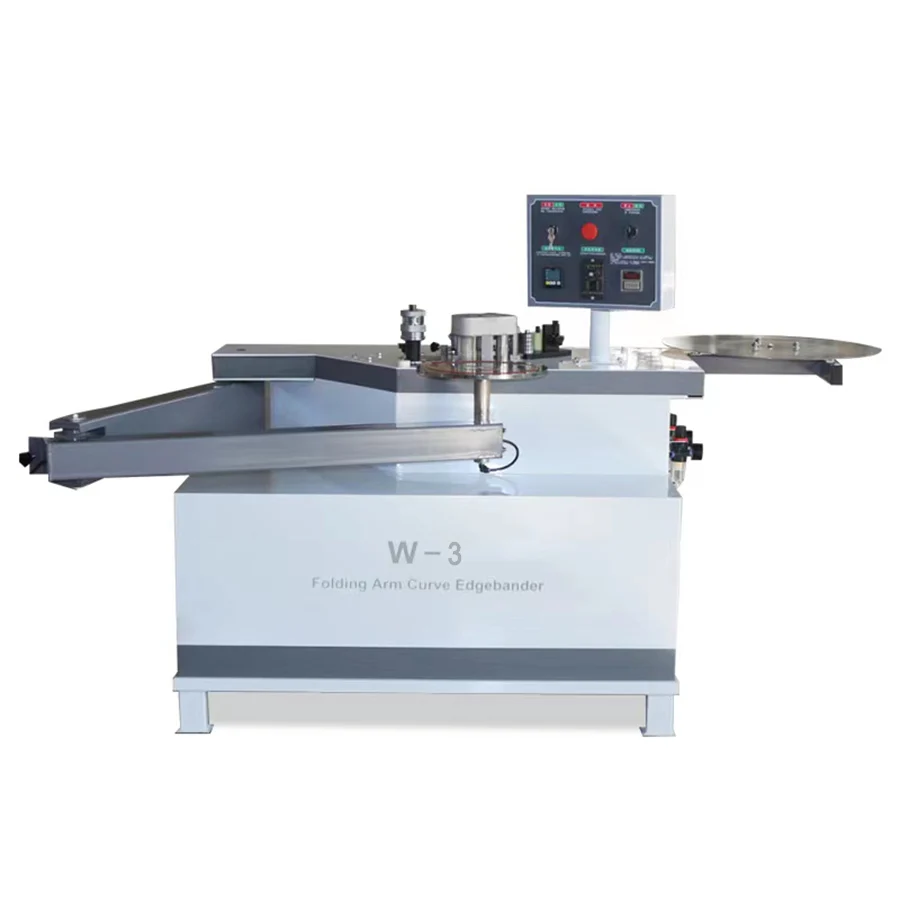
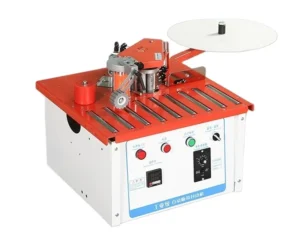
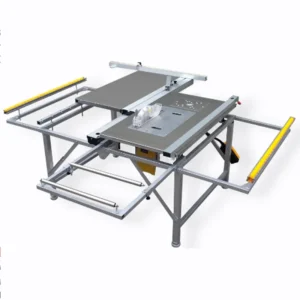
Precision-ground components and four-stage QC — Every W-1, W-2, and W-3 curve edge banding unit undergoes incoming material inspection, in-process assembly checks, and pre-shipment verification under your confirmed voltage before leaving the factory floor.
Technical Specifications
| Parameter |
Value |
| Product Type |
Curve Edge Banding Machine |
| Model Options |
W-1 / W-2 / W-3 |
| Voltage & Frequency |
220V 50Hz (configurable 110V–440V for OEM orders) |
| Total Power |
1.4 kW (W-1, W-2) / 3.4 kW (W-3) |
| Air Supply Requirement |
0.5–0.8 MPa |
| Edge Banding Speed |
0–180 mm/s |
| Edge Band Thickness Range |
0.4–2 mm |
| Edge Band Width Range |
8–50 mm |
| Standard Suction Cup Size |
200×26 mm (W-1) / 300×26 mm (W-2, W-3) |
| Overall Dimensions (L×W×H) |
900×620×820 mm (W-1) / 1200×800×1220 mm (W-2) / 1210×1100×970 mm (W-3) |
| Net Weight |
88 kg (W-1) / 152 kg (W-2, W-3) |
| Control Features |
Intelligent temperature control, speed adjustment, timer |
| Hot Air Device |
Bottom-up hot air heating for improved adhesion |
| Belt Breaking Device |
Automatic, controlled by double cylinders |
| Edge Banding Wheel Adjustment |
±0.5 mm offset to prevent strip shifting |
| Warranty |
1 year |
Application Suitability
| Application |
Material or Output |
| Panel furniture edge finishing |
MDF, particleboard, plywood with PVC or veneer banding |
| Customized cabinet and wardrobe production |
Curved and straight panel profiles, 0.4–2 mm PVC and wood veneer strips |
| Office furniture manufacturing |
Study tables, desks, and workstations requiring contoured edge finishing |
| Door and window joinery |
Solid wood and composite panels with decorative edge banding |
| Small-batch bespoke woodworking |
Curved contour banding on chairs, tables, and decorative wood products |
Why Voltage Confirmation Must Precede Every Curve Edge Banding Machine OEM Factory Order
Machines built without confirmed local electrical standards arrive as dead weight at the distributor’s warehouse.
I have spent years dispatching woodworking equipment across Middle East job sites, and the pattern is predictable: a Curve Edge Banding Machine OEM factory order ships at standard 220V 50Hz, reaches a facility running on a different industrial supply, and the motor will not engage. The distributor then waits weeks for a replacement transformer or a rewound stator while their customer’s production line sits idle [NEED_CITE: voltage and frequency standards by export market]. Pre-production electrical verification and documented schematic matching eliminate this failure mode before the crate is sealed.

Component Sourcing and Assembly Traceability
Every Curve Edge Banding Machine OEM factory build begins with incoming material inspection on motors, pneumatic cylinders, and heating elements. The double-cylinder belt-breaking mechanism, the enlarged glue pot, and the bottom-up hot air system are assembled from components with documented supplier origins. This traceability matters when a distributor needs to certify equipment for resale under their own brand name or satisfy import compliance audits in regulated markets.
Four-Stage Quality Control Before Dispatch
In-process checks verify the ±0.5 mm edge banding wheel offset and suction cup alignment before the machine moves to final assembly. Finished product testing runs actual PVC and veneer strips through the full 0.4–2 mm thickness range at varying speeds up to 180 mm/s. Pre-shipment verification then powers the unit at the buyer’s confirmed voltage and frequency, documenting motor draw, heater response, and pneumatic stability under load [NEED_CITE: CE machinery directive requirements for industrial equipment].
Reading the Specs That Determine Real Workshop Performance
The distinction between the 1.4 kW W-1 and W-2 models versus the 3.4 kW W-3 matters for workshops running continuous curved-edge production. Higher total power supports sustained glue pot temperature and hot air output during long batch runs, reducing the thermal recovery pauses that interrupt feed consistency. The 0.5–0.8 MPa air supply requirement applies across all three models, but the larger 300×26 mm suction cups on the W-2 and W-3 provide firmer strip retention on wider banding materials up to 50 mm. Edge banding speed adjustability from zero to 180 mm/s lets operators slow the feed on tight radii where excessive speed causes strip lifting, then accelerate on gentle curves and straight segments. The bottom-up hot air device pre-warms the substrate surface before glue contact, which is particularly relevant when banding cold MDF or plywood in unheated workshops during winter months.
The Cost of Skipping Configuration Verification
Ordering curve edge banding equipment without matching the suction cup size to your typical strip width results in inadequate holding force on wider profiles, causing the strip to drift during application. A glue pot sized below your batch volume forces mid-run refills that introduce temperature instability and visible seam lines on finished panels [NEED_CITE: edge banding adhesion failure modes in panel processing]. Skipping the voltage confirmation step before production locks you into a machine that may require on-site electrical modification, delaying commissioning and frustrating the end user who expected immediate deployment.
Why Distributors Source Their Private-Label Inventory Here
The factory welcomes on-site audits of the precision-grinding stations, assembly lines, and QC checkpoints that build every W-series unit. OEM logo application and private-label packaging are standard options from single-unit sample orders through full container loads. Voltage configuration from 110V to 440V and multilingual control panels are treated as baseline customization, not premium add-ons. Every shipment includes a factory test record documenting performance under the buyer’s specified electrical conditions. Component traceability documentation supports distributors who must satisfy import compliance requirements in their target markets.
Documentation & Verification
- CE declaration of conformity matched to your W-series model configuration
- ISO 9001 certificate covering the manufacturing and QC process
- Electrical schematic with your confirmed voltage and frequency annotated
- Factory test record documenting functional verification before crating
- Packing photographs of your specific unit for pre-shipment review
Installation, Commissioning & Support
- Requires a dedicated circuit matching the confirmed voltage, rated for 1.4 kW or 3.4 kW depending on model selection
- Compressed air line at 0.5–0.8 MPa with moisture filtration to protect pneumatic cylinders
- Compact footprint from 900×620 mm to 1210×1100 mm allows placement against existing workshop walls
- Initial commissioning includes glue pot temperature calibration and suction cup alignment verification
- Operator training covers speed adjustment across the 0–180 mm/s range for different curve radii
- Spare parts list identifies consumable suction cups and heating elements for distributor inventory planning
What We Need to Configure Your Order
Share your target market’s standard voltage and frequency so we can match motor and heater specifications before production begins. Confirm whether you need PVC, veneer, or both banding materials processed, along with the typical thickness and width ranges your customers demand. Let us know if you require custom logo placement, private-label packaging, or multilingual control panel labels for your rebrand program.
Frequently Asked Questions
Q: What customization scope is available for OEM and private-label Curve Edge Banding Machine orders?
A: Logo placement, private-label packaging, voltage configuration from 110V to 440V, and multilingual control panels are all available as standard options. Machine specifications including suction cup sizing can be adjusted for single-unit sample orders through container-load production runs. We confirm every customization detail in writing before production begins.
Q: How is voltage and frequency confirmed before production starts?
A: We request your target market’s electrical standards during the inquiry stage and annotate the electrical schematic accordingly. The motor, heater elements, and control transformer are then sourced to match. Pre-shipment testing powers the completed unit at your specified voltage to verify full operational performance.
Q: What does the pre-shipment test record actually cover?
A: Each record documents motor startup and steady-state current draw at your confirmed voltage, glue pot temperature stability, hot air device output, pneumatic cylinder response, and a functional edge banding run using PVC or veneer strips within the 0.4–2 mm thickness range. This document ships with your unit.
Q: How should distributors plan spare parts inventory?
A: The spare parts list provided with each order identifies consumable items including suction cups, heating elements, and pneumatic seals. We recommend stocking these based on your regional service commitments. Lead times for replacement components are quoted separately to support your inventory planning cycle.
Q: Can new partners visit the factory before placing their first order?
A: Factory visits are welcomed and encouraged. Partners can inspect precision-grinding stations, observe four-stage QC checkpoints in operation, and review assembly procedures for the W-series line. We coordinate walkthrough scheduling around your travel plans and provide technical discussions with our engineering team on-site.