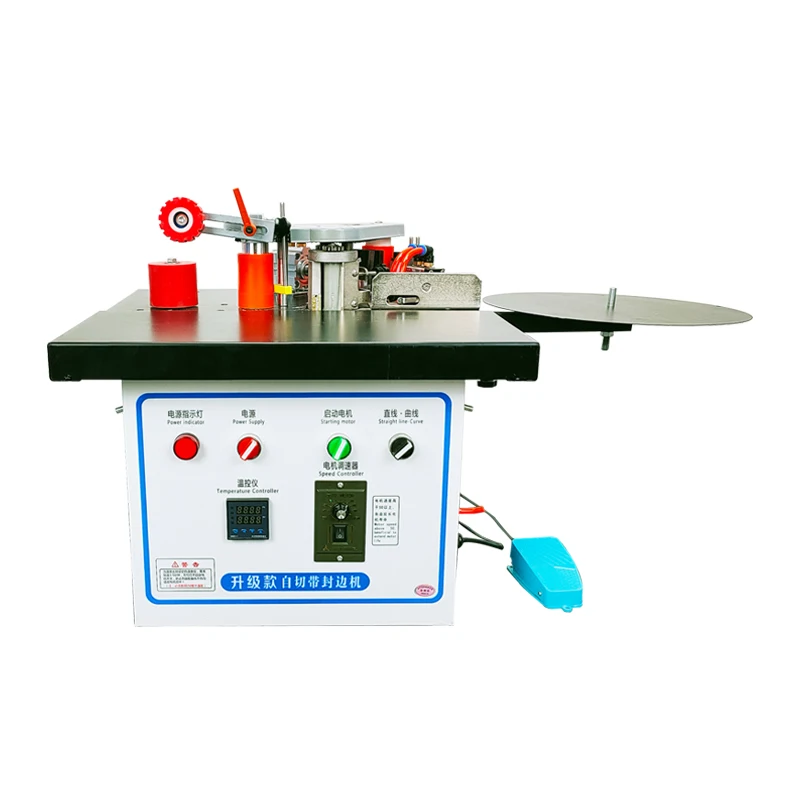
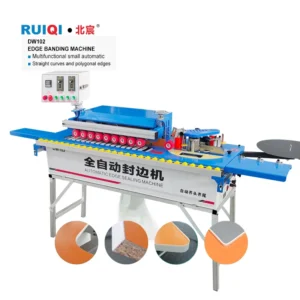
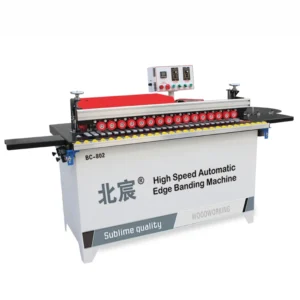
Voltage-Verified Production — Every ST-50 portable edge banding machine ships with a confirmed electrical schematic matching the buyer’s local frequency and plug standard, eliminating the costly rewinding and rewiring delays that occur when OEM partners skip this step.
Technical Specifications
| Parameter |
Value |
| Product Type |
Portable Edge Banding Machine |
| Total Power |
1000W |
| Voltage & Frequency |
220V / 380V / Custom (basis not stated in source) |
| Edge Banding Thickness |
0.3–3 mm |
| Edge Banding Height |
0–50 mm |
| Glue Pot Capacity |
1000 ml |
| Minimum Sheet Length |
25 cm |
| Minimum Sheet Width |
3 cm |
| Air Source Pressure |
0.5–0.8 MPa |
| Product Dimensions |
50 × 50 × 47 cm |
| Product Weight |
22 kg |
| Plug Options |
EU, USA, AU, UK |
| Control Panel Language |
Chinese, English, customizable |
| Key Features |
Curved and straight edge banding, benchtop assembly, OEM branding support |
Application Suitability
| Application |
Material or Output |
| Small workshop furniture repair |
MDF and particleboard offcuts requiring quick edge sealing |
| Home decoration production |
Plywood shelving and solid wood trim with curved profiles |
| Manual-to-machine transition |
Ecological board panels moving from hand-applied tape to mechanized bonding |
| Regional distributor resale |
Private-label portable units configured for local voltage and language markets |
Why the Voltage Question Must Precede the Edge Banding Machine OEM Agreement
Confirming local frequency and plug type before production prevents the most expensive mistake in cross-border machinery trade.
When an Edge Banding Machine factory ships a unit wired for 50 Hz into a 60 Hz territory, the motor runs faster than designed, the glue pot overheats, and the feed mechanism loses synchronization. The buyer faces weeks of downtime while the electrical cabinet is rebuilt and resent [NEED_CITE: voltage and frequency standards by export market]. For OEM partners placing private-label orders, this failure reflects directly on their brand reputation in the regional market. Verifying the electrical configuration at the quotation stage — not at the packing stage — is the only reliable safeguard.

Private-Label Configuration from the Source
Securing an Edge Banding Machine OEM arrangement means more than printing a logo on the chassis. It requires the factory to adjust the control panel language, select the correct plug standard, and adapt the voltage range so the machine operates safely in the distributor’s territory. Our configuration process locks these variables during the formal quotation, ensuring the distributor receives a product that is genuinely ready for local resale without secondary modification.
Production Depth Behind Compact Footprint
The ST-50 is a benchtop unit, but its assembly involves the same precision grinding and four-stage quality control applied to our full-size line. Incoming material inspection verifies the glue pot casting, in-process checks confirm the feed roller alignment, and pre-shipment testing runs actual MDF and plywood samples through curved and straight cycles. This manufacturing discipline is what allows an Edge Banding Machine factory to offer genuine OEM partnerships rather than simple relabeling [NEED_CITE: CE machinery directive requirements for industrial equipment].
Matching Specifications to Workshop Reality
The 0.3–3 mm edge thickness range covers PVC, melamine, and thin wood veneer — the materials most small workshops stock. The 1000 ml glue pot supports sustained small-batch runs without constant refilling, which matters when a joinery shop is processing fifty cabinet doors in a single session. The 0.5–0.8 MPa air pressure requirement is compatible with the small piston compressors typically found in compact workshops, avoiding the need for a dedicated industrial air supply. Curved and straight banding in one unit means a fabricator can edge-seal a radius-cut shelf and a square cabinet side without changing machines or tooling.
The Hidden Cost of Skipping Electrical Verification
A portable edge bander that arrives with the wrong voltage does not simply fail to start — it may damage the heating element, warp the PVC edge tape, and ruin the workpiece surface before the operator realizes something is wrong. The distributor then absorbs the return freight, the replacement parts, and the reputational damage with their end customer. These losses compound quickly across a container load of misconfigured units [NEED_CITE: typical import equipment failure causes in Southeast Asian markets].
Why Procure This OEM Line Here
Our four-stage QC protocol covers incoming material, in-process assembly, finished product, and pre-shipment verification — each unit is tested on the buyer’s specified panel thickness before packing. Custom voltage and frequency are confirmed via a formal electrical schematic document signed off before production begins. OEM logo placement, control panel language, and packaging graphics are all adjusted in-house, so no third-party converter is needed after the machine leaves our facility. The engineering team provides configuration recommendations within 24 hours of receiving the buyer’s workshop parameters. Factory visits or virtual tours are available for distributors evaluating manufacturing depth before committing to a bulk order.
Documentation & Verification
- Electrical schematic confirming voltage, frequency, and plug type for the destination market
- Factory test record using buyer-specified MDF or plywood panel thickness
- Operation and maintenance manual delivered in the agreed control panel language
- Spare parts list identifying wear items specific to the portable edge banding configuration
- Packing photographs documenting unit condition prior to container loading
- CE declaration of conformity and ISO 9001 certificate copies
Installation, Commissioning & Support
- Benchtop placement requires a stable 50 × 50 cm surface near a dedicated 1000W circuit
- Air supply hose connection rated for 0.5–0.8 MPa from existing workshop compressor
- First-run glue temperature calibration performed on buyer’s actual PVC or veneer stock
- Multilingual control panel walkthrough covering feed speed and glue flow adjustment
- Replacement glue pot and feed roller kit identified on the included spare parts list
- Periodic cleaning schedule for the 1000 ml glue pot to prevent residue buildup
Starting the OEM Conversation
To receive an accurate configuration proposal, provide your target market’s standard voltage and frequency, the plug type required for retail compliance, the control panel language your end users expect, and your projected annual order volume. If you have existing branding guidelines for logo placement and packaging, share those files at the inquiry stage so the engineering team can integrate them into the initial quotation.
Frequently Asked Questions
Q: What is the OEM process for logo, panel language, and packaging customization?
A: We confirm logo artwork, control panel language, and packaging graphics during the quotation stage. Once the buyer approves the digital mockup, these specifications are locked into the production order. No third-party relabeling is required after the unit leaves our facility, ensuring consistent branding across the entire shipment.
Q: How is local voltage and plug standard confirmed before production?
A: The buyer provides the destination country’s voltage, frequency, and plug type at the inquiry stage. Our engineering team generates an electrical schematic reflecting those parameters and sends it for formal sign-off. Production only begins after the buyer approves this document, preventing mismatches upon arrival.
Q: Can you produce according to buyer-supplied drawings or modified specifications?
A: Yes, provided the modifications fall within the mechanical envelope of the portable platform. We review the buyer’s drawings against our existing assembly constraints, identify any feasibility issues, and return a marked-up proposal within 24 hours. Tooling changes, if required, are quoted separately before production.
Q: What certifications and test documentation ship with each OEM unit?
A: Each unit is accompanied by a CE declaration of conformity, ISO 9001 certificate copy, factory test record on the specified panel material, electrical schematic, and a maintenance manual in the agreed language. The packing list includes a spare parts catalog identifying consumable components for the distributor’s service inventory.
Q: What is the sample pre-test process for first-time OEM buyers?
A: Before bulk production, we run a sample unit through a full curved and straight edge banding cycle using the buyer’s specified panel material and edge tape. Video and photographic records of the test, along with the finished sample panels, are sent for approval. Bulk production commences only after the buyer signs off on the sample output.