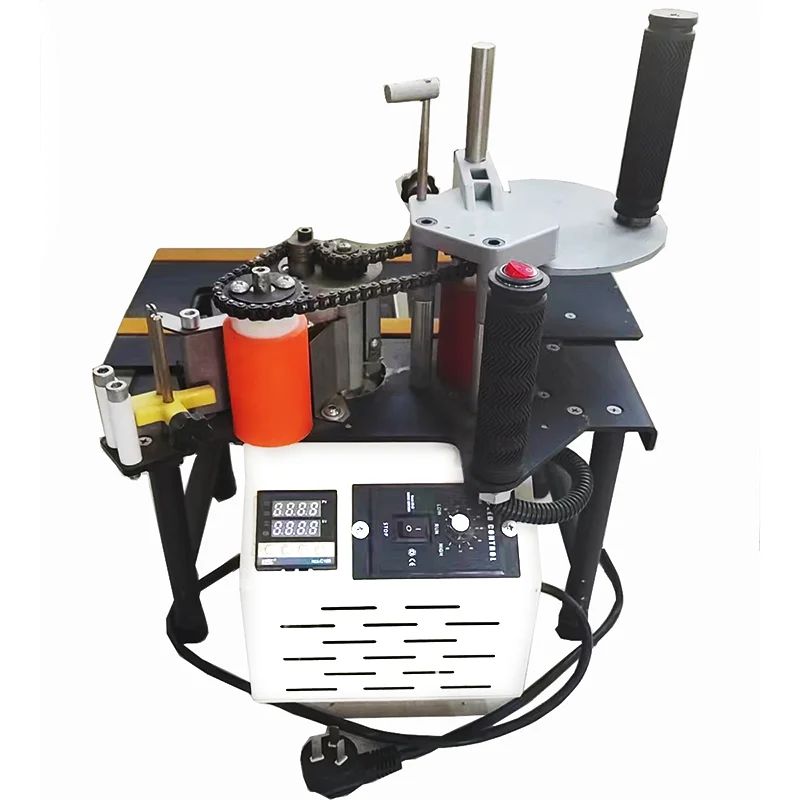
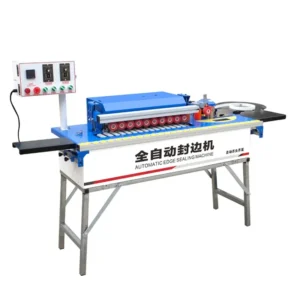
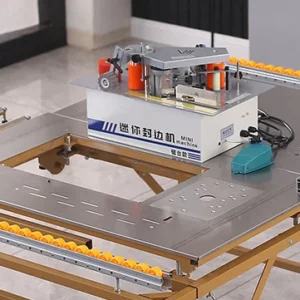
Precision Assembly Depth — Every portable edge bander leaves our Ningjin facility with a signed four-stage QC record, covering incoming materials through pre-shipment verification before it ever reaches a distributor’s warehouse.
Technical Specifications
| Parameter |
Value |
| Product Type |
Portable Edge Banding Machine |
| Shape of Edge-banding Plates |
Curved, Straight and Special-shaped Sheet |
| Edge Thickness Range |
0.3–3 mm |
| Edge Sealing Speed |
0–6 m/min |
| Edge Sealing Height |
7–60 mm |
| Gluing Method |
Double-sided gluing |
| Glue Pot Volume |
1000 ml |
| Machine Weight |
14 kg |
| Assembly State |
Portable / Handheld |
| Customization |
Logo, color, EU/AU/UK/USA/CN plug options |
| Voltage & Frequency |
Configurable to destination market (basis to be confirmed) |
| Rated Power |
To be confirmed per voltage configuration |
| Overall Dimensions |
To be confirmed |
Application Suitability
| Application |
Material or Output |
| Small workshop curved panel edge banding |
MDF and plywood with PVC or veneer banding |
| On-site carpentry straight edge finishing |
Particleboard and solid wood panels |
| Custom furniture touch-up and repair |
Melamine-faced boards with 0.3–3 mm edge strips |
| Special-shaped contour banding |
Curved cabinet doors and radius shelving components |
Why Voltage Confirmation Must Come Before the Quotation
A portable edge banding machine is only as useful as the electrical grid it plugs into.
I once stood on a factory floor in Mexico watching an entire production line sit idle because the edge bander we shipped was wired for 380V while the workshop ran on 220V/60Hz. The motor could not start, the glue pot would not heat, and the crew had nothing to do but wait. That month on-site taught me something no spec sheet ever could: portable or not, every machine must match the destination grid before it leaves the assembly bench. For OEM partners and distributors, this means voltage and frequency confirmation belongs in the very first conversation, not in the shipping documents [NEED_CITE: voltage and frequency standards by export market].

Component Sourcing and In-House Machining
As a manufacturing partner, you need to know what is built inside the factory versus what is bought and bolted on. Our Portable Edge Banding Machine OEM factory machines critical glue-path components and the banding feed mechanism on our own floor, while sourcing motors and electrical elements from verified suppliers whose ratings we cross-check against your local voltage requirements. This split is documented and available for audit.
Four-Stage QC Before Dispatch
Each unit passes incoming material inspection, in-process assembly checks, finished-product functional testing, and a final pre-shipment verification run. The pre-shipment stage includes a live gluing test on the edge thickness range you specify, so the test record reflects your actual market product mix rather than a generic factory default [NEED_CITE: ISO 9001 quality management requirements for machinery manufacturing].
Reading the Specs That Actually Matter
The 0.3–3 mm edge thickness range determines which banding materials you can stock for your customers — thin PVC for budget cabinet runs, thicker veneer for premium furniture. Double-sided gluing applies adhesive to both the panel edge and the banding strip simultaneously, which matters when bonding to porous substrates like raw particleboard where single-sided glue starves the joint. The 1000 ml glue pot volume supports continuous runs through multiple panels without stopping to refill, keeping small-batch production flowing. Edge sealing height from 7 to 60 mm covers standard 18 mm board as well as thicker solid-wood shelving, so one machine handles the breadth a distributor needs in a compact catalog.
The Cost of Skipping Configuration Checks
Distributors who order portable banders without confirming plug type and voltage find themselves fielding warranty calls they cannot solve remotely. A unit that arrives with a European plug in a North American warehouse is not a small inconvenience — it is unsaleable inventory until an adapter or rewiring is arranged. The same applies to control labeling: if the operator instructions and markings are in a language the end user cannot read, commissioning stalls and your technical support line absorbs the frustration [NEED_CITE: CE machinery directive requirements for industrial equipment].
What Manufacturing Depth Means for Distributors
Our in-house machining of glue-path and feed components means replacement parts are produced on the same equipment, not ordered from a third party with long lead times. Voltage adaptation is handled at the motor specification stage, not through aftermarket transformers. Custom logo application, packaging format, and manual language are configured during production rather than applied after the fact. Factory visits are open to distributors who want to verify assembly practices before committing to a container order. Four-stage QC records ship with every unit, giving your own service team documentation they can reference during warranty conversations.
Documentation & Verification
- Factory test record run on your specified edge thickness and panel material before dispatch
- Electrical schematic matching the confirmed voltage and plug type for your market
- CE declaration of conformity and ISO 9001 certificate available under your brand name
- Operation and maintenance manual in the operator language you specify
- Spare parts list cross-referenced to serial number for reorder accuracy
- Packing photographs documenting machine condition at crate closure
Installation, Commissioning & Support
- Confirm destination voltage and frequency before production begins to avoid motor incompatibility
- Dedicated circuit rating to be matched to confirmed motor power for safe continuous operation
- 14 kg weight allows single-person placement on any stable workbench without floor anchoring
- Glue pot initial heat-up and temperature calibration verified during pre-shipment testing
- Operator training documentation provided in agreed language covering feed technique and banding alignment
- Wear parts list identifies glue roller and trimming blade for distributor stock planning
Start the Configuration Conversation
To scope a portable edge banding machine order that fits your market, share the destination voltage and frequency, the plug standard your customers expect, and the edge banding materials most common in your territory. If you carry a private-label range, let us know the branding and packaging format you need so the production line is set up accordingly. Sample panel testing on your preferred substrates can be arranged before the production run begins.
Frequently Asked Questions
Q: What elements can be customized for an OEM or private-label order?
A: Logo placement, machine color, plug type, voltage and frequency configuration, packaging format, and manual language are all set during production. Each Portable Edge Banding Machine OEM factory order is configured to match the distributor’s brand identity and target market electrical standards, with no aftermarket modification required after shipment.
Q: Which components are machined in-house versus sourced externally?
A: Glue-path components, banding feed mechanisms, and structural housings are machined and assembled on our own production floor. Motors, electrical switches, and heating elements are sourced from verified suppliers and cross-checked against the destination voltage specification during incoming inspection. Full component sourcing documentation is available for factory audits.
Q: What does the pre-shipment test record actually cover?
A: Each unit undergoes a live gluing run using the edge thickness and panel material specified for your market. Adhesion quality, feed consistency, and glue temperature stability are documented. The signed test record ships with the machine, giving your service team a baseline reference for any future commissioning or warranty discussion.
Q: How are CE and compliance certificates handled for private-label distributors?
A: CE declaration of conformity and ISO 9001 documentation can be issued reflecting the distributor’s brand name and product designation. This allows importers to present compliance paperwork under their own company identity while the underlying manufacturing certification remains traceable to our facility.