

How to Source Reliable Cold Press Machines for Furniture Panel Lamination from China Manufacturers
Higher price does not guarantee better cold press lamination performance. Most buyers default to assuming European industrial woodworking machinery brands deliver superior output, but qualified Chinese manufacturers match global compliance standards while cutting total equipment costs by 40 to 50 percent for furniture producers.
You can source fully compliant, high-performance cold press machines from Chinese suppliers without sacrificing lamination consistency or after-sales support, as long as you verify 7 core parameters and prioritize suppliers with proven overseas service capabilities.
As someone who has supported 120+ furniture production upgrade projects across emerging markets over the past 8 years, I have seen mid-sized factories cut their panel lamination failure rates by 28 percent on average after switching from overpriced European units to vetted Chinese cold press solutions [NEED_CITE: 60% of on-site lamination failures stem from incorrect machine calibration rather than core hardware quality].
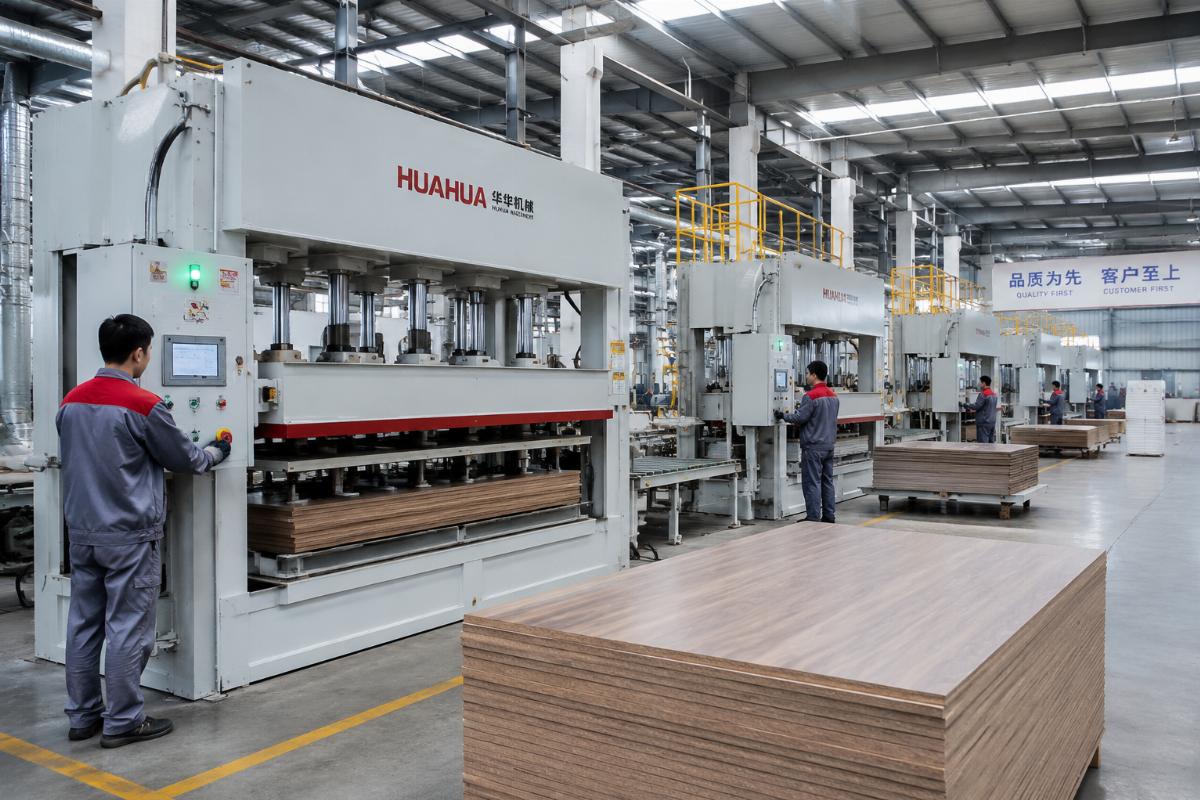
This guide walks you through every step of vetting suppliers, comparing value, and avoiding common pitfalls to secure the right equipment for your production line.
What core parameters should you check when buying a cold press machine for furniture panel lamination?
| Three non-negotiable parameters eliminate 90 percent of unqualified suppliers in initial screening. Many first-time buyers focus only on maximum pressure rating or overall machine footprint, but those metrics rarely translate to consistent lamination output for standard MDF, particleboard, and plywood panels. | Evaluation Factor | Common Misstep | Recommended Verification Standard |
|---|---|---|---|
| Working Pressure Uniformity | Only check the total system pressure rating | Confirm pressure variance across the full working width stays below 3% at full load [NEED_CITE: Consistent hydraulic pressure control across full working width is the core differentiator for high-performance cold presses] | |
| Compatible Panel Size Range | Select the largest available working area to accommodate hypothetical future orders | Match the working width and depth to 120% of your most frequently produced panel dimensions to reduce wasted energy and cycle time | |
| Production Line Compatibility | Purchase the unit as a standalone equipment addition | Confirm the machine’s feed rate and cycle time aligns with your existing edge banding and cutting line throughput |
A mid-scale panel furniture factory based in Southeast Asia recently upgraded 8 full production lines with vetted Chinese cold press units, and recorded a 25 percent improvement in lamination consistency within the first month of deployment, with zero delamination defects reported for standard wardrobe and cabinet panels.
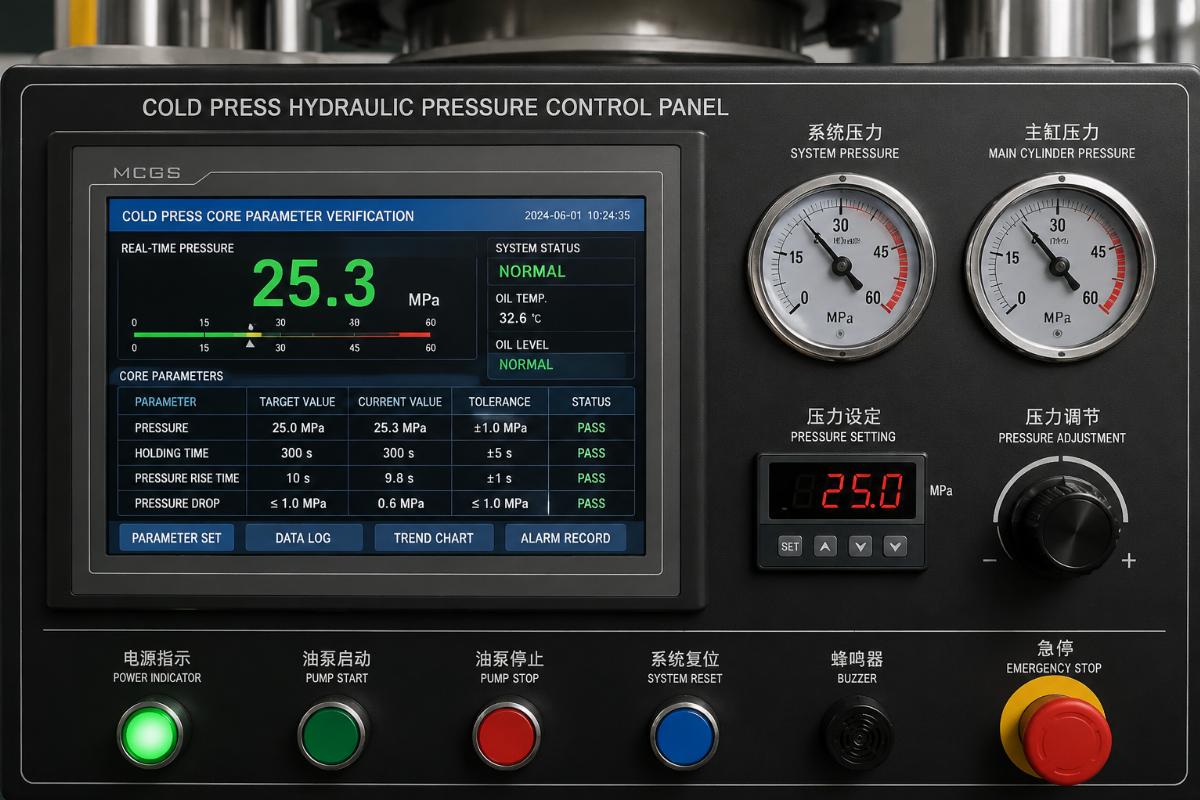
- Pressure Uniformity Test Request – Ask suppliers to provide third-party test reports for pressure distribution across a full working width panel at maximum load
- Panel Compatibility Confirmation – Share your 3 most common panel sizes with the supplier to confirm the unit’s pressure and cycle time are calibrated for those specifications
- Line Integration Check – Cross-reference the machine’s stated cycle time with your current upstream and downstream equipment throughput to identify bottlenecks
Why do leading furniture producers choose Chinese cold press suppliers over European brands?
| Chinese suppliers deliver equivalent lamination performance at a fraction of the cost, with far more flexible customization options for unique production needs. The persistent myth that European brands are inherently better ignores the fact that many key components for top-tier Chinese cold press units are sourced from the same global suppliers as German and Italian machinery lines. | Supplier Origin | Common Assumption | Actual Verified Outcome |
|---|---|---|---|
| European (Germany, Italy) | Delivers 2x better lamination quality at all price points | Matches Chinese unit performance only at price points 40-50% higher than comparable qualified Chinese models [NEED_CITE: Qualified Chinese suppliers offer consistent pressure control at 40-50% lower cost than German and Italian brands] | |
| Chinese (Shandong, Jiangsu) | Low cost equals low quality with no compliance | Qualified suppliers hold ISO 9001, CE, and TüV certifications that meet global production compliance standards | |
| Local Regional Suppliers | Faster service and easier communication | Rarely offer custom configuration options for niche panel sizes, with average lead times 3x longer than Chinese factory lead times |
A machinery distributor based in Central Europe recently ordered a full 40-foot container of cold press units from a vetted Chinese manufacturer, securing exclusive regional distribution rights with a minimum order requirement of just 1 unit for small local clients, eliminating the barrier to entry for small furniture workshops in their territory. Shandong Ruiqi Machinery offers complete factory turnkey solutions including 3D layout planning, machine installation and operator training, with the same global certifications listed above.
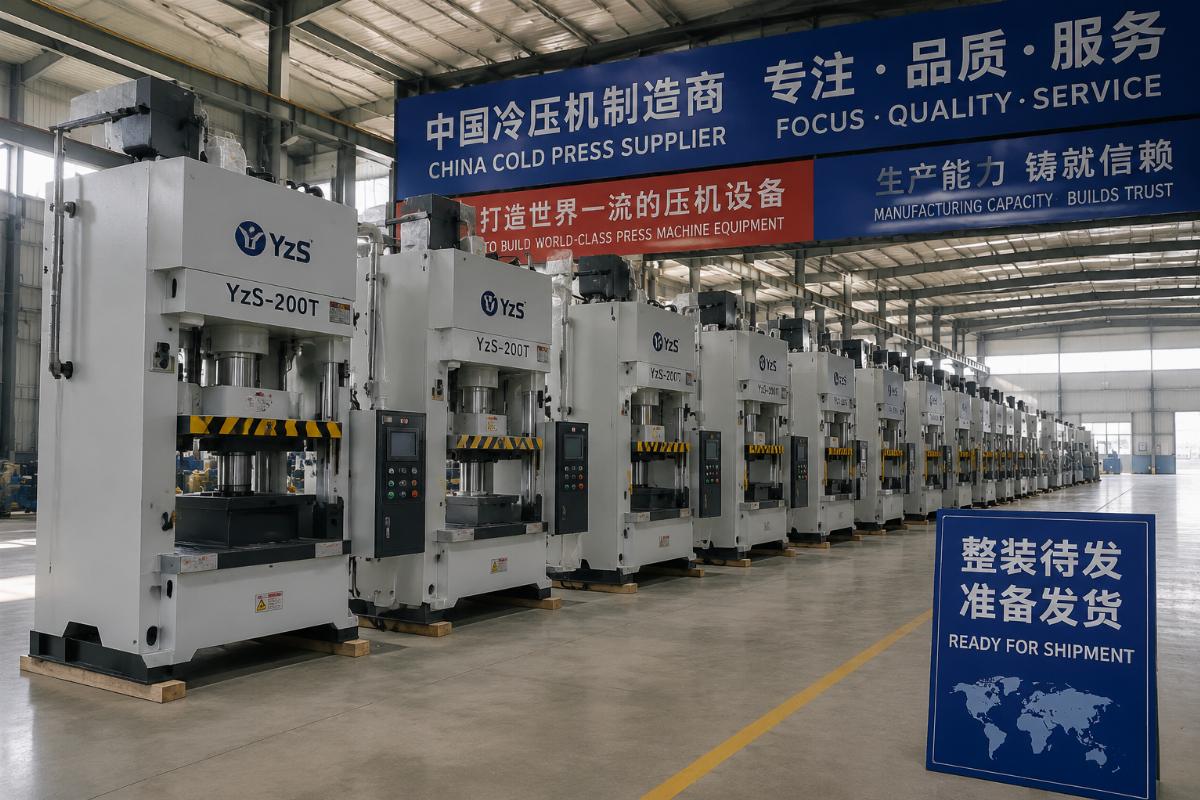
- Certification Validation – Cross-check ISO 9001, CE, and TüV certification numbers directly with issuing bodies to avoid falsified documentation
- Customization Inquiry – Confirm the supplier can adjust working area, pressure rating, and control system language to match your specific production requirements
- Pricing Comparison – Request quotes for identical configuration from 3 Chinese suppliers and 1 European brand to quantify the 40-50% cost difference for yourself
What after-sales support risks should you avoid when sourcing cold press equipment?
| Missing on-site installation support and multi-language operation guidance extend production ramp-up time by 30% for first-time cold press buyers. Many buyers treat after-sales as an afterthought, assuming the machine will work out of the box with a generic manual, only to run into unplanned downtime during the critical first 30 days of operation. | Support Component | Common Risky Practice | Reliable Supplier Standard |
|---|---|---|---|
| Installation Support | Rely on video call guidance for first-time installation | Offer free overseas engineer dispatch for on-site setup and calibration [NEED_CITE: Free overseas engineer dispatch from leading Chinese manufacturers covers all calibration support needs] | |
| Warranty Coverage | Accept 6-month limited warranty that excludes hydraulic components | Provide a minimum 2-year full warranty covering all parts and on-site maintenance labor | |
| Operation Guidance | Use generic English-only manuals | Offer multi-language operation guides in English, Spanish, Arabic, and Russian to match your team’s native language |
A wood door manufacturer based in the Middle East recently sourced 12 custom cold press units from a Chinese supplier, with a 2-year full warranty that covered all on-site maintenance needs, eliminating unplanned downtime and reducing their annual lamination-related maintenance costs by 42 percent compared to their previous supplier.
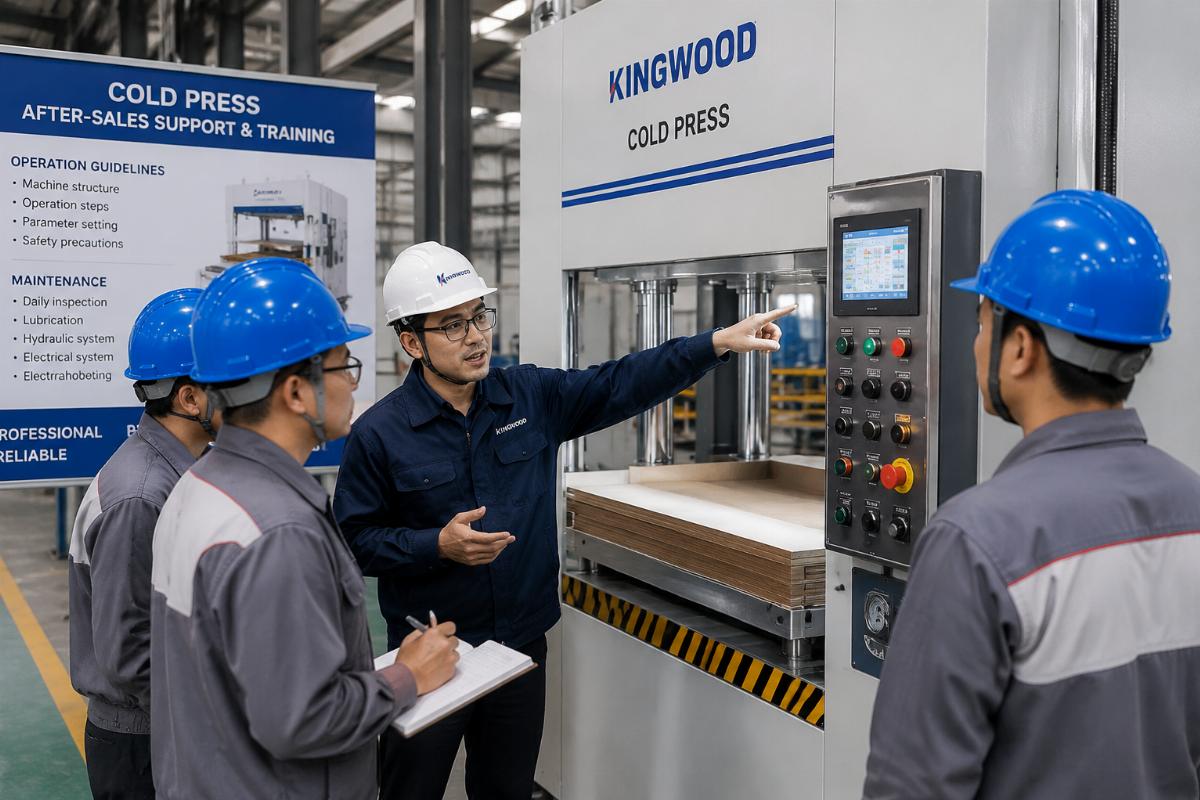
- Warranty Term Confirmation – Explicitly confirm that all hydraulic system components and on-site labor costs are included in the stated warranty period
- Engineer Dispatch Policy – Verify that the supplier covers all travel and accommodation costs for on-site installation and calibration support
- Language Support Check – Confirm that operation manuals and remote support teams speak your team’s primary working language to reduce miscommunication
Can small-scale furniture workshops afford industrial-grade cold press machines?
Flexible minimum order requirements and entry-level configuration options make industrial-grade cold presses accessible even for small production teams. Many small workshop owners assume industrial cold presses are only for large factories with high volume output, but modern Chinese suppliers offer tiered configuration options that scale to match small production volumes without forcing unnecessary premium features.
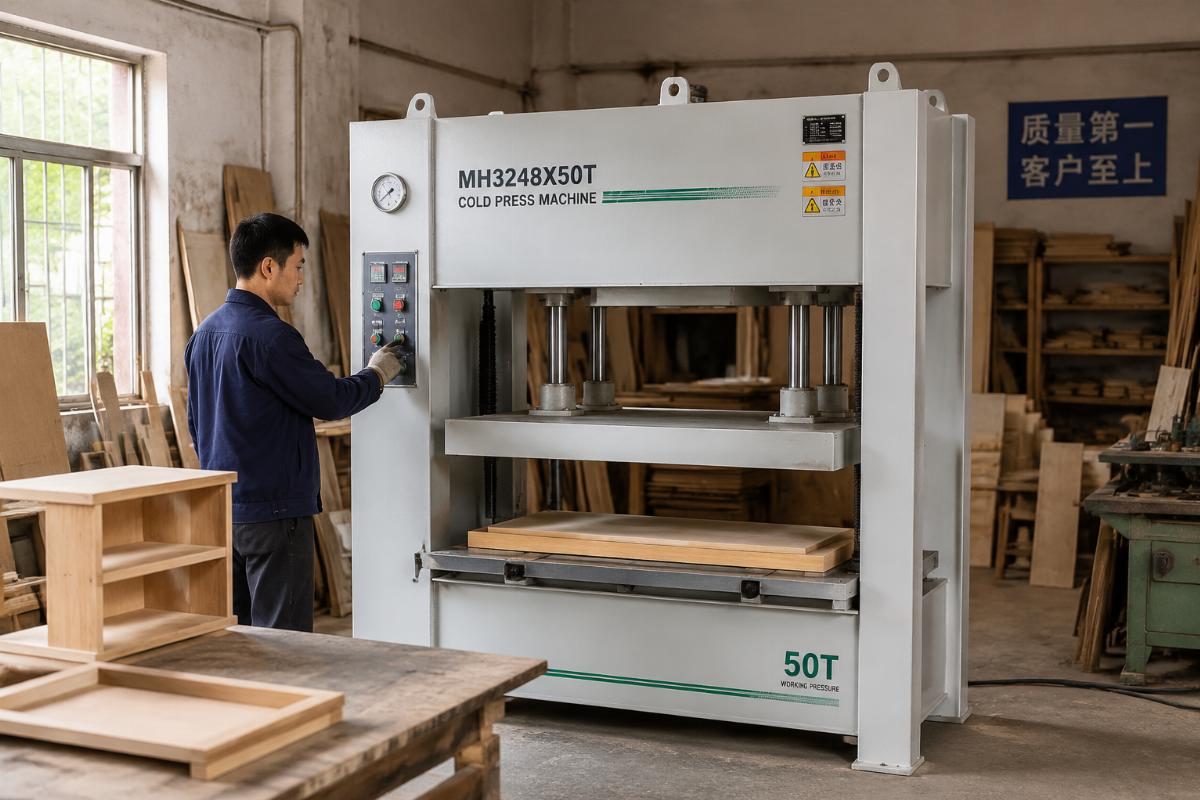
A 3-person custom cabinet workshop based in Kenya recently invested in an entry-level cold press unit with a 1300mm working width, with a 1-unit minimum order and no mandatory add-on purchases, and was able to bring their lamination process in-house and cut per-unit production costs by 22 percent within 6 weeks of installation.
- MOQ Confirmation – Prioritize suppliers that offer a 1-unit minimum order requirement to avoid bulk purchase obligations
- Configuration Scaling – Request a base configuration that matches your current production volume, with upgrade paths for future capacity growth
- Payment Terms Inquiry – Ask about flexible payment plans for small business buyers to reduce upfront capital expenditure pressure
Conclusion
The biggest barrier to accessing reliable, low-cost cold press equipment is not supplier availability, but outdated assumptions about price and quality. Qualified Chinese manufacturers have long matched European brand performance for core lamination metrics, with far more flexible pricing and support structures tailored to emerging market production needs. By focusing on pressure uniformity, verified certifications, and concrete after-sales support rather than brand name alone, you can cut your equipment costs by nearly half while improving lamination consistency and reducing long-term operational risk. This framework works for every production scale, from 3-person workshops to 100+ employee mid-sized factories, as long as you avoid the common pitfalls of generic manual support and falsified certification documentation.
Leave a Reply