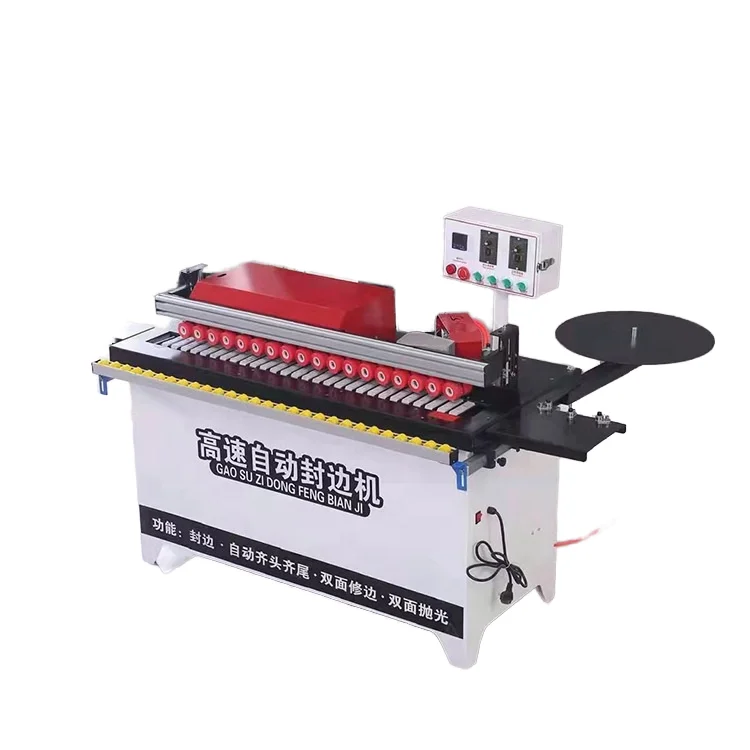
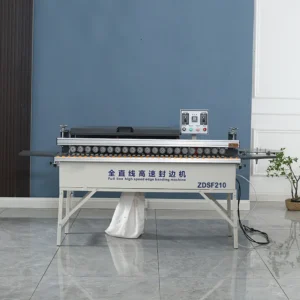
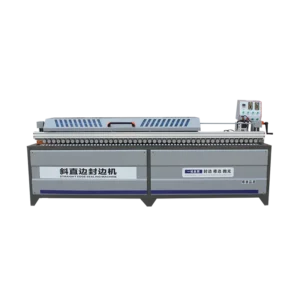
Verified Tolerance Assurance — Every ZDSF802 leaving the assembly floor passes a four-stage QC sequence with factory test records on your specified panel thickness range before dispatch.
Technical Specifications
| Parameter |
Value |
| Model |
ZDSF802 |
| Product Type |
Automatic Edge Banding Machine |
| Function Sequence |
Gluing, End Cutting, Vacuuming, Trimming, Polishing |
| Edge Type |
Straight Line |
| Rated Voltage |
220V (basis not stated in source — confirm frequency and phase) |
| Voltage Customization |
Available from 110V to 440V |
| Strip Thickness |
0.6–2.0 mm |
| Sheet Thickness |
10–50 mm |
| Feed Speed |
0–10 m/min |
| Trimming Power |
800 W × 2 |
| Polishing Power |
180 W × 2 |
| Suction Power |
1200 W |
| Rated Power |
4 kW |
| Heating Power |
1000 W (5–10 min warm-up) |
| Glue Pot Capacity |
4000 ml |
| Rated Air Pressure |
0.4–0.6 MPa |
| Conveyor Belt Material |
Silicone |
| Pressure Beam |
One-piece, double rows of pressure wheels |
| Extension Table |
Extendable fluent strips |
| Control Panel |
Digital display with independent switch |
| Machine Weight |
150 kg |
| Overall Dimensions |
190 × 65 × 75 cm (source value — verify against manufacturer catalog) |
| Certification |
CE, ISO 9001 |
Application Suitability
| Application |
Material or Output |
| Custom cabinet door edge banding |
MDF and plywood with PVC edge banding |
| Wardrobe panel processing |
Particleboard with 0.6–2.0 mm PVC strips |
| Small-batch furniture production |
Solid wood panels with veneer edge banding |
| Workshop scaling from manual to automated |
Mixed board stock up to 50 mm thickness |
| Joinery and fit-out components |
Melamine-faced chipboard for commercial interiors |
Why Voltage Confirmation Should Precede Every Automatic Edge Banding Machine OEM Order
The electrical schematic must match the destination grid before production begins.
A few years ago I watched an edge bander sit idle in a Middle Eastern workshop for three weeks because the factory had wired 380V and the local grid ran at 415V. The motor contactor kept tripping, the glue pot could not reach operating temperature, and the distributor lost credibility with the end user. Voltage and frequency mismatches remain one of the most common reasons industrial woodworking equipment fails at commissioning [NEED_CITE: voltage and frequency standards by export market]. For any Automatic Edge Banding Machine OEM order, the electrical specification is not a footnote — it is the first line item that must be locked.

Precision Ground Components and Proprietary Cutting Mechanisms
The ZDSF802 uses a patented cutting mechanism held to verified tolerance through precision-ground components. When the end cutting unit severs the edge strip, the blade geometry and feed alignment determine whether the panel edge is square or carries a slight taper. On a cabinet run of several hundred doors, even minor deviation accumulates into visible misalignment during assembly. Our in-house machining allows us to control these dimensions from raw stock to finished unit, rather than relying on outsourced assemblies with unknown tolerances.
Four-Stage Quality Control From Incoming Material to Dispatch
Component inspection starts at incoming material verification, where motors, pneumatic cylinders, and heating elements are checked against rated values before entering the build line. In-process checks cover pressure beam flatness, conveyor belt tracking, and glue pot thermal uniformity. Finished product testing runs actual panels through the full function sequence — gluing, end cutting, trimming, and polishing — to confirm edge adhesion and surface finish. Pre-shipment verification produces a factory test record with photographs, so the Automatic Edge Banding Machine OEM buyer can review results before the crate is sealed [NEED_CITE: CE machinery directive requirements for industrial equipment].
How Sheet Thickness Range and Feed Speed Shape Daily Output
The 10–50 mm sheet thickness range covers the majority of board stock encountered in custom furniture work, from thin 10 mm shelving inserts to 50 mm worktop blanks. The one-piece pressure beam with double rows of pressure wheels maintains consistent downward force across this span, preventing the lighter panels from lifting during trimming. Feed speed is adjustable from 0 to 10 m/min, and the silicone conveyor belt grips the panel surface without leaving marks. A 4000 ml glue pot capacity reduces refill interruptions, keeping the operator focused on feeding rather than topping up adhesive mid-shift. The 800 W × 2 trimming motors deliver enough spindle speed for clean cuts on both PVC and veneer strips without chatter marks on the panel edge.
The Hidden Cost of Skipping Pre-Shipment Electrical Verification
When an edge bander arrives with the wrong voltage configuration, the buyer faces a choice: source a transformer locally or ship the machine back for rewinding. Either path adds weeks of downtime and erodes trust between the distributor and the end user. Pneumatic circuits also behave differently outside their rated pressure range — running below 0.4 MPa causes sluggish cylinder response during end cutting, while exceeding 0.6 MPa accelerates seal wear. These issues rarely surface during a quick bench test but become obvious within the first production shift [NEED_CITE: compressed air quality standards for pneumatic woodworking tools].
Why OEM Buyers Choose This Manufacturing Floor
Our in-house production means the ZDSF802 is not a relabeled machine from a third-party assembler — every pressure beam, glue pot housing, and conveyor frame is machined and assembled under one roof. Voltage customization from 110V to 440V is handled during the build, not bolted on afterward as an external transformer. Multilingual control panels are wired in from the start, so operators in different markets read instructions in their own language on day one. The patented cutting mechanism and verified tolerance are documented with test records, not just claimed in a brochure. OEM branding — custom logo placement, color scheme, and private label documentation — scales from single-unit samples to container-load production runs without switching suppliers.
Documentation & Verification
- CE declaration of conformity covering the ZDSF802 electrical and mechanical safety scope
- ISO 9001 certificate for the manufacturing quality management system
- Machine specification sheet with confirmed voltage, frequency, and phase for your market
- Electrical schematic and wiring diagram matching the as-built configuration
- Factory test record showing edge banding results on your specified panel thickness and strip material
- Packing photographs documenting crating and securing before container loading
Installation, Commissioning & Support
- Floor space of roughly 190 × 65 cm plus operator clearance on the feed and discharge sides
- Dedicated circuit matching confirmed voltage and 4 kW rated power with appropriate breaker sizing
- Compressed air supply regulated to 0.4–0.6 MPa with inline filtration for pneumatic cylinders
- Glue pot warm-up of 5–10 minutes at 1000 W before first panel feed to stabilize adhesive viscosity
- Silicone conveyor belt tension and pressure beam alignment checked during initial commissioning run
- Trimming and polishing motor brushes inspected per the maintenance schedule in the operation manual
What We Need to Configure Your Machine Correctly
To prepare an accurate specification and quotation, share your target panel materials and typical thickness range, the local voltage and frequency at the installation site, and the preferred control panel language. If you are planning a production line rather than a standalone unit, let us know the upstream and downstream equipment so we can match feed heights and throughput expectations. Sample processing tests on your actual board stock can be arranged before order confirmation.
Frequently Asked Questions
Q: What customization is included in the OEM and private label scope?
A: OEM branding covers custom logo placement, machine color, and private label documentation. Voltage is configured from 110V to 440V during assembly, and control panels are wired with multilingual interfaces. Specifications such as glue pot capacity and conveyor length can be adjusted. The scope applies from single-unit samples through to full container production runs.
Q: How can distributors verify manufacturing depth before placing an OEM order?
A: Factory visits are welcomed to inspect in-house machining, precision grinding stations, and the four-stage QC process. Distributors can review component sourcing records, assembly procedures, and pre-shipment test records. Video inspections and live video calls during production are available when an on-site visit is not practical.
Q: What documentation ships with each OEM order?
A: Each unit includes a CE declaration of conformity, ISO 9001 certificate, machine specification sheet, electrical schematic matching the as-built voltage, factory test record with photographs, operation manual in the agreed language, spare parts list, and packing photographs. Customs documentation support is provided for the destination market.
Q: How is voltage and control panel language handled for different export markets?
A: Voltage and frequency are confirmed during the specification stage, and the motor, heating elements, and control transformer are matched accordingly. Control panels are labeled and programmed in the buyer’s chosen language. The electrical schematic provided at dispatch reflects the exact configuration installed, ensuring local electricians can service the machine without guesswork.
Q: What is the typical lead time for OEM branded orders?
A: Lead time depends on order quantity and customization scope. Single-unit samples with standard specifications follow typical multi-week production schedules, while larger runs with extensive branding and non-standard voltage configurations require additional time for component sourcing and extended QC cycles. A detailed timeline is provided with the formal quotation.