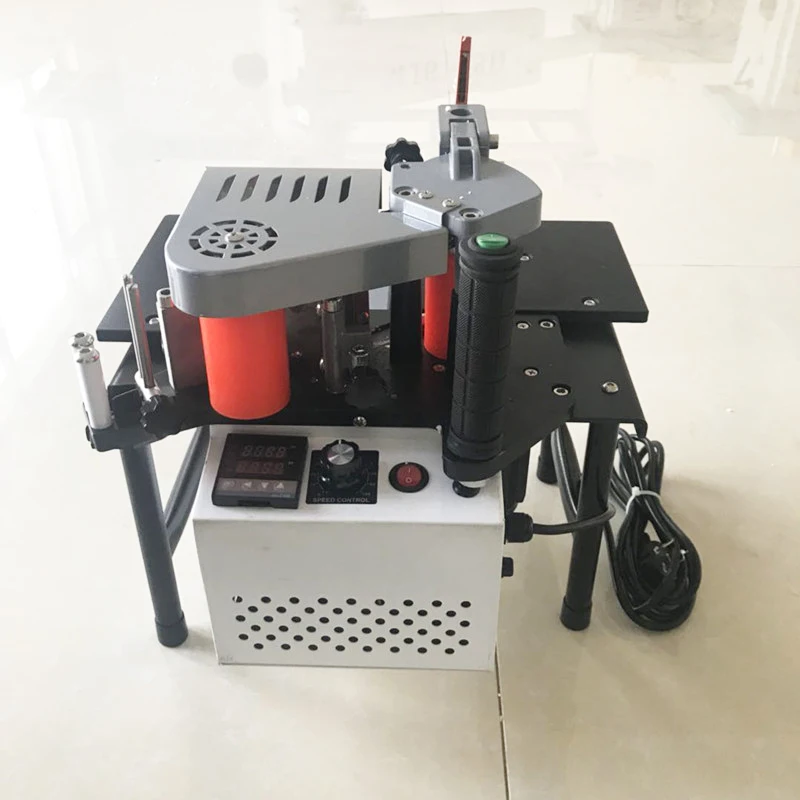
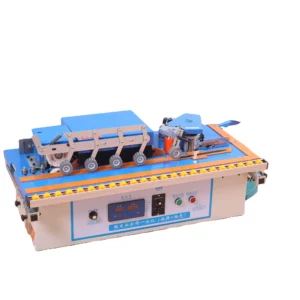
Precision-built portable banding unit — every unit undergoes four-stage QC from incoming material to pre-shipment verification, with electrical configuration matched to your market before it leaves the factory floor.
Technical Specifications
| Parameter |
Value |
| Product Type |
Portable Edge Banding Machine |
| Rated Power |
1000W |
| Voltage & Frequency |
220V (50/60Hz confirmation required per market) |
| Control System |
Manual / Semi-Automatic operation |
| Overall Dimensions |
440×410×450mm |
| Net Weight |
14kg |
| Board Thickness Range |
7–60mm |
| Edge Thickness Range |
0.3–3mm |
| Shape of Plates |
Curved & Straight |
| Gluing Method |
Double-sided gluing |
| Glue Pot Capacity |
800ml |
| Assembly State |
Portable / Handheld unit |
| Plug Options |
EU / AU / UK / USA / CN plug available |
| Logo Customization |
OEM logo supported |
Application Suitability
| Application |
Material or Output |
| Custom furniture edge finishing |
MDF and plywood panels with PVC edge banding |
| On-site joinery and cabinet work |
Particleboard and blockboard with veneer banding |
| Small workshop production runs |
Solid wood panels requiring curved and straight edge treatment |
| Repair and rework operations |
Replacement banding on pre-assembled cabinet components |
Why Voltage Confirmation Must Happen Before the Portable Edge Banding Machine Ships
A 220V unit wired for 50Hz will overheat on a 60Hz supply — and no amount of on-site troubleshooting fixes a wrong motor winding.
I spent years coordinating OEM shipments across Southeast Asia, and the most expensive delays were never about the machine itself. They were about the electrical cabinet. One Malaysian furniture factory received an edge bander configured for 380V/50Hz while their workshop ran 415V/60Hz. The entire panel line sat idle for three weeks waiting for a step-down transformer. When a Portable Edge Banding Machine factory OEM partner ships without locking down local voltage and frequency, the cost lands on the buyer’s floor. [NEED_CITE: voltage and frequency standards by export market]
How In-House Manufacturing Shapes Private-Label Quality
When a distributor white-labels a Portable Edge Banding Machine, the factory’s manufacturing depth determines whether the machine holds up under real workshop conditions. In-house precision grinding of the gluing roller and feed mechanism means tolerance is controlled at the source, not left to component suppliers who may shift specifications between batches. This level of control matters when your brand name sits on the nameplate.
The Four-Stage QC Process Behind Every Shipment
Incoming material inspection catches substandard glue pot castings before they enter assembly. In-process checks verify roller alignment and motor winding integrity. Finished product testing runs the double-sided gluing system through a full cycle on both curved and straight panels. Pre-shipment verification confirms voltage, plug type, and control language match the purchase order. Each stage is documented and traceable. [NEED_CITE: ISO 9001 quality management requirements for manufacturing]

Reading the Specifications That Actually Matter
The 7–60mm board thickness range covers everything from thin shelving stock to heavy worktop panels, but the lower limit matters most for portable units. Boards below 7mm flex under the pressure roller, producing uneven glue transfer on the edge. The 0.3–3mm edge thickness range accommodates both thin PVC for cabinet interiors and thicker veneer banding for visible furniture faces.
Double-sided gluing applies adhesive to both the panel edge and the banding material simultaneously, which is critical for curved surfaces where contact pressure varies along the contour. The 800ml glue pot capacity supports extended work sessions without frequent refills — a practical concern when a joiner is banding multiple curved chair components in sequence. The 14kg net weight keeps the unit portable while providing enough mass to resist walking across the workbench during operation.
What Happens When Configuration Details Get Skipped
A distributor who orders portable banders without specifying plug type watches containers arrive with connectors that require adapters — adapters that introduce resistance, heat buildup, and eventual tripped breakers in a busy workshop. Control panels printed in a language the operator cannot read mean commissioning relies on guesswork, and incorrect glue temperature settings produce peeling edges that only show up after the furniture reaches the customer. Machines purchased without confirming the board thickness range against actual production materials end up struggling on the thicker stock they encounter daily. [NEED_CITE: CE machinery directive requirements for portable woodworking equipment]
Why Sourcing This Portable Edge Banding Machine Factory OEM Directly
Patented cutting mechanisms are built in-house, so trimming quality is not dependent on third-party component consistency. Voltage and plug customization is built into the standard production flow rather than treated as an afterthought, meaning the 220V configuration ships with the correct EU, AU, UK, USA, or CN plug already fitted. The 10,000㎡ facility supports production runs from single sample units to container-load OEM orders without shifting to a different manufacturing line. Engineer-led configuration review happens before order confirmation, not after the machine is already assembled. Factory visits are welcomed so distributors can inspect precision grinding stations and QC checkpoints firsthand.
Documentation & Verification
- Factory test record showing glue adhesion results on your specified panel and banding materials
- Electrical schematic confirming 220V configuration and matched plug type for your target market
- CE declaration of conformity covering portable woodworking machinery safety requirements
- ISO 9001 certificate documenting quality management across the manufacturing process
- Operation and maintenance manual in the agreed language for end-user training
- Packing photographs verifying unit condition and accessory completeness before dispatch
Installation, Commissioning & Support
- Requires a dedicated 220V circuit with adequate amperage for the 1000W rated power draw
- 440×410×450mm footprint fits standard workbenches; secure with anti-vibration pads
- Arrives fully assembled as a portable unit — no on-site mechanical assembly required
- First-run glue temperature and feed speed calibration on your specific board and edge materials
- Operator training covering double-sided gluing technique for curved and straight edges
- Spare glue pot elements and replacement feed rollers included in initial shipment
What We Need to Configure Your Portable Edge Banding Machine Correctly
Share the panel materials you work with most often — MDF, plywood, particleboard, or solid wood — along with the edge banding type and thickness range. Confirm your local voltage, frequency, and the plug standard required in your market. If this unit will be sold under your own brand, provide your logo artwork and any color or packaging specifications so these can be incorporated during production.
Frequently Asked Questions
Q: What OEM customization options are available for private-label portable edge banders?
A: The factory supports custom logo application, housing color selection, voltage and plug configuration to your market standard, and branded packaging. Control panel language can be specified to match the end-user region. All customizations are integrated during the standard production process rather than added as post-assembly modifications.
Q: Which components are manufactured in-house versus sourced externally?
A: The cutting mechanism, gluing roller assembly, and precision-ground feed components are produced in-house with proprietary tooling. Motors and electrical components are sourced from established suppliers and validated during incoming material inspection. This division keeps critical tolerance-bearing parts under direct factory control.
Q: What does the four-stage QC process cover for each portable banding unit?
A: Incoming inspection verifies raw castings and motor windings. In-process checks confirm roller alignment and glue pot integrity. Finished product testing runs the machine on sample panels through complete gluing cycles. Pre-shipment verification matches voltage, plug type, and documentation to the specific purchase order before crating.
Q: Are CE and ISO documents provided with each shipment?
A: The CE declaration of conformity and ISO 9001 certificate are supplied as standard documentation. Each unit also ships with its individual factory test record showing performance results on sample materials. These documents support distributor compliance requirements in regulated import markets.
Q: What is the minimum order for OEM production versus a single sample unit?
A: Single sample units can be ordered with full OEM customization to validate the configuration before committing to volume. Production runs scale from small batches for regional market testing through to container-load quantities. Lead times vary with order size and customization scope and are confirmed at quotation stage.