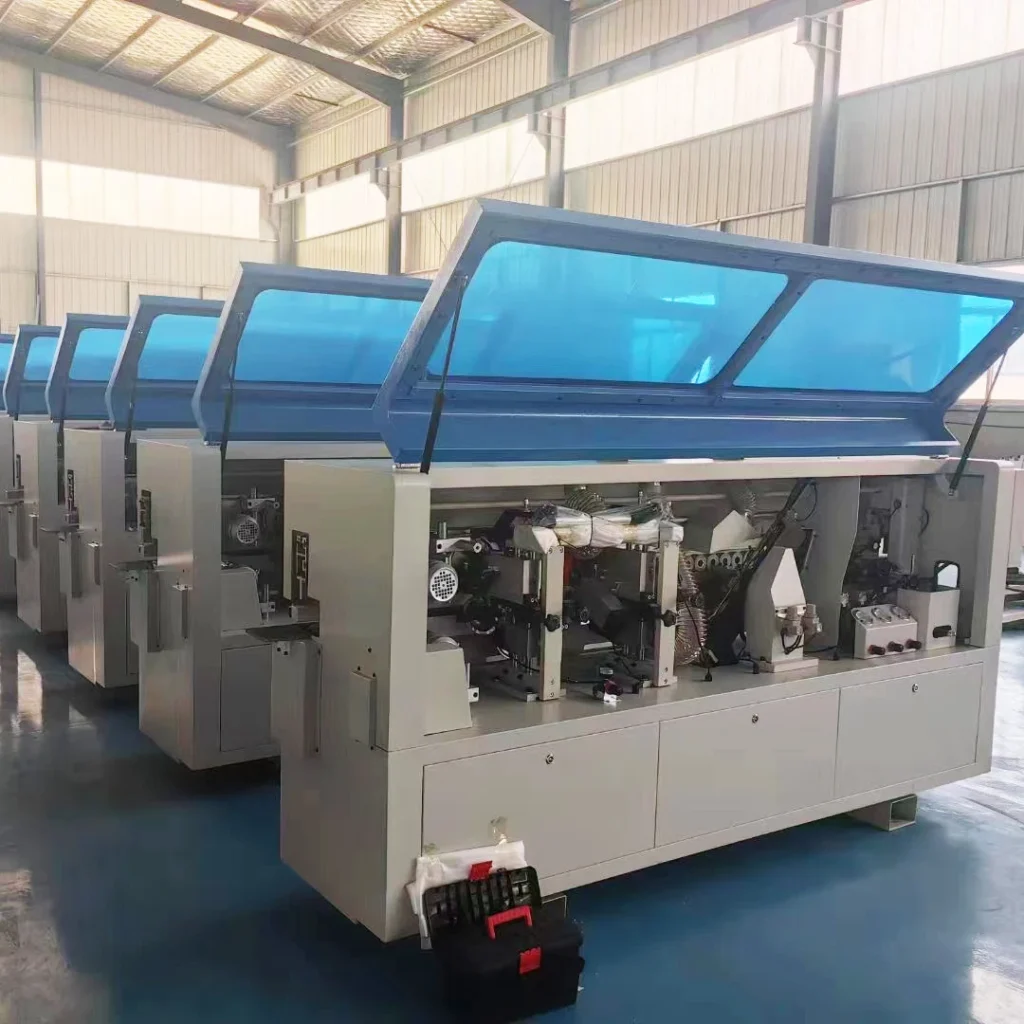
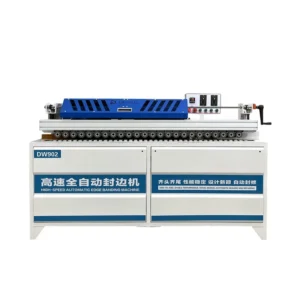
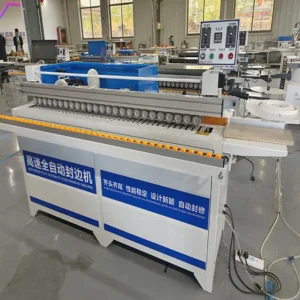
Precision-Machined Frame Construction — 14 mm national standard high-strength steel plate with high-temperature quenching, built for OEM branding and private-label packaging on every ZDS280B / ZDS280C unit leaving the factory floor.
Technical Specifications
| Parameter |
Value |
| Model |
ZDS280B / ZDS280C |
| Product Type |
Automatic Straight Line Edge Bander |
| Main Functions (ZDS280B) |
Gluing, End Trimming, Fine Trimming, Buffing |
| Main Functions (ZDS280C) |
Gluing, End Trimming, Fine Trimming, Scraping, Buffing |
| Working Pressure |
0.6–0.8 MPa |
| Panel Thickness Range |
10–55 mm |
| Edge Thickness Range |
0.4–3 mm |
| Feed Speed |
15 m/min |
| Min. Panel Width |
45 mm |
| Min. Panel Length |
80 mm |
| Voltage & Frequency |
380V-3HP (frequency to be confirmed for target market) |
| Rated Power |
7.5 kW |
| Net Weight |
650 kg (ZDS280B) / 800 kg (ZDS280C) |
| Overall Dimensions (L×W×H) |
2300×700×1250 mm (ZDS280B) / 2800×700×1250 mm (ZDS280C) |
| Fuselage Construction |
14 mm high-strength steel plate, frame-type, high-temperature quenching |
| Conveyor Guide Rail |
HT260 |
| Conveying Motor |
Taiwan brand with thermal protection |
| Pneumatic System |
German Festo or Taiwan AirTAC cylinders; AirTAC magnetic switches |
| Electrical Components |
Delixi/Chint air switches and contactors; Japanese Omron travel switches |
| Warranty |
1 year |
Application Suitability
| Application |
Material or Output |
| Custom cabinet door and carcass edging |
MDF and particleboard panels with PVC edge banding |
| Plywood furniture component finishing |
Plywood panels 10–55 mm thick with veneer or PVC banding |
| Small-to-medium batch straight-line production |
Solid wood panels requiring consistent glue application and trimming |
| Joinery workshop transition from manual to automated |
Panel boards in the 45 mm minimum width range upward |
What Happens When Voltage and Frequency Get Overlooked Before Shipment
Every ZDS280B and ZDS280C leaves with voltage, frequency, and control language formally confirmed and documented.
I remember a distributor in Southeast Asia who received a container of edge banders quoted at 380V/50Hz, only to find the local industrial grid ran 415V/60Hz. The motors overheated within the first shift, and the thermal protection tripped repeatedly. The machines sat on the workshop floor for weeks while new motors were sourced. That kind of mismatch is entirely avoidable if the conversation happens before production starts rather than after the crate is opened. An automatic edge bander factory that builds for export must treat electrical confirmation as a hard gate, not an afterthought. [NEED_CITE: voltage and frequency standards by export market]
Component Sourcing Transparency for Distributor Partnerships
When an importer evaluates an OEM edge banding machine supplier, the conversation quickly moves past exterior finishes to what sits inside the electrical cabinet and pneumatic manifold. The ZDS280B and ZDS280C use Delixi or Chint air switches and contactors paired with Japanese Omron travel switches — components that regional service teams can identify, source, and replace without waiting for proprietary parts shipped overseas. This traceability matters when a distributor commits to stocking spare inventory for their territory.
Pneumatic Reliability Across Gluing and Trimming Stations
The pneumatic system runs on German Festo or Taiwan AirTAC cylinders with AirTAC magnetic switches governing each station’s response timing. In practice, this dual-sourcing approach means an automatic edge bander factory can match the pneumatic specification to a buyer’s existing service network. A distributor whose technicians are already trained on Festo components can request that configuration across the entire order, keeping the maintenance knowledge base unified. [NEED_CITE: pneumatic component standardization in woodworking machinery exports]
How Frame Rigidity and Rail Material Shape Long-Term Accuracy

Board Thickness Range and What It Means for Mixed Production
The 10–55 mm panel thickness range covers the majority of furniture-grade MDF, particleboard, and plywood stock that a small-to-medium workshop processes daily. The 14 mm high-strength steel fuselage, treated with high-temperature quenching, resists the frame deflection that causes glue gap variation when heavier panels pass through at 15 m/min. HT260 conveyor guide rails maintain the feed plane flatness over extended production runs. For OEM partners building a model mix, this working range positions the ZDS280B as the entry configuration and the ZDS280C — with its added scraping station — as the step-up for workshops handling veneer banding where scrape finish matters.
The Cost of Skipping Pre-Shipment Panel Testing
I once watched a container of edge banders arrive at a buyer’s facility only for the first test panel to show visible glue line inconsistency on high-density MDF. The glue pot temperature had never been dialled in for that specific substrate. The buyer’s production team spent a day and a half adjusting parameters that should have been locked down before the machine left our floor. Now every unit runs a buyer-supplied panel sample through all stations, and the test record ships with the documentation package. [NEED_CITE: edge banding adhesion testing standards for panel substrates]
Why Procurement Teams Source This OEM Edge Bander Directly
The frame-type fuselage is welded and quenched in-house, not assembled from third-party subframes, giving OEM partners a single point of accountability for structural integrity. Component sourcing across electrical, pneumatic, and drive systems is documented per unit, supporting the transparency that importers need when presenting to their own downstream buyers. Voltage, frequency, and control panel language are confirmed at the quotation stage, eliminating the post-delivery mismatches that stall commissioning. Pre-shipment testing runs actual buyer-supplied panel material through every station before crating. Private label packaging, logo placement, and colour specifications are handled as standard configuration options rather than special requests.
Documentation & Verification
- CE declaration of conformity matched to the ZDS280B or ZDS280C model designation on the nameplate
- ISO 9001 certificate covering the manufacturing process from incoming material inspection to pre-shipment test
- Full electrical schematic reflecting confirmed voltage and frequency for the destination grid
- Factory test record with panel sample output showing edge quality across all stations
- Spare parts list cross-referenced to Festo, AirTAC, Omron, Delixi, and Chint component numbers
Installation, Commissioning & Support
- The 7.5 kW rated power requires a dedicated 380V circuit with confirmed frequency matching local grid supply
- Overall length of 2800 mm (ZDS280C) requires minimum 3500 mm clear floor space including infeed and outfeed zones
- Working pressure of 0.6–0.8 MPa demands a clean, dry compressed air line with a dedicated regulator upstream
- First-run parameter setup covers glue pot temperature calibration for the specific edge banding material the buyer stocks
- Operation and maintenance manual provided in the buyer’s agreed language, covering all station adjustments
- Wear components including trimming cutters and buffing wheels listed with reorder part numbers in the spare parts package
Preparing Your Inquiry
When you are specifying an OEM edge banding machine for your market, the details that slow down a quotation are usually the ones that prevent problems later. Share the panel materials you plan to process — MDF, particleboard, plywood, or solid wood — along with the thickness range and edge banding type. Confirm your local voltage and frequency so the electrical system is built to match from the start. If you are evaluating for a territory, let us know your target model mix and whether you need uniform pneumatic component branding across the order for service consistency. Sending a panel sample for a pre-shipment test run removes guesswork from glue temperature and feed speed settings.
Frequently Asked Questions
Q: What OEM and private label options are available on these edge banders?
A: Logo placement on the fuselage, custom colour on external panels, branded control panel overlays, and private-label packaging are all handled as standard configuration. You specify the artwork and colour codes at order confirmation, and they are applied during final assembly before the pre-shipment test run.
Q: How do you confirm voltage and frequency before production starts?
A: The buyer’s local grid specification is collected during the quotation stage and written into the production order. The electrical cabinet is then built with matching air switches, contactors, and motor windings. A voltage confirmation document ships with the electrical schematic for customs and on-site electrician reference.
Q: Can I witness or receive records of the pre-shipment factory test?
A: Every ZDS280B and ZDS280C runs buyer-supplied or buyer-specified panel material through all stations before crating. A signed test record with output samples and parameter settings is included in the documentation package. Factory visits for live witness testing are arranged on request.
Q: What spare parts ship with the machine, and how are reorders handled?
A: Each unit includes a starter set of wear components matched to the station configuration — trimming cutters, buffing wheels, and scraper blades. The spare parts list references original component manufacturers so regional distributors can source locally or reorder directly.
Q: Can I send my own panel samples for a test run before committing?
A: Yes. Send representative panel stock with the edge banding material you plan to use. We run the samples through the full station sequence, document glue temperature, feed speed, and trimming results, and return the test panels along with the formal quotation.