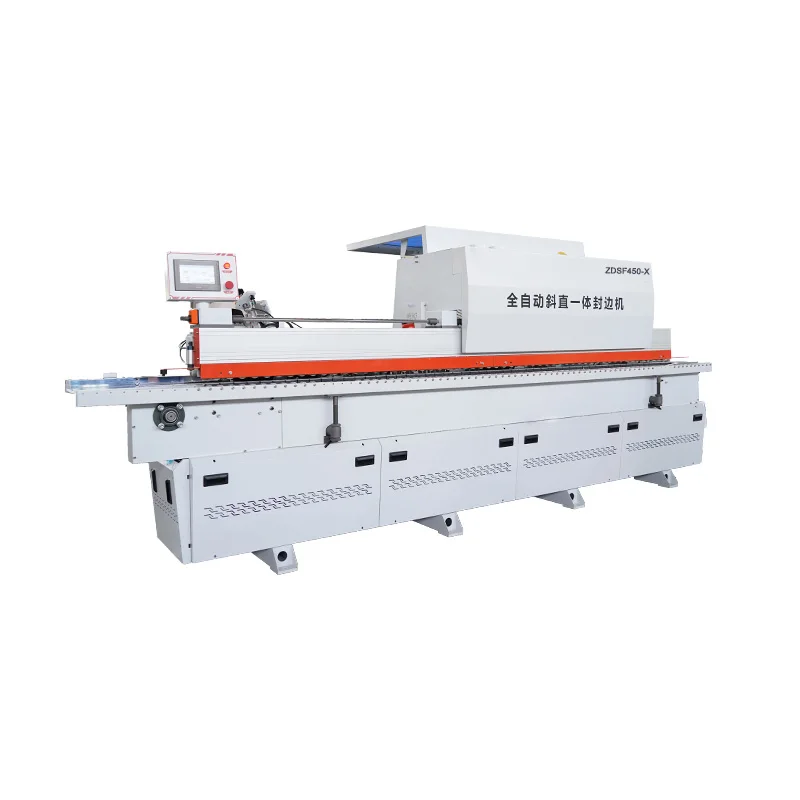
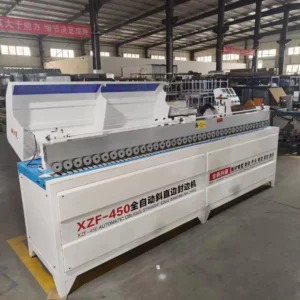
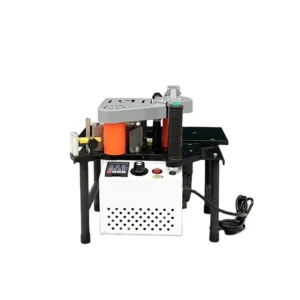
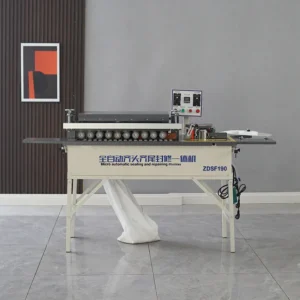
In-House Precision Manufacturing — every automatic edge banding machine leaves our Ningjin facility with proprietary cutting mechanisms ground to ±0.02mm tolerance and verified through four-stage QC before crating.
Technical Specifications
| Parameter |
Value |
| Product Type |
Automatic Edge Banding Machine |
| Overall Dimensions (L×W×H) |
4350×920×1650 mm |
| Total Power |
17.5 kW |
| Voltage & Frequency |
Configurable from 110V to 440V / 50-60Hz (three-phase) |
| Conveying Motor |
2.2 kW with frequency converter |
| Feed Speed |
0–12 m/min (variable, straight and inclined edge) |
| Panel Thickness Range |
18 / 22 / 25 mm |
| Minimum Panel Width |
>100 mm |
| Minimum Panel Length |
>250 mm |
| Edge Banding Width |
20–50 mm |
| Edge Banding Thickness |
Up to 1.2 mm (material dependent) |
| Edge Banding Material |
PVC |
| Glue Pot Capacity |
2000 mL |
| Glue Pot Heating Power |
1.2 kW |
| Glue Pot Operating Temperature |
150–170°C (source value — verify against final order spec) |
| Heat Gun Power |
2 kW |
| Trimming Motor |
0.75 kW × 2 |
| End Trimming Motor |
0.37 kW × 2 |
| Polishing Motor |
0.37 kW × 2 |
| Milling Motor B |
3.5 kW |
| Selection Motor A |
4 kW |
| Slotted Motor |
220V 0.8 kW |
| Bevel Capability |
45 degree |
| Control System |
Xinjie industrial touch screen with Xinjie industrial inverter |
| Air Source Pressure |
0.6–0.8 MPa |
| External Dust Extraction Port |
100 mm diameter |
Application Suitability
| Application |
Material or Output |
| Custom furniture panel edge banding |
MDF, particleboard, plywood with PVC edge strips |
| Cabinet door and carcass production |
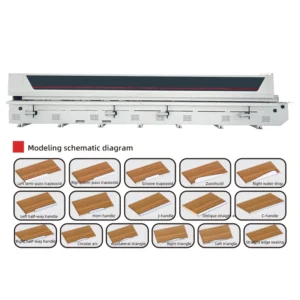
Straight and 45° bevel edge profiles on panel stock |
| Contract furniture component finishing |
High-volume panel runs requiring consistent glue-line quality |
| Regional distributor stock programs |
Private-label automatic edge banding machine OEM factory builds for local market supply |
Why the Voltage Question Should Come Before the Price on an Automatic Edge Banding Machine OEM Factory Order
Confirming local voltage and frequency before production starts prevents weeks of on-site electrical rework that no distributor margin can absorb.
I once watched a Malaysian customer’s electrician spend an entire week rewiring a 380V machine that should have been built for 415V three-phase. The motors simply would not start, and every day of downtime eroded the distributor’s credibility with the end user. When sourcing from an automatic edge banding machine OEM factory, the electrical specification must be locked in writing before the first component is cut [NEED_CITE: voltage and frequency standards by export market]. A factory that skips this confirmation step is signaling a deeper problem in how they manage build-to-order configurations across different export markets.
How OEM Partnerships Are Structured at the Factory Level
Working with an automatic edge banding machine OEM factory means defining the customization boundary before tooling begins. This machine supports private-label branding across the enclosure color, logo placement, and control panel language — each configured to match the distributor’s market identity. The Xinjie touch screen interface can be loaded with operator menus in the local language, reducing commissioning friction when your service team hands over the equipment to an end user who has never operated Chinese-built woodworking machinery before.
What the Four-Stage QC Process Actually Covers
Incoming material inspection checks every motor winding, bearing grade, and pneumatic valve before assembly begins. In-process verification measures grinding tolerances on the trimming and polishing stations while the frame is still accessible. Finished-product testing runs actual MDF and particleboard panels through all stations at varying feed speeds. Pre-shipment verification photographs every crate and documents the electrical schematic against the confirmed voltage order [NEED_CITE: CE machinery directive requirements for industrial equipment]. Each stage generates records that are shared with the OEM partner before dispatch authorization.
Reading the Spec Sheet Against Real Workshop Conditions
The 0–12 m/min variable feed speed, managed through the Xinjie inverter, matters because PVC edge banding on MDF behaves differently than on dense particleboard — slower feed allows the 2000 mL glue pot to maintain thermal stability at the bonding point. The 45° bevel capability adds a second processing geometry without requiring a separate machine, which is significant for distributors building a product range around cabinet door workshops. Panel thickness coverage at 18, 22, and 25 mm handles the majority of carcass and door stock encountered in custom furniture markets. The 100 mm dust extraction port must connect to a workshop system with adequate static pressure, otherwise trimming debris contaminates the polishing stage and compromises edge finish quality [NEED_CITE: dust extraction requirements for edge banding operations].

The Hidden Cost of Skipping Configuration Validation
A distributor who accepts a standard voltage build without confirming local supply standards faces more than rewiring costs — the motor windings may operate outside their designed thermal envelope, shortening bearing life and triggering warranty claims the factory will legitimately dispute. Control panels shipped in a language the operator cannot read stall commissioning for days while translation workarounds are improvised on the shop floor. Machines specified without considering the end user’s actual panel thickness range force the distributor into uncomfortable conversations when 25 mm stock cannot pass through the feed chain [NEED_CITE: common edge banding commissioning failures in export markets].
Why Distributors Source This Machine from Our Facility
In-house manufacturing means every grinding tolerance and assembly sequence is controlled under one roof, not outsourced to a contract workshop with separate quality incentives. The patented cutting mechanisms deliver verified ±0.02mm tolerance that your service team can measure and demonstrate to end users during acceptance testing. Voltage and language customization is standard procedure, not a special request that disrupts the production schedule. The full machine family — from entry-level to full-function pre-milling models — lets a distributor scale a regional product range without qualifying a second supplier. Factory visits are open, allowing OEM partners to inspect precision-ground components and test-run facilities before committing to a container order.
Documentation & Verification
- CE declaration of conformity matched to the automatic edge banding machine configuration
- ISO 9001 certificate covering the manufacturing and QC process
- Electrical schematic confirming the exact voltage and frequency built for your market
- Factory test record documenting panel edge quality on your specified material range
- Packing photographs showing crate condition and component securing before dispatch
- Operation and maintenance manual in the language agreed during order confirmation
Installation, Commissioning & Support
- 4350×920 mm footprint requires level concrete flooring with clearance for panel infeed and outfeed
- Three-phase power supply must match the confirmed voltage specification with dedicated circuit protection for the 17.5 kW total load
- Machine arrives fully assembled; dust extraction port connects to workshop system via the 100 mm external port
- First-run calibration sets glue pot temperature, feed speed, and trimming offsets on your actual panel stock
- Xinjie touch screen training covers parameter storage for repeat panel dimensions and bevel settings
- Spare parts list identifies consumable trimming cutters, polishing wheels, and pneumatic seals
What We Need to Build Your Configuration
To configure this automatic edge banding machine for your market, share the local voltage and frequency standard, the control panel language your operators require, and the panel materials your end users process most frequently. If you are building a distributor range, indicate which station configurations — straight edge only, bevel, or full pre-milling — align with your target customer segments. Sample panel stock sent to our facility allows us to run a processing test and document edge quality before you commit to production quantities.
Frequently Asked Questions
Q: What is the full OEM and private-label customization scope available for this edge bander?
A: Customization covers enclosure color, logo placement, control panel language, voltage from 110V to 440V, and tailored station configurations. The Xinjie touch screen interface loads operator menus in the target market language. OEM partners review and approve the final specification sheet before production begins, ensuring the private-label output matches the distributor’s brand positioning across all visible surfaces and documentation.
Q: How is four-stage QC implemented and what records are provided before shipment?
A: Incoming material inspection verifies motor grades and bearing specifications. In-process checks measure grinding tolerances on trimming and polishing stations. Finished-product testing runs panels through all stations at varying feed speeds. Pre-shipment verification documents electrical schematics against confirmed voltage orders. Each stage generates written records shared with the OEM partner, who must authorize dispatch before crating proceeds.
Q: Can voltage, frequency, and control panel language be matched to our target market?
A: Yes. Voltage is configurable across the 110V to 440V range at 50 or 60Hz three-phase, confirmed in writing before production. The Xinjie touch screen accepts multilingual operator menus loaded during assembly. Electrical schematics in the final documentation package reflect the exact build configuration, allowing local electricians to service the machine without reverse-engineering non-standard wiring.
Q: What spare parts backup and technical training are provided for distributor service teams?
A: A spare parts list identifies consumable trimming cutters, polishing wheels, and pneumatic seals specific to this configuration. Distributor service teams can visit the factory for hands-on training covering station adjustment, inverter parameter tuning, and fault diagnosis through the Xinjie touch screen. Remote troubleshooting support references the same control interface the operator uses daily.
Q: What component sourcing and precision grinding standards are used in manufacturing?
A: Motors, inverters, and pneumatic components are sourced from specified suppliers and verified during incoming material inspection. Precision-ground trimming and polishing components are held to ±0.02mm tolerance through proprietary cutting mechanisms. In-process QC measures these tolerances before final assembly, and finished-product testing confirms edge quality on actual panel stock before the machine is cleared for shipment.