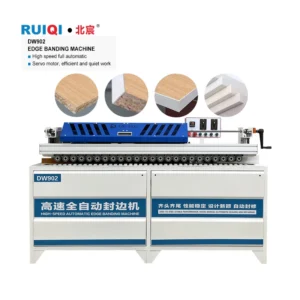
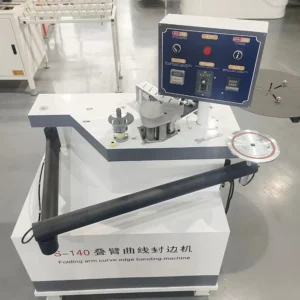
Precision-verified manufacturing — Every Portable Dust-Free Sliding Table Saw leaving our Ningjin facility undergoes four-stage QC with pre-shipment electrical and mechanical test records, ensuring OEM partners receive machines built to confirmed specifications rather than catalog promises.
Technical Specifications
| Parameter |
Value |
| Product Type |
Portable Dust-Free Sliding Table Saw with Scoring Blade |
| Total Power |
6.2 kW |
| Main Saw Motor |
3.0 kW |
| Main Saw Speed |
3800 r/min |
| Main Saw Blade Diameter |
200 mm |
| Scoring Saw Motor |
2.0 kW |
| Scoring Saw Speed |
13000 r/min |
| Vacuum Cleaner Motor |
1.2 kW |
| Maximum Cutting Length |
2440 mm (basis not stated in source — confirm guide rail extension and support configuration) |
| Maximum Cutting Thickness |
40 mm (basis not stated in source — confirm panel density and material) |
| Machine Dimensions (Saw Unit) |
500 × 300 × 380 mm |
| Net Weight |
22 kg |
| Dust Extraction |
Integrated 1.2 kW vacuum port |
| Plug Options |
EU / USA / AU / UK |
| Control Language |
Chinese, English (customizable to Spanish and other languages) |
| Certification |
CE |
Application Suitability
| Application |
Material or Output |
| Panel sizing for custom cabinet production |
MDF, particleboard, plywood up to 40 mm thickness |
| Laminated board cutting with clean edges |
Melamine-faced chipboard, veneered panels using scoring blade |
| On-site carpentry and joinery installation |
Solid wood boards and sheet goods in field conditions |
| Small-batch furniture workshop processing |
Standard 2440 × 1220 mm sheet materials |
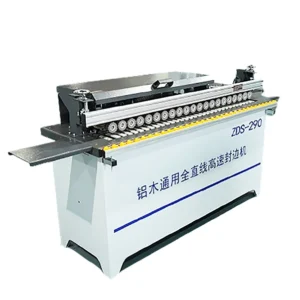
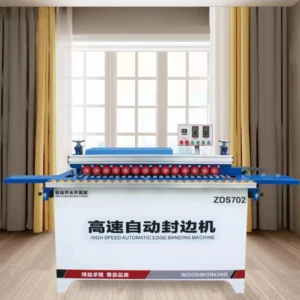
| OEM catalog bundling with edge banders |
Complete panel-to-edge processing equipment sets |
Why Voltage Confirmation Must Happen Before the Order Is Placed
A portable saw built for 380V/50Hz will not start on a 220V/60Hz workshop circuit, and rewinding the motor on-site is rarely an option.
I once watched a container of woodworking machines sit on a dock in Veracruz for three weeks because the buyer’s electrician opened the control box and found wiring that did not match local supply. The Portable Dust-Free Sliding Table Saw factory OEM process we follow requires voltage and frequency confirmation before production begins, not after the machine ships. When regional distributors skip this step to save time, the result is idle equipment and frustrated end users [NEED_CITE: voltage and frequency standards by export market]. The electrical schematic we issue with each order reflects the exact motor winding, contactor rating, and plug configuration your market requires.

Manufacturing Depth Behind the Compact Footprint
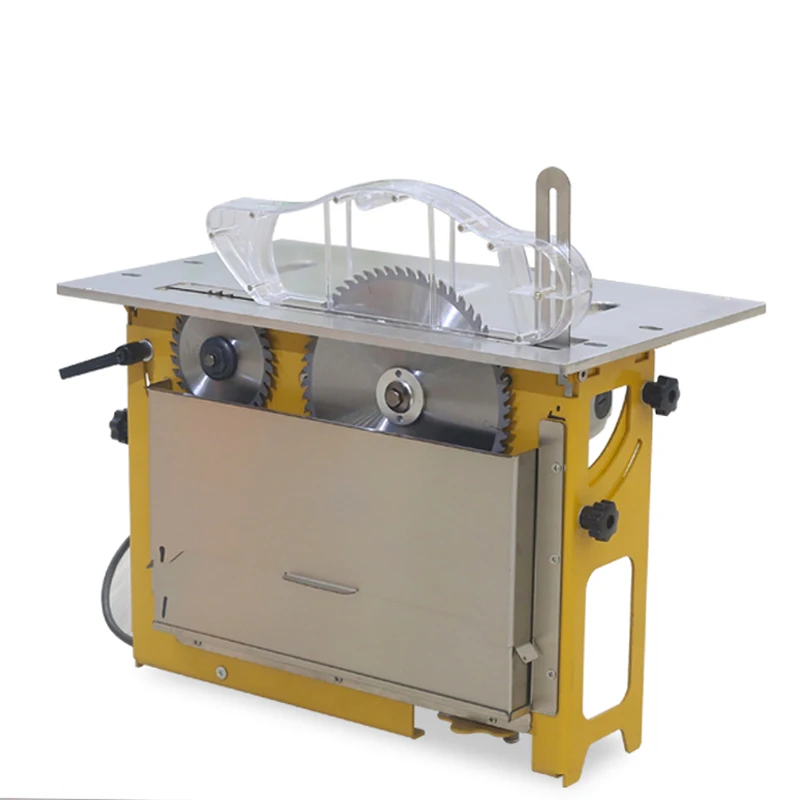
At 22 kg with a 500 × 300 × 380 mm saw unit, this machine might appear simple from the outside. Inside, the main saw and scoring saw are independently powered — 3.0 kW and 2.0 kW respectively — meaning neither blade borrows torque from the other when cutting dense particleboard or thick MDF. Our Ningjin factory produces the cutting mechanism under proprietary patents, and every Portable Dust-Free Sliding Table Saw factory OEM order begins with component-level sourcing that we control directly rather than outsourcing to third-party assemblers.
What Four-Stage QC Means for Your Shipment
Incoming material inspection checks motor windings and bearing tolerances before assembly starts. In-process verification catches guide rail alignment deviations during the build. Finished product testing runs the saw through actual panel cuts at your specified thickness range. Pre-shipment verification produces a factory test record with photographs that ships alongside your machine. This sequence applies whether you order a single unit for evaluation or a container load for distribution [NEED_CITE: quality management standards for woodworking machinery exports].
How the Scoring Blade and Dust Extraction Change the Cut
The 13000 r/min scoring blade scores the bottom laminate before the main 200 mm blade at 3800 r/min completes the through-cut. This two-stage action prevents chipping on melamine and veneer surfaces, which is the difference between a sellable cabinet panel and scrap. The integrated 1.2 kW vacuum port captures dust at the cut point rather than relying on an external collector that a portable setup may not have. For OEM partners bundling this saw with edge banders, the chip-free edge directly affects downstream adhesive bonding and banding quality. The 2440 mm cutting length handles full standard sheets, though guide rail extension and support configuration should be confirmed for your specific panel sizes.
The Real Cost of Skipping Pre-Shipment Verification
I have seen sliding table saws arrive at workshops where the guide rail was never leveled to the table during assembly, causing every cut to drift across the full 2440 mm length. Operators blame the blade, then the fence, then the material — never suspecting the machine was never verified before crating. With compact portable units especially, a small alignment error compounds across the cutting path [NEED_CITE: common installation failures in imported woodworking machinery]. Our pre-shipment test runs actual panels through the machine and documents the results before the saw leaves the factory floor.
What This Factory Brings to Your Supply Chain
In-house cutting mechanism patents mean the core cutting assembly is designed and manufactured here, not sourced from a generic catalog. Four-stage QC with documented pre-shipment records gives you verification, not just promises. Voltage customization from 110V to 440V with matching plug configurations is standard procedure, not a special request. Multilingual control panel options allow you to localize the machine for Spanish, Portuguese, or other regional markets. Engineer-led configuration means we review your upstream and downstream equipment before recommending specs, preventing the height mismatch and feed incompatibility issues that stall production lines.
Documentation & Verification
- CE declaration of conformity covering machinery directive requirements for this portable saw class
- Factory test record showing actual cut results on your specified panel material and thickness
- Electrical schematic matching confirmed voltage, frequency, and plug type for your destination market
- ISO 9001 certificate documenting the quality management system behind each production batch
- Packing photographs showing crate condition, accessory placement, and securing method before dispatch
Installation, Commissioning & Support
- Verify workshop circuit matches confirmed voltage and frequency before uncrating the 6.2 kW total load
- Allow adequate clearance around the 500 × 300 mm saw unit for full 2440 mm guide rail travel
- Connect the integrated 1.2 kW vacuum system before first cut to prevent dust accumulation in the motor housing
- Run scoring blade and main blade independently to confirm rotation direction matches your electrical phase sequence
- Set cutting depth and scoring depth on test panels matching your production material before switching to live stock
- Replace scoring blade at intervals based on laminated material volume to maintain chip-free edge quality
What to Include in Your Inquiry
Tell us the panel materials and thickness range you process most often, the local voltage and frequency at your destination market, and whether you need control panel language customization beyond English. If you are bundling this saw with edge banders or boring machines for a catalog offering, share the upstream and downstream equipment so we verify compatibility. We can arrange sample processing tests on your actual materials before you commit to a production order.
Frequently Asked Questions
Q: Can I apply my own logo and branded packaging to this portable saw?
A: Yes. Our OEM and private-label process covers logo placement on the machine body, custom color schemes, branded packaging, and localized documentation. We work from your artwork files and provide proofs for approval before production begins. Minimum order quantities for full branding packages vary by customization scope.
Q: What electrical standards does the factory support for export markets?
A: We configure voltage from 110V to 440V and match frequency to 50Hz or 60Hz depending on your market. Plug options include EU, USA, AU, and UK types. An electrical schematic and voltage confirmation document are issued before production so you can verify compliance with local regulations.
Q: Are the main saw motor and scoring unit produced in-house or sourced externally?
A: The cutting mechanism is produced under proprietary patents at our Ningjin facility. Motor units are sourced from established suppliers and undergo incoming inspection before assembly. This combination allows us to control the precision-critical cutting geometry while maintaining reliable motor supply for volume orders.
Q: What does the factory test record cover before the machine ships?
A: The pre-shipment test record documents guide rail alignment, scoring blade and main blade operation, vacuum extraction function, and actual cut samples on panel material. Photographs of the test results and packed crate condition are included with your shipping documentation.
Q: What spare part support is available for regional distributors?
A: We provide a spare parts list covering blades, bearings, belts, and electrical components specific to your machine configuration. Distributor orders can include a recommended spare parts kit sized to your territory’s service capacity. Technical documentation supports your service team in performing field replacements.