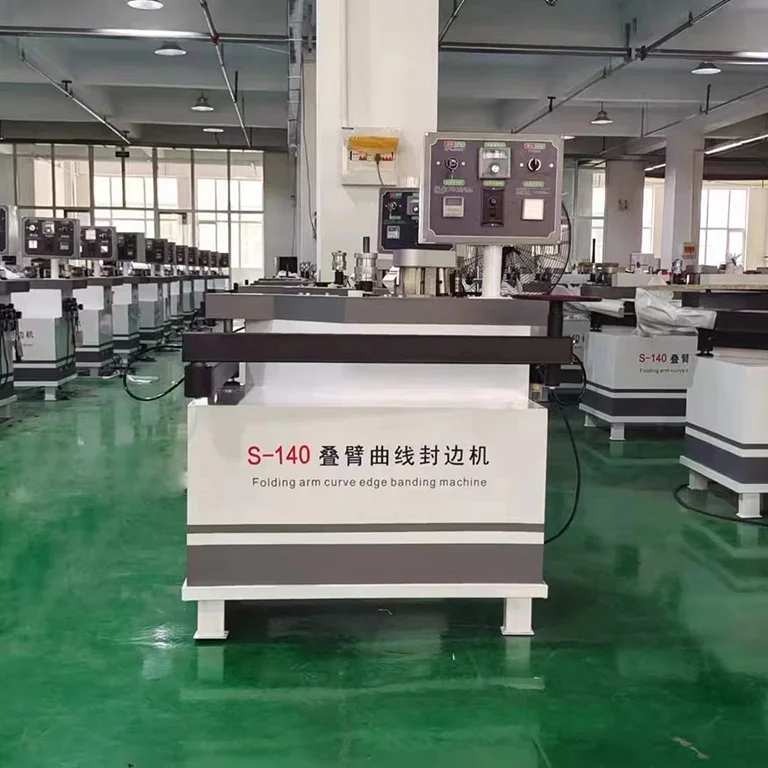
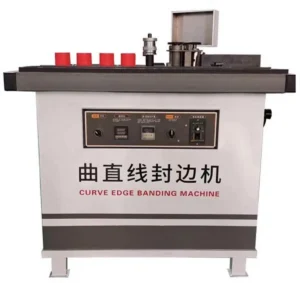
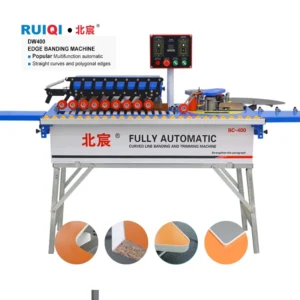
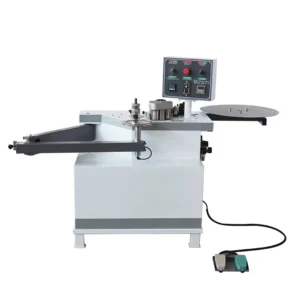
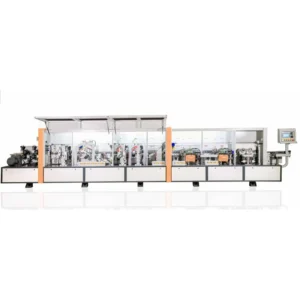
Precision Electrical Verification — Every S-140, W-2, and W-3 unit undergoes local grid parameter cross-checking before the motor is energized, preventing the on-site failures that arise from overlooked frequency mismatches.
Technical Specifications
| Parameter |
Value |
| Model |
S-140 / W-2 / W-3 |
| Product Type |
Curve Edge Banding Machine |
| Voltage |
220V / 220V 50Hz (configurable from 110V to 440V on request) |
| Rated Power |
1.4 kW (S-140, W-2) / 3.4 kW (W-3) |
| Control System |
Intelligent temperature control with speed adjustment and timer |
| Overall Dimensions (L×W×H) |
960×620×880 mm (S-140) / 1200×800×1220 mm (W-2) / 1210×1100×970 mm (W-3) |
| Net Weight |
88 kg (S-140) / 152 kg (W-2, W-3) |
| Air Supply Requirement |
0.5–0.8 MPa |
| Edge Banding Speed |
0–180 mm/s |
| Edge Band Thickness Range |
0.4–2 mm |
| Edge Band Width Range |
8–50 mm |
| Glue Pot Capacity |
1000 ml (S-140) |
| Suction Cup Size |
200×26 mm (S-140) / 300×26 mm (W-2, W-3) |
| Breaking Method |
Automatic tape break (double-cylinder controlled) |
| Gluing Type |
Double-sided gluing |
| Function |
Straight and curved dual purpose |
| Motor Type |
Pure copper motor |
| Hot Air Device |
Bottom-up hot air heating for improved adhesion |
| Edge Banding Wheel |
Adjustable +0.5 mm to prevent edge strip shifting |
| Key Features |
OEM logo, private-label packaging, multilingual control panels, KD packing with assembly guidance |
Application Suitability
| Application |
Material or Output |
| Custom cabinet and wardrobe production |
MDF and particleboard with PVC or veneer edge banding |
| Panel furniture edge finishing |
Plywood panels with 0.4–2 mm thickness banding on curved profiles |
| Office furniture and workstation edges |
Melamine-faced board with curved radius corners |
| Door and window frame trim |
Solid wood and composite substrates with straight or shaped edges |
| Small-batch joinery and prototype shops |
Mixed board substrates requiring frequent changeover between straight and curved runs |
Why the Voltage Question Should Come Before the Price on Any Curve Edge Banding Machine OEM Order
Confirming local frequency and plug type at quotation stage prevents the most expensive commissioning failures we see in exported woodworking equipment.
I once watched a double-sided gluing edge bander sit idle on a workshop floor in the Middle East for three days. The voltage matched, but the local grid ran at 60 Hz while the motor was wound for 50 Hz. The spindle speed climbed, the glue pot overheated, and the timer intervals no longer corresponded to actual belt travel. Two engineers flew out, rewired the control cabinet, and recalibrated every timing parameter before the machine could produce a single acceptable panel. That curve edge banding machine OEM order should have been caught on a checklist weeks earlier [NEED_CITE: voltage and frequency standards by export market].

Component Sourcing and Assembly Traceability
Every curve edge banding machine leaving our facility carries a component sourcing record that traces the motor winding specification, the glue pot heating element rating, and the pneumatic cylinder origin back to incoming inspection. The pure copper motor in the S-140, W-2, and W-3 series is matched to the confirmed destination frequency before it reaches the assembly bench. This matters for OEM partners who will field service calls under their own brand name — when a technician opens the cabinet, the nameplate data must match the documentation the end user received.
Private-Label Configuration and Brand Consistency
Private-label partners need more than a logo swap on the sheet metal. The control panel language, the operator manual terminology, the spare parts list part numbers, and the packing photographs all carry the distributor’s branding when the crate arrives at the destination port. Our curve edge banding machine OEM process locks these elements into a configuration sheet that the buyer approves before production starts, so the machine on the showroom floor and the machine shipped to the end customer carry identical documentation and interface wording [NEED_CITE: CE machinery directive requirements for industrial equipment].
How Double-Sided Gluing and Hot Air Heating Affect Curved Edge Quality
The double-sided gluing system applies adhesive to both the panel edge and the banding strip simultaneously, which is critical when the substrate follows a curved profile and the contact time is shorter than on a straight run. The bottom-up hot air device preheats the bonding zone so the glue reaches working temperature at the moment of contact rather than relying solely on pot temperature. For PVC banding at the thinner end of the 0.4–2 mm range, this reduces the cold-joint failures that appear as hairline delamination after the panel reaches the customer. The adjustable edge banding wheel, set at +0.5 mm, keeps the strip from creeping outward on tight radii where centrifugal feed forces push the material off-center.
What Happens When Frequency, Air Pressure, or Glue Type Are Missed at Quotation
A distributor once ordered a batch of edge banders rated for 220V 50Hz and shipped them to a territory running 220V 60Hz. The machines powered on, but the feed motor ran faster than the timer expected, the glue pot overshot its setpoint, and the automatic tape break fired too late, leaving excess strip on every curved panel. The workshop blamed the machines; the distributor blamed the factory; the real cause was a missing line on the order form [NEED_CITE: common causes of edge banding machine commissioning failure]. Separately, if the workshop air supply sits below 0.5 MPa, the double-cylinder breaking mechanism cannot achieve full stroke and the tape tears instead of cutting cleanly — a problem that only surfaces once production volume picks up.
Why Distributors Source Curve Edge Banding Machines Here
In-house manufacturing means the patented cutting mechanisms and precision-ground components are built under one roof, not assembled from outsourced sub-kits. The four-stage QC sequence — incoming material, in-process, finished product, and pre-shipment verification — catches the glue pot wiring error before the crate closes. Voltage customization from 110V to 440V is a standard configuration step, not a special engineering request. OEM partners receive a formal configuration document covering logo placement, control panel language, and nameplate data before the production order is released. Factory visits are open so buyers can inspect the precision grinding benches and the pre-shipment test area in person.
Documentation & Verification
- CE declaration of conformity matched to the exported model and destination market
- ISO 9001 certificate covering manufacturing process and QC record retention
- Electrical schematic with confirmed voltage, frequency, and plug type for each order
- Factory test record run on buyer-specified panel thickness and edge band material
- Operation and maintenance manual printed in the agreed operator language
- Packing photographs documenting crate contents before dispatch
Installation, Commissioning & Support
- KD-packed unit requires on-site assembly using included manual and video guidance for S-140, W-2, or W-3
- Dedicated 220V circuit with confirmed frequency required before the 1.4 kW or 3.4 kW motor is energized
- Air compressor supplying 0.5–0.8 MPa must be connected before the double-cylinder tape break is tested
- Intelligent temperature control calibrated to local ambient conditions during first-hour commissioning run
- Edge banding wheel adjusted to +0.5 mm offset and verified on buyer’s actual curved panel samples
- Spare parts list with suction cup and glue pot consumables identified for first reorder cycle
How to Structure Your Inquiry
When you are evaluating a curve edge banding machine OEM partnership, we need the destination country and confirmed grid voltage plus frequency, the edge banding materials you plan to stock (PVC, veneer, melamine, and their thickness range), the control panel language your operators require, and whether you need a sample panel test run on your own board stock before the order is finalized. If you are building a model mix for a regional market, tell us which production volumes the smaller workshops target so we can recommend whether the S-140 or the W-3 frames the entry point of your range.
Frequently Asked Questions
Q: What OEM and private-label customization is available for curve edge banding machines?
A: Customization covers the machine logo and color, voltage from 110V to 440V, control panel language, nameplate data, operator manual translation, spare parts list formatting, and packing photography branded to your distribution identity. Each element is locked in a configuration sheet you approve before production begins.
Q: How does four-stage QC apply to edge banding machine orders?
A: Incoming material inspection verifies motor winding and pneumatic component ratings. In-process checks cover precision grinding and assembly alignment. Finished product testing runs the machine on actual panel stock. Pre-shipment verification confirms electrical parameters against the destination country grid data before the crate is sealed.
Q: What documentation ships with each machine for customs and commissioning?
A: Each unit ships with a CE declaration of conformity, ISO 9001 certificate copy, electrical schematic with confirmed voltage and frequency, factory test record, multilingual operation manual, spare parts list, and packing photographs. These documents support customs clearance and provide the commissioning technician with verified reference data.
Q: How are spare parts supplied and what does the warranty cover?
A: The warranty covers factory-defect spare parts replacement for one year. The spare parts list identifies consumables such as suction cups and glue pot elements so distributors can stock for their territory. Replacement parts ship with matching specification data to ensure compatibility with the exact configuration delivered.