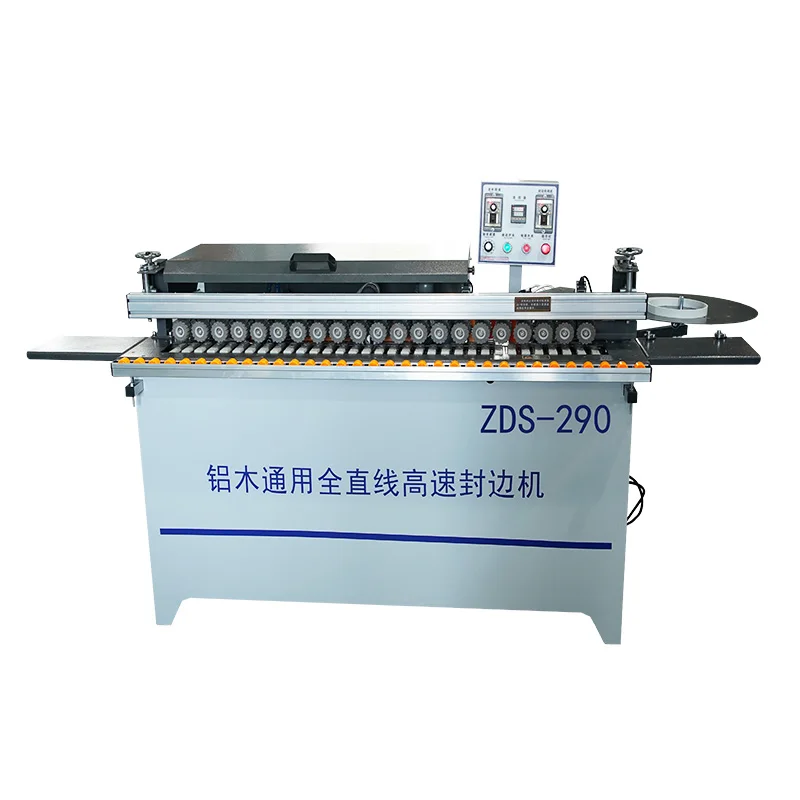
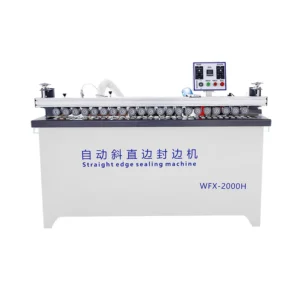
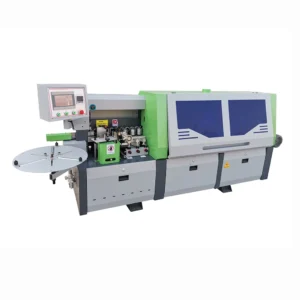
Precision-Grounded Assembly — Every ZDS290 leaving our Ningjin floor is measured against a physical tolerance record, not a brochure claim, because our QC checkpoints demand verifiable proof before crating.
Technical Specifications
| Parameter |
Value |
| Model |
ZDS290 |
| Product Type |
Aluminum-Wood Universal Full Linear High-Speed Edge Banding Machine |
| Rated Voltage |
220V |
| Rated Power |
4165W |
| Edge Banding Speed |
6 m/min |
| Strip Thickness Range |
0.5 – 2.5 mm |
| Sheet Thickness Range |
10 – 50 mm |
| Glue Pot Capacity |
1000 ml |
| Glue Pot Heating Power |
800W |
| Conveying Motor Power |
180W |
| Trimming Motor Power |
800W × 2 |
| Polishing Motor Power |
180W × 2 |
| Vacuuming Power |
1200W |
| Rated Air Pressure |
0.6 – 0.8 MPa |
| Pressure Beam |
Integrated thickened aluminum alloy |
| Pressure Wheel System |
Double-row inclined pressure wheel |
| Board Thickness Display |
Digital display |
| Pressure Beam Adjustment |
Hand-crank wheel |
| Glue Application |
Imitation glue pot with concave-convex gum wheel |
| Machine Size |
150 × 57 × 96 cm |
| Warranty |
1 year |
Application Suitability
| Application |
Material or Output |
| Honeycomb aluminum panel edge treatment |
Aluminum honeycomb core with composite skin |
| Wood-based panel finishing |
MDF, particleboard, plywood substrates |
| Aluminum-wood composite processing |
Mixed wood and aluminum extruded profiles |
| Custom furniture and cabinet edge finishing |
PVC, melamine, and wood veneer banding strips |
| Entry to mid-range workshop production |
Mixed-substrate environments requiring quick changeover |
Why a Claimed Tolerance Means Nothing Without a Factory Test Record
Tolerance is only real when measured on your actual board, under your production conditions, before the crate is closed.
As a distributor evaluating an Edge Banding Machine manufacturer OEM factory, you have likely seen spec sheets that promise sub-millimeter precision but never include a physical witness sample. We encountered this early on when a machine shipped to a humid climate returned delaminated edges after two weeks; the factory test had been run on MDF, but the customer was running melamine-faced particleboard with a completely different thermal profile [NEED_CITE: thermal expansion differences between wood-based substrates]. Since then, every pre-shipment run we document uses the buyer’s own substrate or a certified equivalent.
In-House Machining of the Pressure Beam Assembly
The thickened aluminum alloy pressure beam on the ZDS290 is machined and ground on our own floor, which lets us control flatness directly rather than accepting a vendor’s tolerance band. When an Edge Banding Machine manufacturer OEM factory outsources this component, any warping or uneven wear transfers directly into the strip contact zone. By keeping beam production internal, we maintain alignment across the full 10–50 mm panel thickness range without relying on field shimming.
Proprietary Concave-Convex Gum Wheel Mechanism
Our glue pot uses a concave-convex gum wheel design developed specifically for substrates where visible glue lines cause immediate rejection. On honeycomb aluminum panels, the surface energy differs sharply from MDF, and a flat gum wheel tends to over-apply adhesive at the strip edges. The contoured wheel matches the strip profile, distributing a controlled film that cures cleanly [NEED_CITE: adhesive film thickness and bond strength on composite substrates]. This mechanism is one of the reasons distributors bring us difficult substrate pairings that standard machines cannot hold.
Reading the Specification Sheet Against Real Production Needs
The ZDS290 runs at 6 m/min with dual 800W trimming motors, a configuration that matters when you are trimming 2.5 mm PVC on a 50 mm thick board; insufficient motor power here causes chatter marks that show up under angled light. The 1000 ml glue pot with 800W heating element reaches operating temperature within minutes, which reduces idle energy draw during short-run changeovers common in custom furniture shops. Meanwhile, the 1200W integrated vacuuming system captures trim waste at the source, keeping the polishing stations free from debris that would otherwise score the finished edge. The double-row inclined pressure wheel design, combined with the digital board thickness readout, allows operators to dial in strip contact force without guesswork each time they switch between a 12 mm shelf panel and a 40 mm worktop.

The Hidden Cost of Skipping a Pre-Shipment Material Trial
When a machine arrives at a port and the first test run produces lifted edges, the cost extends far beyond rework. Production lines sit idle, container demurrage accumulates, and the distributor’s local reputation takes a hit that no discount can repair. We have traced these failures back to glue temperature settings that were correct for the factory’s test board but wrong for the customer’s ambient humidity and substrate density [NEED_CITE: edge banding adhesion failure analysis in varying humidity]. Running your actual material through the ZDS290 before dispatch eliminates this class of failure entirely.
Why Sourcing the ZDS290 From Our Production Floor
Our 10,000㎡ facility in Ningjin houses 60 engineers and over 800 skilled workers, giving us direct control over every machining and assembly stage. We hold proprietary patents on the cutting and glue application mechanisms inside the ZDS290, meaning design changes do not depend on external suppliers. Four-stage QC — incoming material, in-process, finished product, and pre-shipment verification — is documented step by step, not summarized in a single pass/fail stamp. Voltage customization from 110V to 440V and multilingual control panel adaptation are configured during assembly, not bolted on afterward. Factory visits are open at any stage, so you can watch your machine move from bare casting to crated unit.
Documentation & Verification
- CE declaration of conformity specific to the ZDS290 model configuration
- ISO 9001 certificate covering our full edge banding machine production scope
- Factory test record documenting banding tolerance on your specified panel thickness
- Electrical schematic with confirmed voltage and frequency for your destination market
- Operation and maintenance manual written in the operator’s agreed language
- Packing photographs taken at the crating stage for shipment condition reference
Installation, Commissioning & Support
- Requires on-site assembly; manual and video guidance cover the 150 × 57 × 96 cm footprint setup
- Dedicated 220V circuit with capacity for the 4165W rated load and starting surge
- Hand-crank pressure beam adjustment calibrated to your 10–50 mm board range during first power-on
- Digital thickness display verified against physical gauge blocks at commissioning
- Concave-convex gum wheel temperature profile set for your specific adhesive and strip material
- Spare parts list covering wear items: gum wheels, trimming cutters, polishing buffs, and pressure wheel bearings
Requesting a Quotation That Matches Your Market
Tell us the primary substrate types your regional customers run, the banding materials they stock, and the local voltage and frequency standard. Share the control panel language your service team needs and whether you plan to brand the ZDS290 under your own label. If you want a pre-shipment test on a specific honeycomb aluminum or composite panel, send us sample sheets and we will document the run.
Frequently Asked Questions
Q: What OEM and private label options are available for the ZDS290?
A: We apply your logo to the machine body and control panel fascia, adapt the color scheme to your brand palette, and produce packaging with your artwork. Operation manuals and digital displays are configured in your chosen language, and electrical schematics carry your company details for local compliance documentation.
Q: How is edge banding tolerance verified before the ZDS290 ships?
A: Each unit runs through our four-stage QC protocol, ending with a pre-shipment test on the buyer-specified panel material. We record strip alignment, glue line visibility, and trimming accuracy, then include the signed factory test record in the documentation package so you have physical evidence of performance.
Q: What lead time should a distributor expect for an OEM order?
A: Production scheduling depends on order quantity and the scope of customization, including voltage adaptation and branding requirements. We confirm a formal timeline at the quotation stage and provide progress updates through assembly and QC so your shipping plan stays on track.
Q: Can we visit the factory to inspect ZDS290 production?
A: Visits are welcome at any stage. You can walk the assembly lines, observe precision grinding stations, review QC checkpoints, and request a live demonstration on your own substrate. We coordinate the visit around your schedule and provide engineering staff for technical discussion.
Q: How do you support distributors with spare parts after delivery?
A: We maintain inventory of wear components specific to the ZDS290, including gum wheels, trimming cutters, and pressure wheel assemblies. Your service team receives technical training covering fault diagnosis and field adjustment, and our engineers remain available for remote support during commissioning.