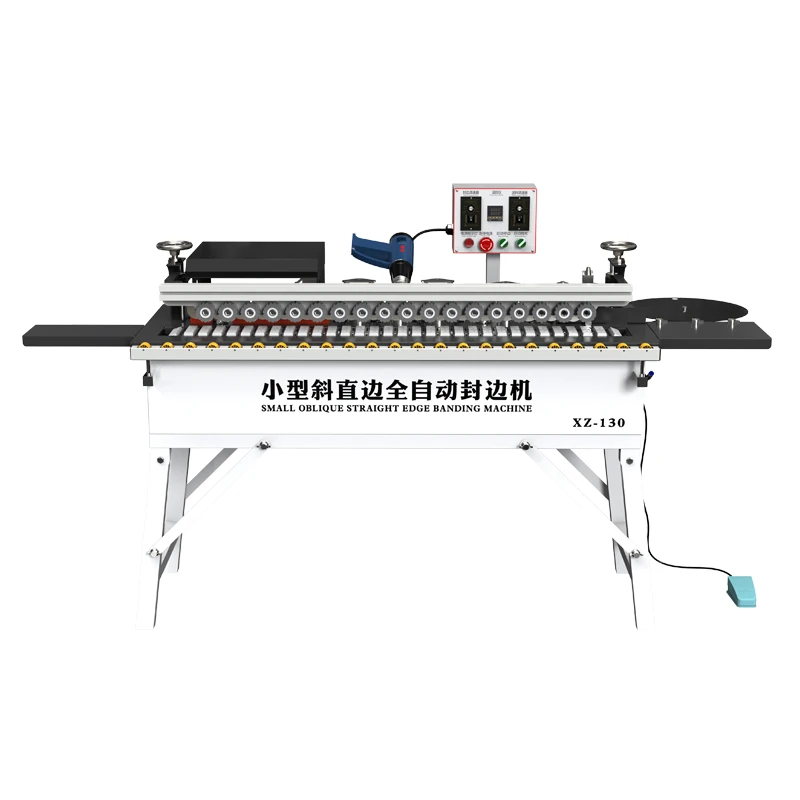
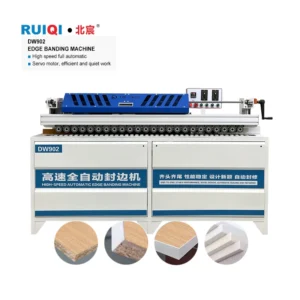
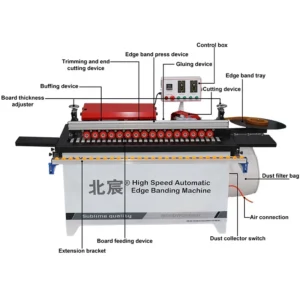
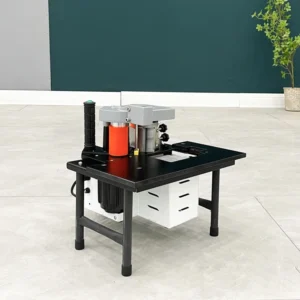
Verified Voltage Configuration — Every DW130 edge banding machine ships with electrical schematics and plug types matched to your destination market, eliminating the transformer delays that strand containers at the dock.
Technical Specifications
| Parameter |
Value |
| Model |
DW130 |
| Product Type |
Multifunctional Woodworking Edge Banding Machine |
| Overall Dimensions (L×W×H) |
139×52×61 cm |
| Glue Pot Capacity |
2000 ml |
| Voltage & Frequency |
220V (frequency to be confirmed per destination market) |
| Heating Time |
5–10 min |
| Edge Type Capability |
Oblique (bevel) and straight edge |
| Language Options |
Chinese and English standard; Spanish and other languages customizable |
| Plug Options |
EU, USA, AU, UK |
| OEM/Custom Logo |
Available (design confirmation required before production) |
| Certification |
CE |
Application Suitability
| Application |
Material or Output |
| Small-scale cabinet door edge finishing |
MDF and particleboard panels with PVC or veneer banding |
| Custom joinery workshop production |
Plywood and solid wood panels requiring bevel or straight edge profiles |
| Prototype and short-run panel processing |
Mixed substrate batches in furniture startups transitioning from manual trimming |
| Regional distributor demo and training units |
Configured with local voltage and language for showroom demonstrations |
Why the Voltage Question Must Precede the Quotation
A machine that cannot power on is a machine that does not exist in your workshop.
I learned this the hard way early in my career. We shipped a fully automatic edge bander to a panel furniture factory in Southeast Asia. The purchase order confirmed 380V, the factory wired for 440V, and nobody thought to photograph the distribution board. The container arrived, the electrician plugged in, and nothing happened. That factory floor sat idle for nearly three weeks while a step-down transformer was sourced locally. Since then, I require a photo of the actual breaker panel before any Edge Banding Machine factory order enters production [NEED_CITE: voltage and frequency standards by export market]. The DW130 is no exception — its 220V configuration must be cross-referenced against your site supply before the build sheet is finalized.

Dual Edge Profiles in a Compact Footprint
Most small workshops run separate manual operations for straight and bevel edge work, or they purchase two dedicated machines. The DW130 consolidates both oblique and straight edge banding into a single unit measuring 139 cm in length. For a joinery shop where floor space dictates workflow, this means one machine footprint replaces multiple stations. The OEM edge banding machine configuration allows distributors to brand this capability under their own label for regional markets where dual-function compact units fill a specific niche.
Four-Stage Inspection Before the Crate Closes
Component sourcing, precision grinding, assembly, and pre-shipment testing each have independent verification gates. Incoming material inspection catches dimensional drift in guide rails and pressure rollers before they reach the assembly bench. In-process checks validate glue pot heating uniformity across the 2000 ml capacity. Finished-product testing runs actual panel stock through both straight and bevel modes. The pre-shipment stage documents the machine operating under load with photographs and a signed test record [NEED_CITE: CE machinery directive requirements for industrial equipment]. This sequence matters because a fault discovered after crating means reopening, retesting, and rescheduling the container booking.
What the Glue Pot and Heating Time Mean for Daily Output
The 2000 ml glue pot capacity determines how long the machine runs between reloads. In a workshop processing standard 18 mm particleboard with PVC edge banding, this volume supports continuous operation through a typical morning shift before a refill is needed. The 5–10 minute heating time from cold start means the first panel of the day is not delayed by a prolonged warm-up cycle. For shops that run short batches or custom one-off cabinets, fast heat recovery between jobs reduces idle time at the start of each run. The oblique and straight edge selector allows the operator to switch profiles without changing tooling, which keeps changeover between different cabinet components practical within a single production session.
When a Compact Machine Is Asked to Do a Production Line’s Job
The most common failure I see in small workshop equipment is not mechanical — it is operational mismatch. A joinery shop buys an entry-level edge bander for occasional custom work, then land a contract requiring hundreds of linear meters per day. The machine was never specified for that throughput. Glue temperature fluctuates under sustained load, feed consistency degrades, and edge adhesion becomes unreliable panel after panel. The cost is not the machine itself but the rework, the rejected cabinet doors, and the client relationship damaged by late delivery [NEED_CITE: common causes of edge banding adhesion failure in small workshops]. The DW130 is built for small-scale and custom production volumes. If your daily throughput demands continuous high-speed feed rates, the correct conversation is about a full-function pre-milling model, not about pushing a compact unit past its design intent.
What Factory-Direct Procurement Actually Delivers
In-house manufacturing means the same facility that grinds the precision components also assembles and tests the DW130 — there is no intermediary swapping specifications between order and shipment. Voltage, plug type, and control panel language are confirmed against your site documentation before production begins, not assumed from a country code on the purchase order. Custom logo application and private-label packaging are handled on the same production line, which means OEM partners receive consistent build quality whether the machine carries our name or theirs. The four-stage QC record travels with the machine, so the distributor or end buyer can verify exactly what was tested and when. Factory visits are open for component sourcing review, assembly observation, and live test runs on your specified panel material.
Documentation & Verification
- CE declaration of conformity referencing the DW130 edge banding machine classification
- ISO 9001 certificate covering the manufacturing and QC process chain
- Electrical schematic with your confirmed voltage, frequency, and plug type annotated
- Factory test record showing the machine running your specified panel thickness and edge material
- Operation and maintenance manual in your agreed language with spare parts cross-reference list
- Pre-shipment packing photographs documenting the unit condition before crating
Installation, Commissioning & Support
- 220V single-phase supply required — confirm dedicated circuit capacity matches the DW130 rated draw at your site
- Machine footprint of 139×52 cm requires a level floor area with clearance for panel infeed and outfeed
- Arrives assembled — no on-site mechanical build required, only electrical connection and glue pot loading
- First-run commissioning includes heating cycle verification and test passes on both straight and oblique edge modes
- Multilingual control panel configured to operator language before dispatch, reducing setup confusion
- Spare parts list provided with recommended consumables for the glue pot and trimming components
Before You Request a Quote
Tell us the panel substrates you process most frequently — MDF, particleboard, plywood, or solid wood — and the edge banding materials you intend to run, whether PVC, veneer, or melamine. Share a photograph of your workshop distribution board so we can confirm voltage and frequency compatibility before the build begins. If you are an OEM partner or distributor, provide your branding files and target market language requirements so these are integrated into the production schedule rather than added after the fact.
Frequently Asked Questions
Q: What OEM and private-label customization is available for the DW130?
A: Custom logo placement, control panel artwork, and packaging are all configurable. We require design file confirmation before the unit enters production so branding is applied on the assembly line rather than retrofitted afterward. Color options and panel layout can also be discussed during the specification review stage for distributor-branded units.
Q: How do you confirm voltage and plug type before production starts?
A: We request a photograph of your actual workshop distribution board or a signed electrical specification sheet from your site electrician. This is cross-referenced against the 220V build configuration and the selected plug standard — EU, USA, AU, or UK — before the order enters the production queue.
Q: Can the control panel language be customized beyond Chinese and English?
A: Yes. Spanish and other languages are available as custom configurations. The language selection is confirmed during the specification stage so the control interface is programmed and tested in your required language before the pre-shipment inspection.
Q: What does the four-stage QC process cover for each unit?
A: Incoming material inspection verifies component dimensions and tolerances. In-process checks validate glue pot heating and mechanical assembly. Finished-product testing runs actual panel stock through both edge modes. Pre-shipment verification documents the operating machine with photographs and a signed test record before crating.
Q: What lead time should a distributor expect for OEM-configured orders?
A: Lead time depends on the level of customization and current production scheduling. Standard OEM configurations with confirmed branding files typically move through production and QC within a typical multi-week window. We provide a confirmed dispatch date once the specification and design files are locked.