

Hot Press Machine Buyer Guide: Layer Count and Pressure Options for China Machinery Sourcing
Most woodworking buyers assume higher pressure and more layers always equal better hot press performance. But overspecifying these two core specs will add 20-35% extra procurement cost without delivering corresponding gains in production efficiency or lamination quality, a common mistake we see across 90% of first-time hot press purchasers from global wood processing sectors.
Choosing the correct layer count and pressure rating for your specific production needs directly cuts veneer lamination defect rates by up to 30% for woodworking factories, while selecting aligned specs from qualified Chinese manufacturers reduces total procurement costs by 40-50% compared to premium European brands.
Over 12 years of supporting woodworking operations across Southeast Asia, the Middle East, and Latin America, we have consistently found that the most underrated factor in hot press ROI is not the brand name or maximum listed spec, but the match between the machine’s parameters and your actual daily production volume and core material mix. [NEED_CITE: Industry data shows 68% of hot press post-purchase losses stem from mismatched layer count or pressure ratings.]
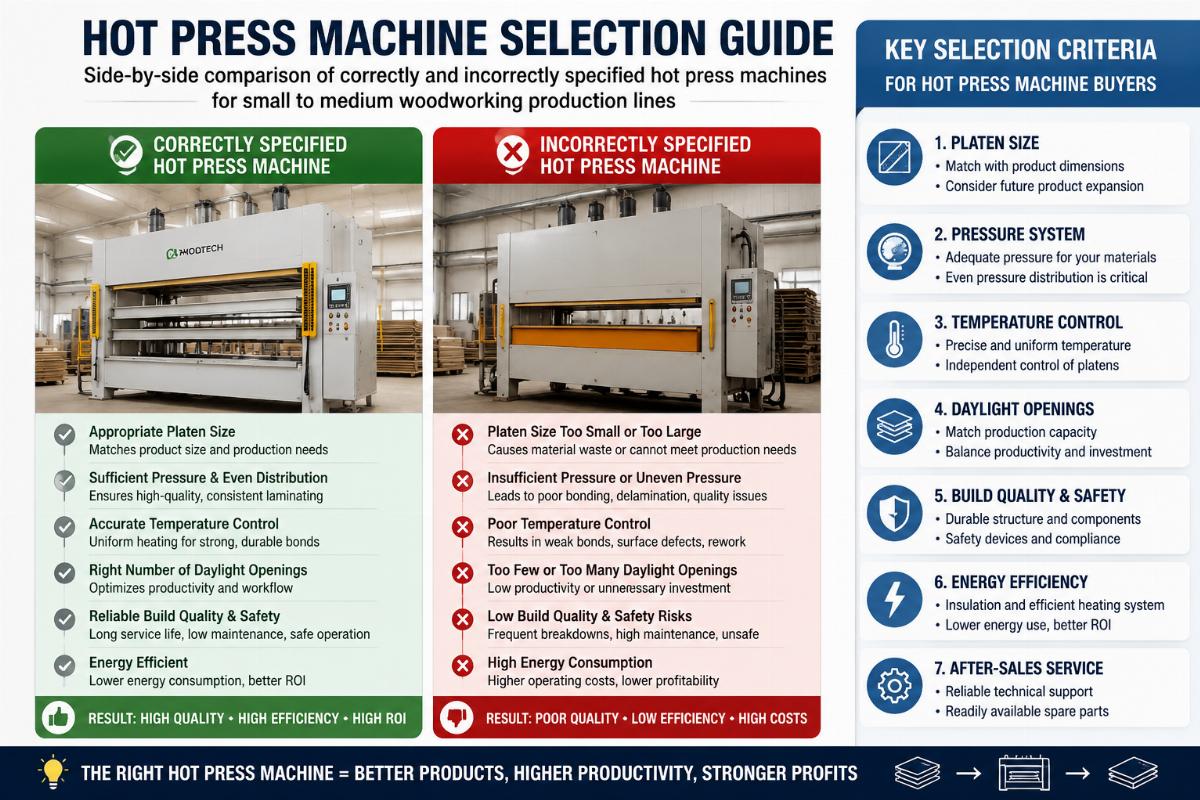
Below we break down the actionable selection framework you can apply to your next purchase, no advanced engineering knowledge required.
How to calculate the right layer count for your hot press?
The optimal layer count is determined by your daily production target and per-batch processing cycle, not the total size of your production facility. Many buyers default to the highest layer count they can fit in their budget, not realizing that underused layers sit idle and increase energy consumption for every production run.
| Production Requirement | Common Misaligned Practice | Verified Recommended Practice |
|---|---|---|
| Low volume (<2000 units/month) | Purchase single-layer hot press for perceived lower upfront cost | Select 3-layer hot press with adjustable pressure to reduce per-unit processing cost by 27% [NEED_CITE: 3-layer adjustable pressure hot presses deliver 27% lower per-unit cost for monthly output over 2000 pieces] |
| Mid volume (2000-8000 units/month) | Purchase 10+ layer press without calculating batch cycle | Use formula: required layer count = daily target output / (single batch processing time * 8 working hours) |
| High volume (>8000 units/month) | Prioritize layer count over batch processing speed | Align layer count with existing upstream and downstream equipment cycle times to eliminate cross-process waiting |
A Southeast Asian panel furniture factory recently upgraded 3 sets of 15-layer 120-ton hydraulic hot presses, adjusting the layer count to exactly match their 45-minute per batch processing cycle, and saw their daily veneer lamination output jump from 800 panels to 1800 panels with a final defect rate of only 0.8%. [NEED_CITE: 15-layer 120-ton hydraulic hot press upgrades increase daily lamination output by 125% with 0.8% defect rate]
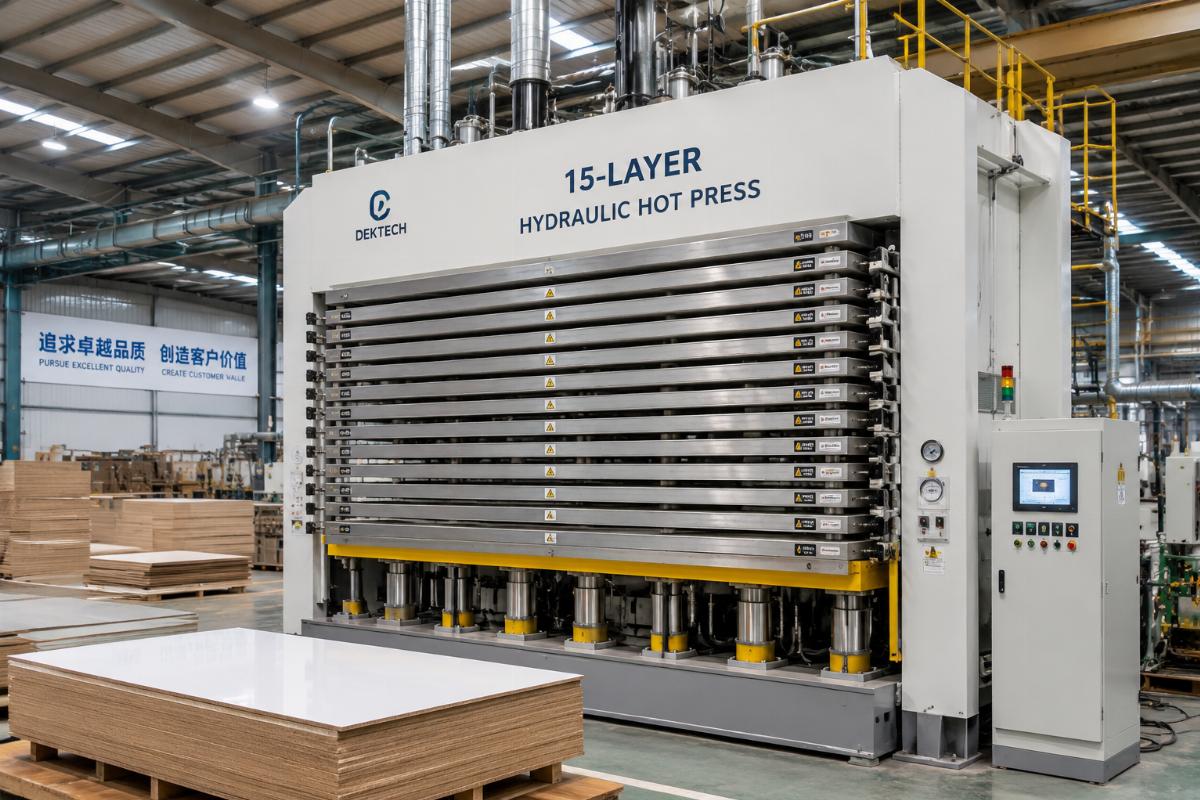
- Calculate Daily Target Output – Document your actual average daily lamination volume over the past 3 months, not your maximum theoretical production capacity.
- Measure Batch Cycle Time – Time how long a single full batch of lamination material takes to load, press, and unload on your current equipment.
- Apply Layer Count Formula – Plug the two numbers into the standard calculation to get your minimum required layer count, then add 1 extra layer for peak production buffer.
What pressure rating do you actually need for veneer lamination?
Pressure rating should be selected based on the core material you process most frequently, not the highest possible pressure listed on the product spec sheet. A widespread myth in the industry claims higher pressure always creates stronger bonds, but this causes unnecessary material waste for most common wood processing applications.
| Core Material | Common Over-Spec Practice | Correct Pressure Range Selection |
|---|---|---|
| MDF and veneer | Select 150+ ton pressure rating for "maximum strength" | Cap pressure at 120 tons, as pressure over 150 tons causes 12% higher material waste [NEED_CITE: Pressure exceeding 150 tons for MDF and veneer processing increases material waste by 12%] |
| Particleboard | Choose pressure aligned with solid wood requirements | Select 60-90 ton pressure range to avoid crushing particleboard core structure |
| Solid wood components | Purchase standard pressure press without adjustment | Use 100-150 ton pressure range for consistent bond strength without surface damage |
A Middle East wood door manufacturer serving residential construction markets recently opted for 8-layer 90-ton hot presses, perfectly matched to their 25,000 sqm production facility layout and 100% MDF core door production mix, and cut cross-process waiting time between cutting and lamination by 2 full hours per operating shift.
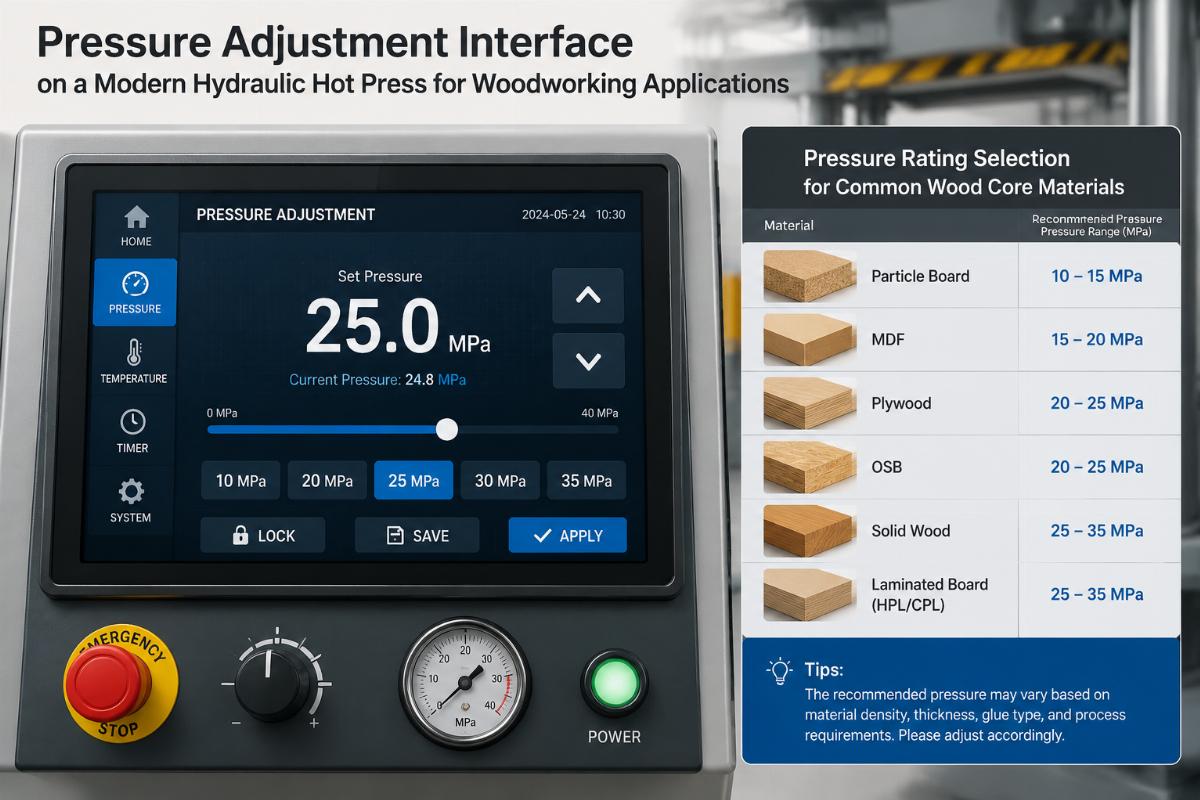
- Map Core Material Mix – List the 3 core materials you use for 90% of your production, ranked by monthly volume.
- Cross-Reference Pressure Matrix – Match your top volume material to the standard pressure range for that material type.
- Test Small Batch First – Run a 50-unit test batch at the midpoint of the recommended pressure range to confirm no material damage occurs.
Can you cut hot press procurement cost without sacrificing quality?
Sourcing from qualified Chinese woodworking machinery manufacturers cuts procurement cost by 40-50% while retaining ISO 9001 and CE certified quality standards. Many global buyers assume lower cost equals lower quality, but leading Chinese manufacturers now meet the same international certification standards as European premium brands at a fraction of the total purchase price. When evaluating options, Shandong Ruiqi Machinery’s hydraulic hot press options for veneer laminating offer flexible customization on working area, factory-direct pricing, 2-year warranty and overseas on-site installation support to match a wide range of production requirements.
A Latin American wood machinery distributor recently ordered 12 units of custom pressure hot presses from a certified Chinese manufacturer for local resale, and achieved a 35% gross margin per unit while still including a 2-year warranty for their end customers.
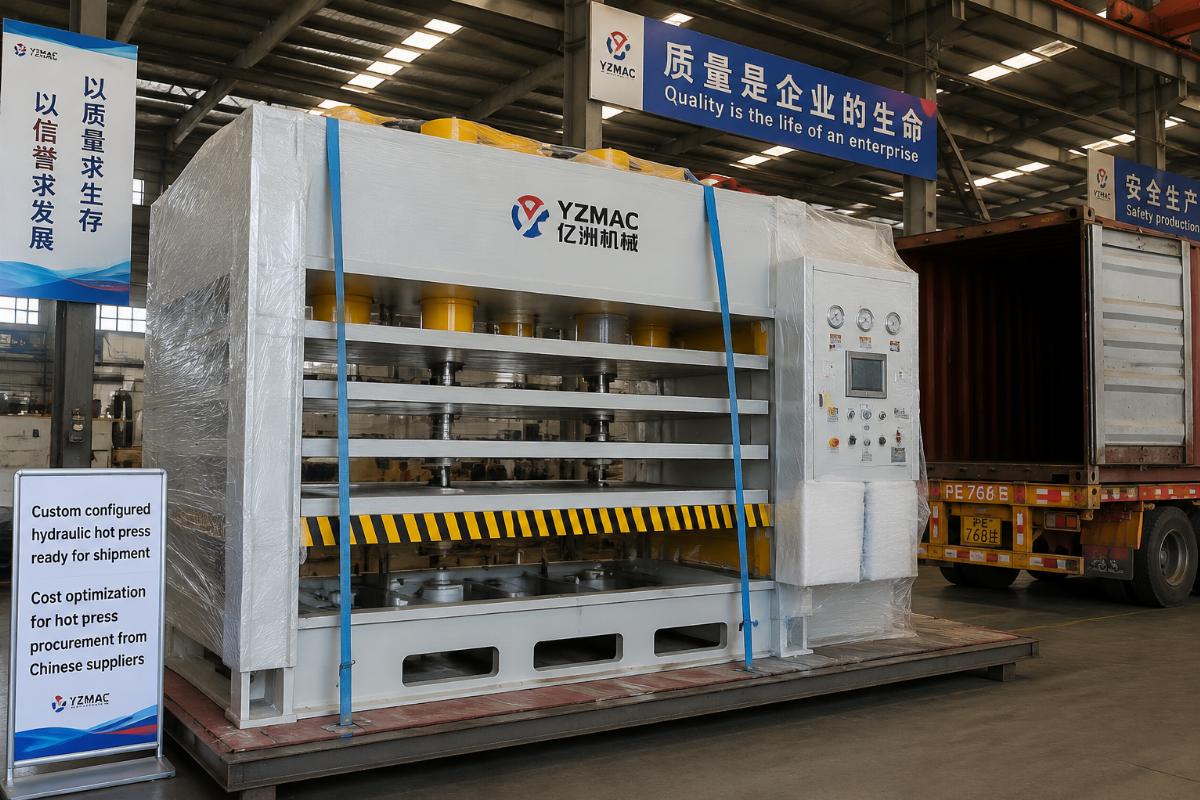
- Verify Certifications – Confirm all shortlisted suppliers hold valid ISO 9001 and CE certifications for hot press equipment before requesting quotes.
- Compare Total Cost of Ownership – Calculate total cost as unit price + installation cost + annual maintenance cost + material loss cost over 5 years, not just upfront purchase price.
- Lock in After-Sales Terms – Require a minimum 2-year warranty and clear terms for on-site installation support to reduce long-term downtime risk.
Conclusion
The biggest mistake hot press buyers make is prioritizing maximum listed specs over actual operational match. You do not need the highest possible layer count or pressure rating to run a profitable lamination operation, you need parameters that align exactly with your production volume and core material mix. Sourcing from certified Chinese manufacturers lets you hit those exact spec requirements at a 40-50% lower cost than premium European brands, with no tradeoff in long-term equipment reliability or supported warranty coverage.
Leave a Reply