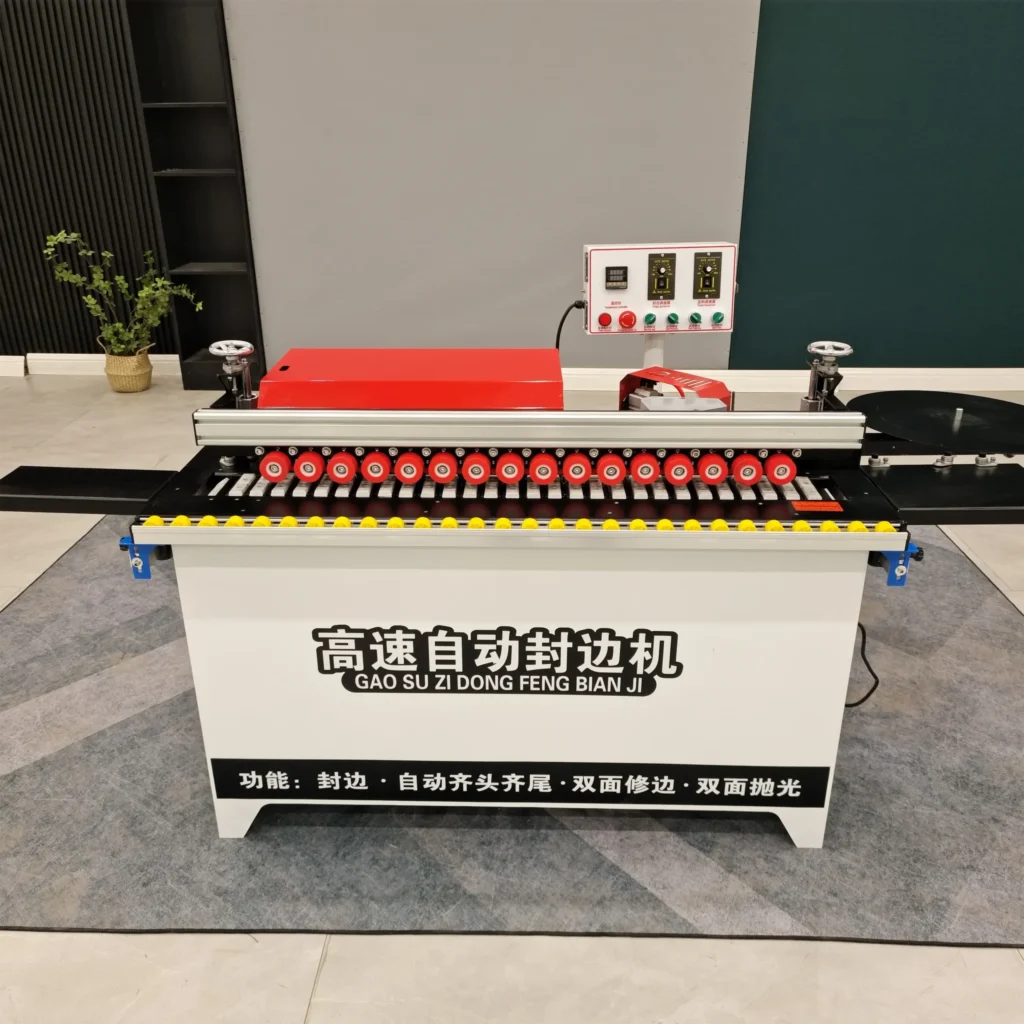
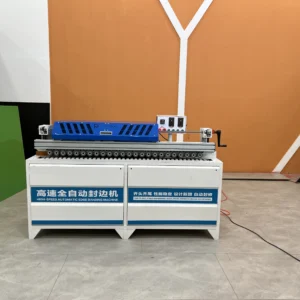
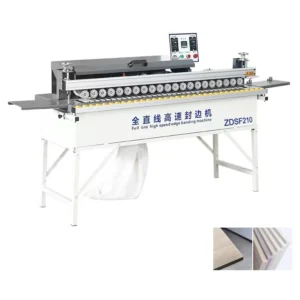
Four-Stage Quality Verification — every ZDSF802 automatic edge banding machine is tested on buyer-supplied panel stock at destination voltage before crate closure, with full documentation traceable to the production batch.
Technical Specifications
| Parameter |
Value |
| Model |
ZDSF802 |
| Product Type |
Automatic Edge Banding Machine |
| Function Stations |
Gluing, End Cutting, Trimming, Vacuuming, Buffing |
| Rated Voltage |
220V (basis not stated in source — confirm local frequency and phase) |
| Rated Power |
4 kW |
| Edge Strip Thickness Range |
0.5 – 2.5 mm |
| Panel Thickness Range |
10 – 50 mm |
| Rated Air Pressure |
0.6 – 0.8 MPa |
| Working Speed |
0 – 7 m/min |
| Conveyor Belt Speed |
0 – 14 m/min |
| Glue Pot Capacity |
4000 ml |
| Overall Dimensions |
190 × 60 × 130 cm |
| Machine Weight |
150 kg |
| Control Interface |
Digital glue pot temperature display with independent switch |
| Pressure Beam |
Integrated beam with double rows of pressure wheels |
| Conveyor Belt Material |
Silicone |
| Trimming Configuration |
Double high-speed motors, up-and-down action |
| Polishing Configuration |
Up-and-down dual polishing motors |
| Belt Breaking Method |
Pneumatically controlled |
| Extension Support |
Extendable fluent strips for oversized panels |
Application Suitability
| Application |
Material or Output |
| PVC edge banding on particleboard |
Furniture and cabinet panel components |
| Edge sealing on MDF substrates |
Shelving, door fronts, and carcass panels |
| Plywood panel edge finishing |
Interior fit-out and joinery components |
| Thin veneer edge application |
Decorative surfaces requiring low-temperature adhesive control |
| Small-batch custom panel runs |
Job-shop environments with frequent material changeover |
Why the Voltage Question Must Precede the Purchase Order
Confirming local voltage, phase, and frequency before production begins eliminates the most common reason imported woodworking machinery sits idle on arrival.
Distributors who have purchased automatic edge banding machine units at trade shows often discover that the demo ran on a European three-phase supply, while the destination workshop operates on a single-phase or different voltage standard. The motor windings, glue pot heater elements, and control transformer are all specified to a single electrical configuration at the factory. Rewinding or replacing these components after arrival is neither quick nor inexpensive [NEED_CITE: voltage and frequency standards by export market]. This is the reason every ZDSF802 build file records the buyer’s confirmed electrical specification before the frame enters assembly.

Manufacturing Depth Behind Private-Label Edge Banders
Distributors evaluating an OEM edge banding machine manufacturer need to see more than a logo swap. The ZDSF802 platform is built in-house from the pressure beam casting through to the final wiring harness, which means private-label partners can request mechanical modifications — such as altered conveyor width or relocated pneumatic manifolds — without depending on a third-party integrator. The four-stage quality control process covers incoming raw material inspection, in-process assembly checks, finished-product functional testing, and pre-shipment verification under load.
What Factory Test Records Actually Contain
Each ZDSF802 leaves the Ningjin facility with a test record that documents the exact panel material, edge strip type, glue temperature, and feed speed used during the final run. These records are signed by the responsible QC engineer and reference the machine’s serial number. For OEM partners requiring batch consistency across multiple shipments, test parameters can be locked to a master specification sheet so that every unit in a production run is validated against identical criteria [NEED_CITE: ISO 9001 process documentation requirements for machinery manufacturing].
How Core Parameters Translate to Edge Finish Quality
The 4000 ml glue pot capacity allows extended production runs without interruption for adhesive refill, which matters when a distributor’s customer is processing full batches of cabinet components in a single shift. The pneumatically controlled belt breaking mechanism delivers repeatable end cuts regardless of operator fatigue, reducing the visible seam variation that leads to panel rejection downstream. Double high-speed trimming motors working in an up-and-down configuration address both the top and bottom edge profiles in a single pass, a requirement when working with thicker PVC strips up to 2.5 mm. Panel thickness coverage from 10 to 50 mm means the same machine can handle lightweight drawer sides and heavy worktop blanks without a roller or pressure beam changeover, simplifying the product mix a regional distributor needs to stock for their market.
The Cost of Skipping Substrate-Specific Calibration
An automatic edge banding machine factory may quote a unit based on a standard PVC demo, but when the end user runs thin wood veneer at the same feed speed, the glue temperature window and pre-milling pressure no longer match the material. The result is visible glue lines, chipped veneer edges, and panels that fail during assembly. These defects rarely appear during a brief factory acceptance test — they surface weeks into production, after the machine is installed and the distributor’s reputation is already on the line [NEED_CITE: common edge banding defects related to adhesive temperature mismatch]. Qualitative shifts in scrap rate and customer complaint frequency are the real financial consequence.
Why OEM Partners Source This Platform
In-house manufacturing means engineering changes requested by a distributor are executed on the same production floor, not relayed through a trading intermediary. Voltage customization from 110 V to 440 V is handled at the winding and transformer level, not patched with external converters. Multilingual control panels are configured before shipment, so the operator interface matches the destination market language from first power-on. The four-stage QC protocol generates documentation that a distributor can present to their own end customers as evidence of manufacturing rigor. And factory visits are welcomed at any production stage, giving OEM partners direct access to the assembly technicians building their branded equipment.
Documentation & Verification
- CE declaration of conformity specific to the ZDSF802 configuration ordered
- ISO 9001 certificate covering the edge banding machine assembly line
- Electrical schematic confirming destination voltage, phase, and frequency
- Factory test record run on buyer-specified panel thickness and edge strip material
- Operation and maintenance manual in the agreed destination language
- Spare parts list with part numbers matching the as-built configuration
Installation, Commissioning & Support
- 190 × 60 × 130 cm footprint requires a level concrete floor with clearance for panel infeed and outfeed
- 4 kW rated power demands a dedicated circuit matching confirmed voltage and phase specifications
- Machine ships partially assembled; pressure beam and extension supports require on-site alignment
- First-run calibration covers glue pot temperature mapping across the 0 – 7 m/min working speed range
- Silicone conveyor belt tension and pneumatic pressure set to 0.6 – 0.8 MPa during commissioning
- Trimming motor height adjusted to the buyer’s primary panel thickness range before handover
Configuring Your Inquiry
To receive a specification proposal matched to your market, share the primary panel substrates your customers process, the edge strip materials and thicknesses most common in your region, and the local voltage and frequency standard. If you require private-label branding or a specific control panel language, note these in the initial inquiry so the engineering team can confirm feasibility within the standard lead time.
Frequently Asked Questions
Q: What OEM and private-label customization is available for the ZDSF802?
A: Logo placement, machine color, voltage from 110 V to 440 V, and control panel language are all configurable. Private-label packaging and documentation can be arranged. Each customization is confirmed in the engineering proposal before production begins, so there is no ambiguity at shipment.
Q: How does the four-stage QC process work for OEM orders?
A: Incoming materials are inspected before release to assembly. In-process checks verify alignment and wiring at critical stations. Finished-product testing runs the machine under load on specified panel stock. Pre-shipment verification repeats the functional test and generates a signed record included with the shipping documents.
Q: Can I visit the factory or request a sample test on my own panel material?
A: Factory visits are welcomed at any stage. If travel is not practical, send your panel samples and edge strip material to the facility. The engineering team will run the ZDSF802 on those materials and provide a test report with photographs and process parameters.
Q: What is the typical lead time for OEM quantity orders?
A: Lead times depend on order volume and customization scope. A single-unit order with standard specifications moves through production faster than a multi-unit batch requiring unique voltage and branding configurations. The scheduling team provides a confirmed timeline in the formal quotation.
Q: How are spare parts and technical training handled for distributors?
A: A spare parts list with numbered components ships with every machine. Distributors can stock common wear items such as trimming blades and conveyor belt sections locally. Technical training for the distributor’s service team can be arranged at the factory or through remote video sessions covering maintenance intervals and adjustment procedures.