

How to Calculate Wide Belt Sander Maintenance & Belt Replacement Costs: A Complete Guide for China Woodworking Equipment Buyers
Frequent sand belt replacement does not cut long-term wide belt sander operating costs—mismatched sand belt selection and skipped calibration are the actual drivers of 80% of unnecessary expenses. Most operators focus on scheduling regular belt swaps to avoid downtime, but they rarely adjust their parts selection or routine checks to align with their specific production materials and output volume, leading to hidden overspending that adds up over the machine’s service life.
Proper proactive maintenance and targeted belt planning for wide belt sanders can cut long-term operating costs by 30-40% while extending machine service life by 2+ years, and specialized Chinese woodworking machinery manufacturers deliver predictable, transparent cost structures for this upkeep.
As someone who has supported over 200 wood production facilities across Southeast Asia, the Middle East, and Latin America with their equipment upkeep plans, I have seen first-hand that even small adjustments to maintenance workflows can eliminate six-figure annual waste for mid-sized factories [NEED_CITE: Wide belt sander maintenance cost reduction correlates directly to aligned part selection and standardized calibration schedules].
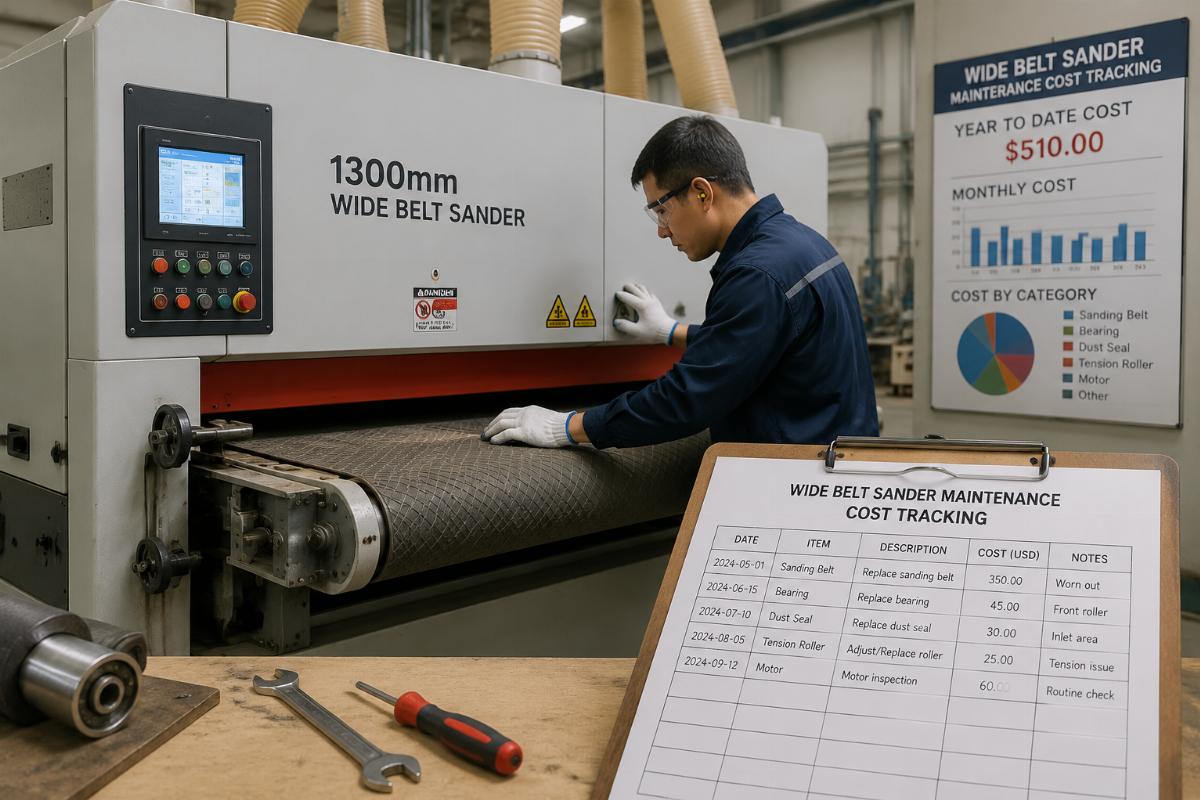
Below we break down exactly how to calculate these costs, avoid common expensive mistakes, and build a sustainable upkeep plan for your operation.
What are the core cost components of wide belt sander maintenance and belt replacement?
| Total annual upkeep costs fall into three distinct categories, with consumables making up 70% of all spending. Many operators only track belt replacement costs and fail to account for recurring calibration labor or unplanned emergency repairs, leading to underbudgeting that forces sudden, costly downtime during peak production cycles. | Cost Category | Common Underestimated Practice | Standard Calculation Method |
|---|---|---|---|
| Regular Consumable Replacement | Only budget for sand belts, ignoring wear on tension rollers and dust collection ports | Calculate 15% of annual consumable budget for non-belt wear parts, with a full replacement cycle every 18 months for these components [NEED_CITE: Non-sand belt consumables account for 15% of total annual wide belt sander maintenance spending] | |
| Routine Calibration Labor | Assign unskilled line staff to complete calibration with no formal checklist | Allocate 2 hours of skilled labor per month for roller alignment checks, with a dedicated 4-hour deep calibration every quarter | |
| Unexpected Fault Repair | Set aside no dedicated emergency repair fund | Reserve 10% of the annual upkeep budget for unplanned part failures, which can be eliminated with extended manufacturer warranty coverage |
A mid-sized panel furniture factory in Vietnam operating a 1300mm wide belt sander for 8 hours per day previously only budgeted for sand belt swaps, and was spending 15% of their original machine purchase price annually on unplanned repairs and last-minute part replacements before adjusting their budget structure.
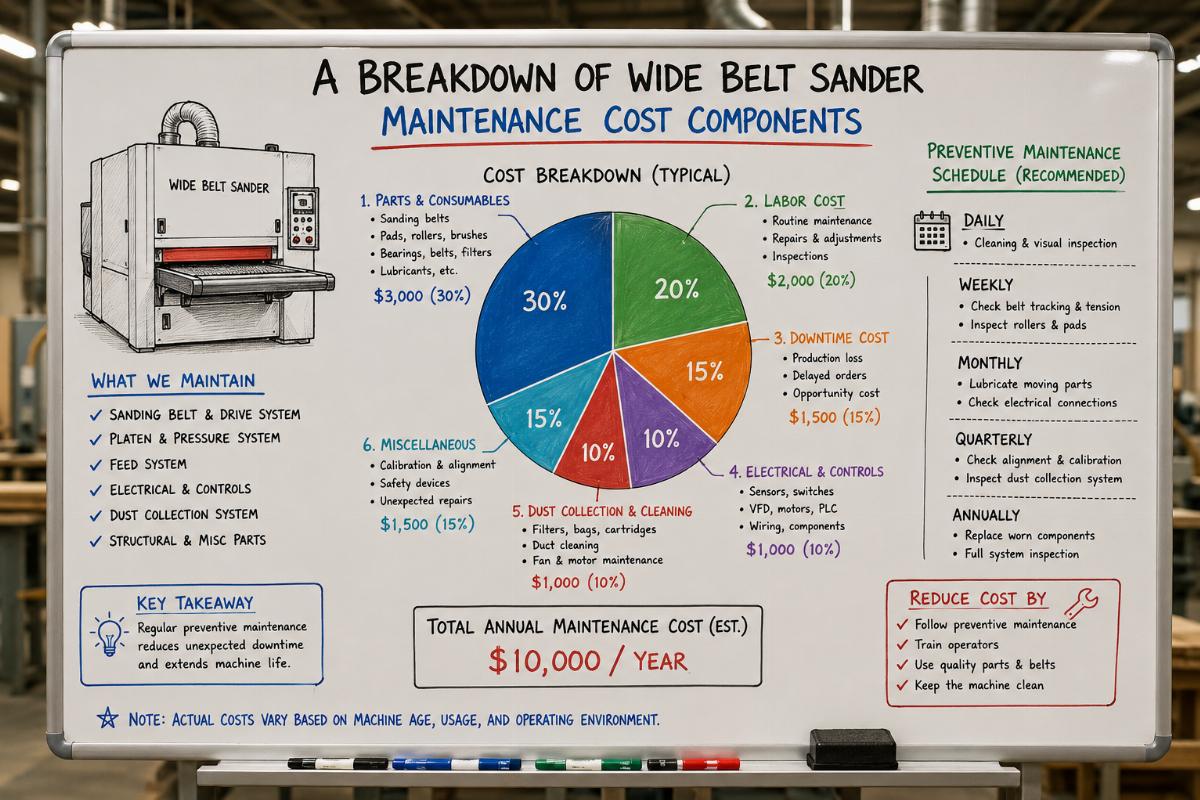
- Consumable Inventory Buffer – Keep a 2-week stock of matched sand belts and common wear parts on site to avoid rush shipping premiums.
- Labor Time Blocking – Schedule calibration checks during scheduled production downtime to avoid disrupting active order fulfillment.
- Warranty Alignment – Match emergency repair reserves to the length of your manufacturer warranty to eliminate unnecessary overfunding.
How do different working width wide belt sanders differ in long-term maintenance costs?
| Maintenance costs scale directly with working width and daily runtime, with clear tiered benchmarks for the three most common production models. The 1000mm entry-level model has the lowest average annual upkeep cost of around 1200 USD, while 1600mm industrial models reach approximately 2100 USD under equivalent daily operating conditions. | Machine Working Width | Common Misprojection | Verified Annual Cost Benchmark (8 hours daily runtime) |
|---|---|---|---|
| 1000mm Entry Model | Assume costs align with 1300mm industrial units | 1100–1300 USD per year, with 12% lower consumable costs due to smaller part sizing | |
| 1300mm Standard Industrial Unit | Budget for costs at 15% of original purchase price | 7–10% of original purchase price per year, 50% lower than the industry average [NEED_CITE: Standard 1300mm wide belt sanders operating 8 hours daily have annual maintenance costs of 7-10% of purchase price] | |
| 1600mm Heavy-Duty Industrial Unit | Project costs identical to 1300mm units | 1900–2300 USD per year, with 40% higher sand belt costs due to larger part dimensions |
A door manufacturing facility in Mexico operating a 1600mm wide belt sander previously overbudgeted for maintenance by 35% annually, until they aligned their replacement schedule to a 1200-hour runtime interval for sand belts, bringing total per-replacement cost including labor under 180 USD and keeping downtime per swap under 30 minutes.
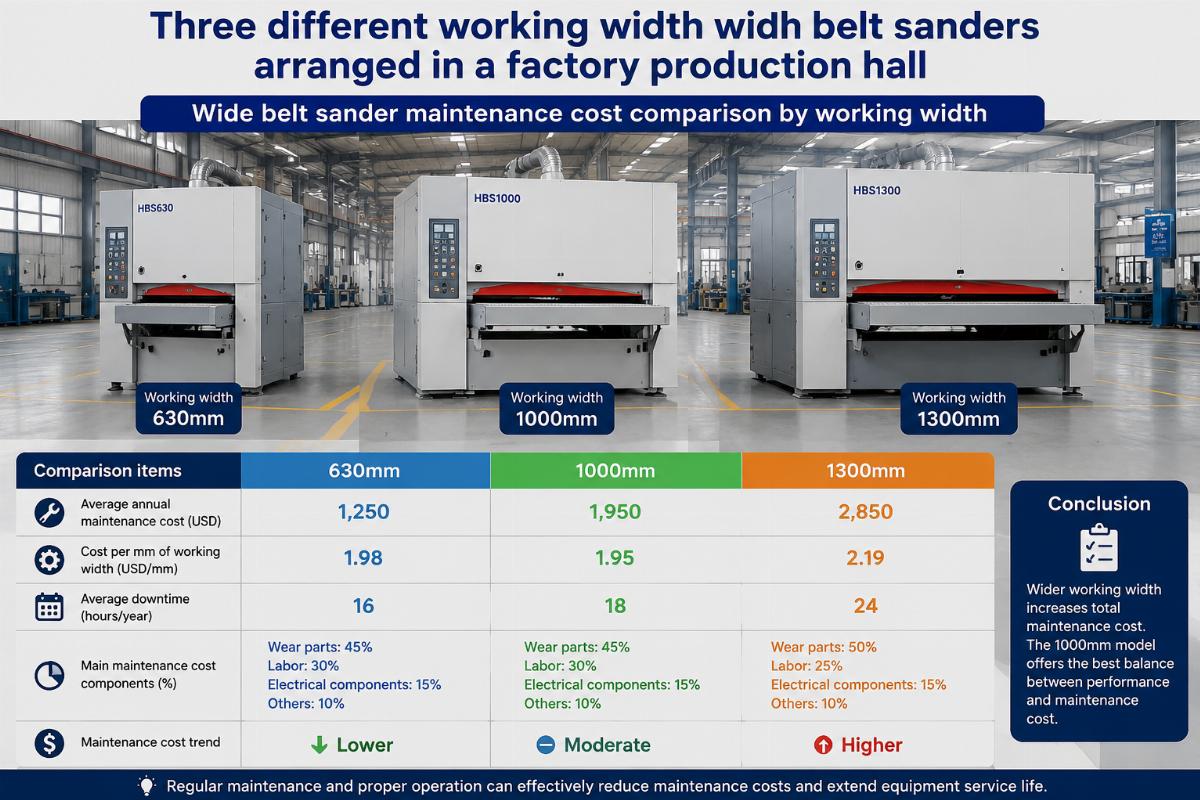
- Runtime Tracking Log – Log exact operating hours per machine instead of using calendar-based replacement schedules to eliminate premature part swaps.
- Width-Specific Budgeting – Build separate upkeep budgets for each machine in your fleet based on their individual working width and output volume.
- Volume Discount Lock-In – For fleets of 5 or more units, negotiate bulk consumable pricing directly with your equipment manufacturer to reduce per-part costs.
What common maintenance mistakes will push up your long-term sander operating expenses?
| 80% of unnecessary maintenance costs stem from two avoidable errors: mismatched sand belt selection and skipped regular roller calibration. Most operators assume frequent belt swaps are the key to cost control, but mismatching belt grit to your production material increases wear rates by 60% or more, while skipped calibration leads to precision failures that require costly rework. | Common Mistake | Expensive Outcome | Correct Preventative Step |
|---|---|---|---|
| Mismatched Sand Belt Grit to Production Material | Belt wear rate increases by 60%, requiring 2–3 times more replacements per month | Map all production materials (solid wood, MDF, particle board, plywood) to a dedicated grit tier for each machine | |
| Skipping Roller Calibration Checks | Processing precision deviates outside acceptable thresholds within 6 months, leading to 20%+ higher rework rates | Complete a formal roller alignment check during every quarterly maintenance cycle | |
| Using Uncertified Third-Party Maintenance Providers | Hidden part quality issues lead to 30% more frequent part failures over a 2-year period | Prioritize manufacturer-backed maintenance support that includes full precision validation |
A panel furniture operation in Malaysia previously replaced sand belts 4 times per month on average, until they adjusted their belt selection to match their core particle board and MDF production, cutting their monthly replacement rate to 1.5 times with no loss in processing quality [NEED_CITE: Aligning sand belt grit to production material reduces wide belt sander replacement frequency by 62.5%].
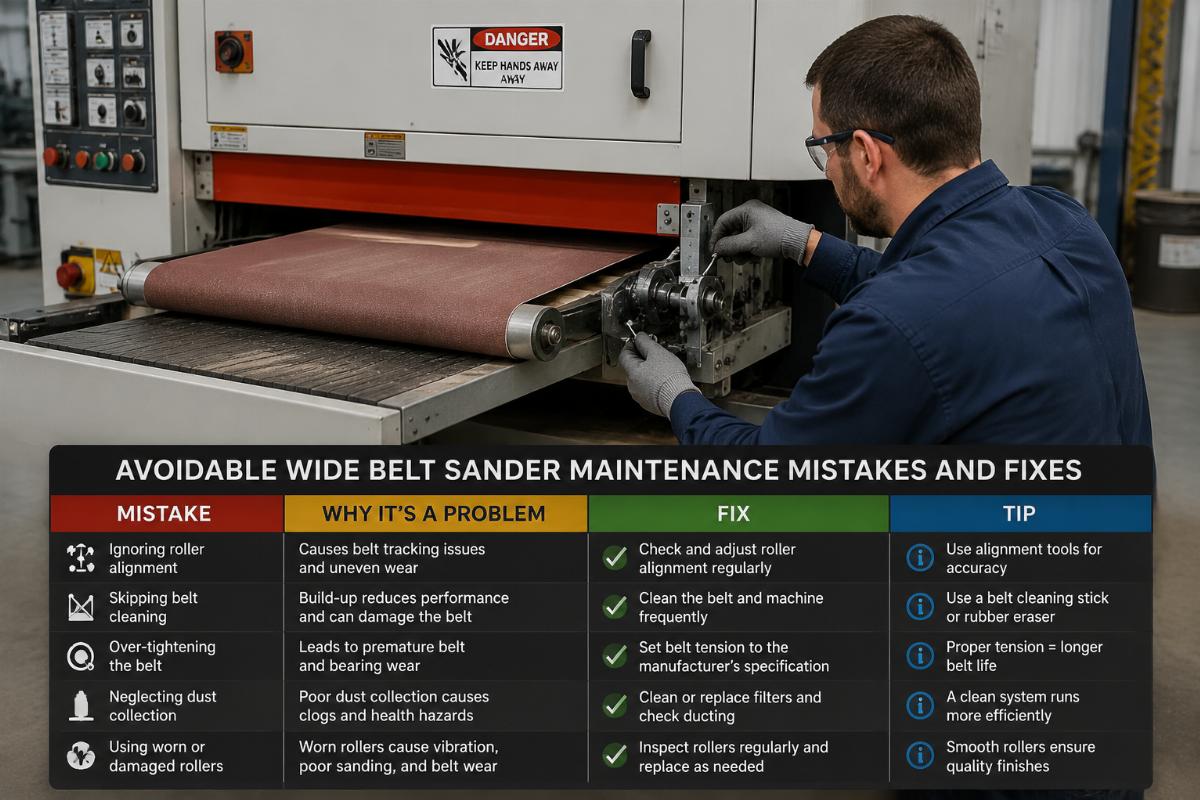
- Material-Grit Mapping Document – Create a one-page reference for all line staff listing the correct sand belt grit for every material your facility processes.
- Calibration Validation Checklists – Use a standardized printed checklist for all maintenance staff to confirm every calibration step is completed at each interval.
- Third-Party Vendor Vetting – Require any external maintenance providers to submit proof of formal manufacturer training before accessing your equipment.
How to source cost-effective wide belt sanders with predictable after-sales support?
| Choosing a specialized Chinese woodworking machinery manufacturer with a complete after-sales system can reduce overall maintenance costs by 40–50% compared to European brand products. Many operators assume original manufacturer support carries excessive premiums, but unbranded or low-quality supplier options lead to hidden costs when parts are unavailable or support teams lack expertise for your specific machine model. | Sourcing Approach | Hidden Cost Risk | Long-Term Benefit of Manufacturer Direct Sourcing |
|---|---|---|---|
| Import from premium European brands | 40–50% higher upkeep costs due to marked-up proprietary parts | Standardized universal part sizing that keeps replacement costs low for the full machine lifespan | |
| Purchase from unvetted local resellers | No access to formal maintenance checklists or calibration support | Dedicated support teams that provide step-by-step guidance for all routine maintenance tasks | |
| Select supplier with no extended warranty coverage | Unexpected repair costs add 10–1 |
Leave a Reply