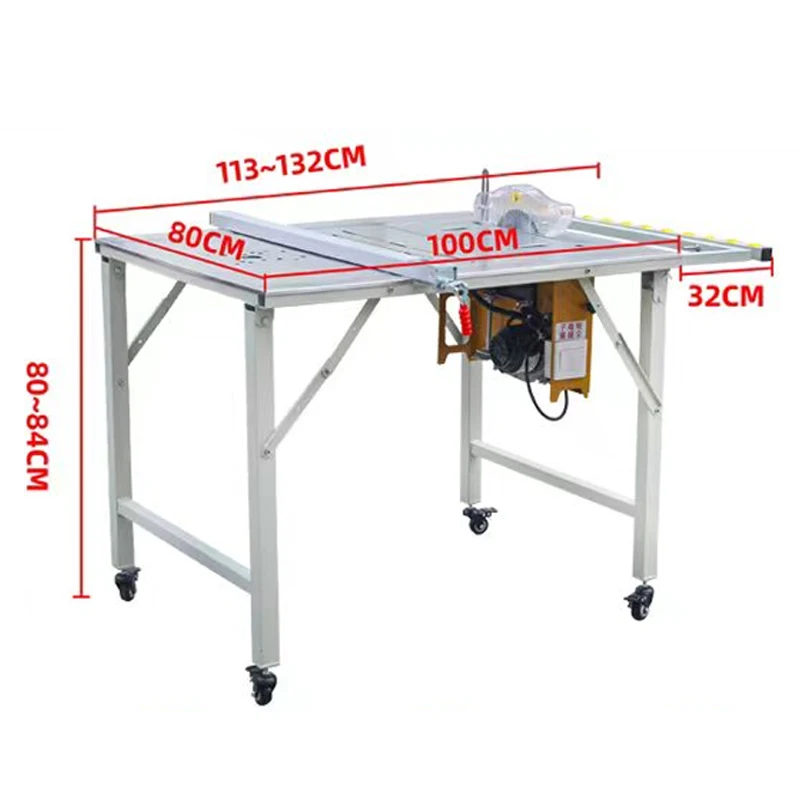
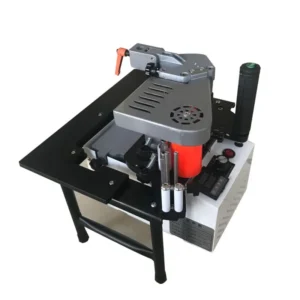
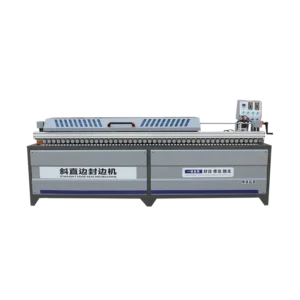
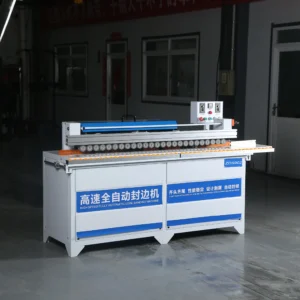
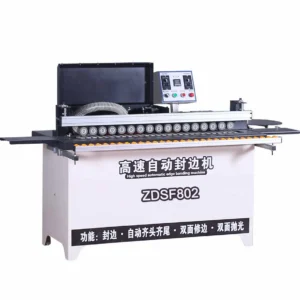
In-House Precision Grinding — every J50 LIUHE-1 Portable Small Saw Table rolls off the same production floor where its components are ground, assembled, and tested under a four-stage QC protocol before crate closure.
Technical Specifications
| Parameter |
Value |
| Model |
J50 LIUHE-1 |
| Product Type |
Portable Small Saw Table |
| Assembly State |
Portable / Tabletop |
| Plug Options |
EU / USA / AU / UK |
| Language Options |
Chinese, English, customizable to Spanish or other languages |
| Customization |
OEM logo printing, custom drawings supported |
| Packing |
Wooden box |
| Voltage & Frequency |
Basis not stated in source — confirm local voltage and frequency |
| Rated Power |
Basis not stated in source — confirm motor rating |
| Overall Dimensions (L×W×H) |
Basis not stated in source — confirm machine footprint |
| Net Weight |
Basis not stated in source — confirm net weight |
| Blade Diameter |
Basis not stated in source — confirm blade size |
| Cutting Depth |
Basis not stated in source — confirm max cutting depth |
| Table Size |
Basis not stated in source — confirm working surface dimensions |
| Feed Speed |
Basis not stated in source — confirm feed rate |
| Panel Thickness Range |
Basis not stated in source — confirm max/min thickness |
| Tolerance |
Basis not stated in source — confirm cutting accuracy |
| Dust Extraction Port |
Basis not stated in source — confirm port diameter |
| Certification |
Basis not stated in source — confirm CE / ISO applicability |
Application Suitability
| Application |
Material or Output |
| Small-scale joinery workshops |
MDF, particleboard, plywood crosscuts and rips |
| On-site portable panel cutting |
Solid wood boards and sheet goods at installation locations |
| Startup workshop transition |
First machine-assisted cuts replacing hand saws and circular saws |
| Auxiliary cutting station |
Supplemental trimming and sizing in larger furniture production environments |
Why the Voltage Question Should Come Before the Price on a Portable Small Saw Table OEM Manufacturer Order
A machine that arrives with the wrong plug or a mismatched frequency is dead weight on the workshop floor until an electrician rewires it.
I have watched importers unpack portable saw tables only to find a three-phase motor wired for a market two continents away. The distributor then spends days sourcing step-down transformers, and the end user loses confidence before the first cut [NEED_CITE: voltage and frequency standards by export market]. With the J50 LIUHE-1, we confirm the destination country’s voltage and frequency before production begins. The correct plug — EU, USA, AU, or UK — is hard-wired at the factory, so the unit goes straight from the wooden crate to the workbench.

Private-Label Production from Drawing to Crate
Regional distributors who want a compact saw table under their own brand can supply drawings and logo files; we print the artwork on the machine body and packaging before the production run starts. The Portable Small Saw Table OEM manufacturer workflow includes a first-article inspection where the buyer approves the logo placement, color match, and label language. Only after sign-off do we release the batch for full assembly.
Multilingual Panels That Keep Operators Cutting
A control panel in a language the operator cannot read stalls commissioning and invites wiring mistakes. The J50 LIUHE-1 ships with the membrane keypad printed in English, Spanish, or another agreed language, matching the operation manual inside the crate [NEED_CITE: CE machinery directive requirements for industrial equipment]. Distributors stocking for Latin American markets typically choose Spanish overlays, while EU buyers often request English with metric scale markings.
How Cutting Depth and Table Size Shape Daily Output
Cutting depth determines whether the saw can rip through 18 mm particleboard in one pass or requires a flip-and-re-cut. Table size sets the maximum sheet footprint the operator can support without auxiliary rollers. When these two parameters are correctly matched to the panel stock the workshop handles most often, the Portable Small Saw Table OEM manufacturer configuration delivers clean edges without secondary trimming. Blade diameter, in turn, governs both cutting depth and available arbor speed range.
The Hidden Cost of Skipping a Sample Test
Distributors who order a container load without running a sample unit sometimes discover that the fence alignment or dust port diameter does not match their local accessories. Reworking tooling after the shipment arrives erodes margin and delays resale [NEED_CITE: typical costs of post-arrival machine rework]. We keep a sample J50 LIUHE-1 available for pre-test so buyers can verify cutting accuracy, noise level, and dust extraction fit before committing to volume production.
Why Sourcing This Portable Saw Table Directly from the Production Floor Matters
The same facility that grinds the table surface also assembles the motor mount and wires the control box, eliminating hand-off delays between subcontractors. OEM orders move through our four-stage QC: incoming material check, in-process assembly inspection, finished-product run test, and pre-shipment verification with photographic records. Custom drawings are reviewed by the engineering team before tooling is set, so tolerance stack-up is caught on paper, not on the first article. Factory visits are open so buyers can watch precision grinding and load testing in real time.
Documentation & Verification
- CE declaration of conformity confirming applicability to the J50 LIUHE-1 portable saw table
- ISO 9001 certificate covering the production line that assembles this model
- Factory test record showing cutting accuracy on the buyer’s specified panel thickness
- Electrical schematic matching the confirmed voltage, frequency, and plug type
- Operation and maintenance manual printed in the operator’s agreed language
- Pre-shipment photographic report documenting crate packing and accessory count
Installation, Commissioning & Support
- Place the tabletop unit on a level workbench; no anchor bolts or special foundation required
- Connect to a dedicated circuit matching the confirmed voltage and plug standard
- Verify blade rotation direction and fence parallelism before the first production cut
- Calibrate the cutting depth stop against the actual panel thickness used in the workshop
- Train operators on blade guard adjustment and emergency stop locations
- Stock spare blades and drive belts sized to the confirmed blade diameter and motor rating
- Schedule dust extraction hose hookup to the port diameter noted on the electrical schematic
What We Need to Quote Your Portable Saw Table Configuration
Send us the panel materials and typical thickness range your workshop handles, along with the local voltage and frequency. Let us know the preferred control panel language and whether OEM logo printing is required. If you plan to integrate the saw into an existing line, share the upstream and downstream equipment models so we can match feed height and dust extraction routing.
Frequently Asked Questions
Q: Can the J50 LIUHE-1 be produced with private label branding and custom drawings?
A: Yes. Distributors supply logo artwork and any drawing modifications. We print the brand on the machine body and wooden box, then run a first-article inspection for buyer approval before releasing the full batch.
Q: How are plug type and voltage confirmed for each destination country?
A: Before production, we ask for the destination country and city. Our engineering team cross-references the local grid standard, selects the correct plug mold, and hard-wires the unit so no adapter is needed on arrival.
Q: What language options are available for the operation panel?
A: Standard options are Chinese and English. We also produce Spanish overlays and can develop other language membranes on request. The operation manual inside the crate matches the panel language.
Q: Is a sample unit available for pre-test, and can buyers visit the factory?
A: A sample J50 LIUHE-1 is kept ready for cutting tests on the buyer’s own panel stock. Factory visits are welcome so distributors can inspect precision grinding, assembly, and the four-stage QC process firsthand.
Q: What is the lead time from order confirmation to shipment for OEM and standard configurations?
A: Standard plug-and-language orders follow typical multi-week lead times. OEM runs with custom drawings or private-label packaging require additional first-article approval, adding a short buffer before mass production begins.