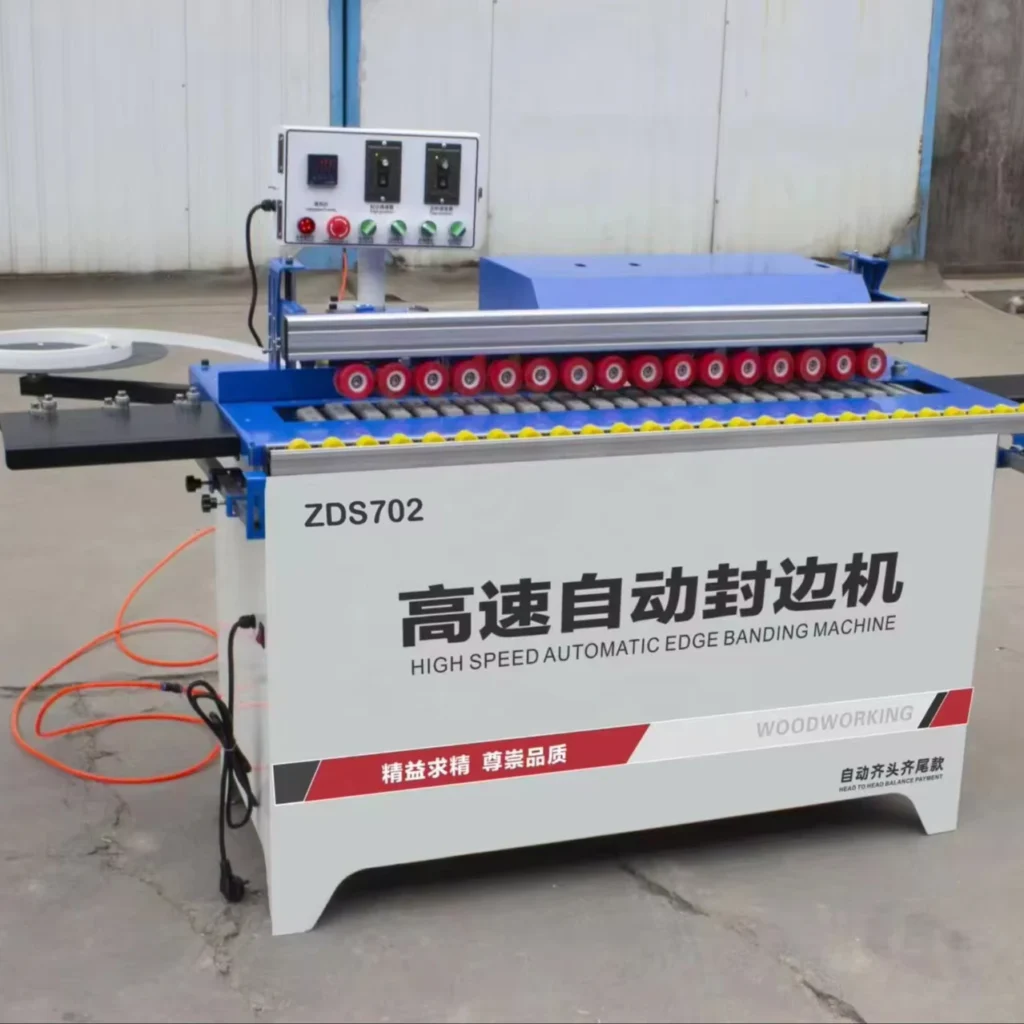
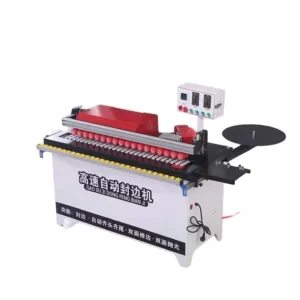
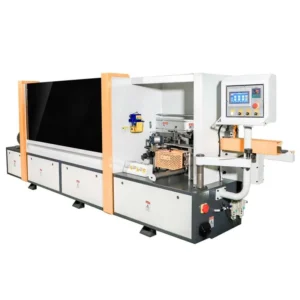
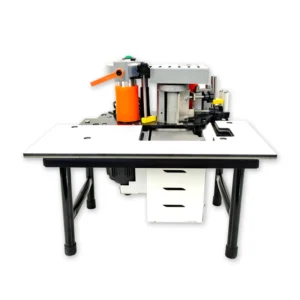
Built on the line, tested before it ships — Every ZDS702 leaves our 10,000㎡ facility only after a pre-shipment verification run on your specified panel thickness and edge material, with electrical schematics and voltage confirmation documents signed off before the crate is sealed.
Technical Specifications
| Parameter |
Value |
| Model |
ZDS702 |
| Product Type |
Automatic PVC Edge Banding Machine |
| Function |
Automatic plate feeding, end cutting, upper and lower polishing, head and tail trimming, built-in dust collector |
| Edge Type |
Straight line |
| Rated Voltage |
220V / 380V / customization (110V–440V available) |
| Rated Power |
3.8 kW |
| Trimming Height (Panel Thickness) |
5–50 mm |
| Feed Speed |
0–10 m/min |
| Edge Banding Thickness |
0.3–3 mm |
| Glue Pot Capacity |
1000 ml |
| Heating Power |
1000 W (heat-up time 5–10 min) |
| Rated Air Pressure |
0.4–0.6 MPa |
| Overall Dimensions |
120 × 55 × 120 cm |
| Machine Weight |
105 kg |
| Pressure System |
One-piece pressure beam, double rows of pressure wheels, silicone material conveyor belt |
| Pressure Adjustment |
Hand crank wheel with integrated precision scale |
| Assembly State |
Fully assembled (source value — verify against manufacturer catalog) |
| Key Features |
Built-in vacuum dust extraction, automatic head and tail trimming, upper and lower polishing |
Application Suitability
| Application |
Material or Output |
| Cabinet door edge sealing |
MDF and particleboard with 0.3–3 mm PVC edge banding |
| Wardrobe panel finishing |
Plywood and melamine-faced board, straight-line edges |
| Office furniture components |
Solid wood panels and veneer banding up to 50 mm thickness |
| Small workshop scale-up |
Transition from manual edge gluing to automated feed and trim |
Why the Voltage Question Must Come Before the Quotation
A machine wired for the wrong grid is a crate that sits on your dock until a transformer arrives.
I learned this the hard way on a project in the Middle East. A 380V edge bander was shipped to a site running 415V three-phase. The variable frequency drive tripped on overvoltage within seconds of power-on, and the entire line sat idle for nearly three weeks waiting for a step-down transformer. Since then, I personally review the electrical schematic and nameplate photo for every unit before release. When sourcing an Automatic Edge Banding Machine OEM factory, confirming local voltage and frequency is the first conversation, not an afterthought [NEED_CITE: voltage and frequency standards by export market].
Proprietary Cutting Mechanism and Verified Tolerance
The ZDS702 uses an in-house developed trimming mechanism with precision-ground components, held to verified tolerances during assembly. This matters on the shop floor: when the head and tail trimming station cuts the overhang flush, the panel moves to assembly without visible gaps or catch points. Distributors who have dealt with customer complaints about edge quality know that the trimming unit is where reputations are won or lost.
Four-Stage Quality Control Across the Build Cycle
Quality checks are not a single inspection at the end. Incoming materials are verified before they enter production, in-process checks catch assembly drift at each station, finished product testing runs the machine under load, and pre-shipment verification confirms performance on your specified panel range. This layered approach means the unit you receive has been tested as a working system, not just assembled from parts that individually passed [NEED_CITE: ISO 9001 quality management system requirements for machinery].

How Feed Speed, Glue Pot, and Pressure Define Your Daily Output
The 0–10 m/min feed speed range gives operators flexibility across material types — slower feeds for veneer on delicate substrates, faster passes for standard PVC on particleboard. The 1000 ml glue pot with 1000 W heating element reaches working temperature in 5–10 minutes, which is practical for workshops that run multiple short batches rather than one continuous shift. The one-piece pressure beam with double rows of silicone pressure wheels maintains even contact across the 5–50 mm panel thickness range, preventing the uneven glue lines that show up under bright warehouse lighting. The hand crank pressure adjustment with a precision scale lets operators dial in the exact setting and repeat it on the next batch. The built-in dust collector keeps the trimming area clear, which directly affects edge finish consistency over a full day of production.
The Hidden Cost of Skipping Voltage Confirmation
When a distributor orders machines piecemeal without locking in electrical specifications, the result is often a mismatch at the customer’s site. A frequency drive rated for 50 Hz on a 60 Hz grid runs the feed motor faster than the glue application rate, producing starved joints. A 220V single-phase unit plugged into a 380V three-phase supply destroys the control board instantly. These failures do not show up in factory testing because the machine was tested on the correct voltage — at the factory [NEED_CITE: common causes of industrial motor failure in export markets].
Manufacturing Depth You Can Inspect
The facility behind the ZDS702 spans a 10,000㎡ production floor staffed by 60 engineers and over 800 skilled workers. In-house manufacturing means component sourcing, precision grinding, and assembly all happen under one roof, giving supply chain control that trading companies cannot match. The proprietary cutting mechanism is designed and built here, not sourced from a third-party spindle supplier. Factory visits are open to distributor partners who want to see the grinding stations, assembly lines, and four-stage QC checkpoints firsthand. Full OEM and private label branding is supported, including custom logos, multilingual control panels, and voltage configurations from 110V to 440V. CE declaration of conformity and ISO 9001 certification are available for market compliance documentation.
Documentation & Verification
- CE declaration of conformity covering the ZDS702 edge banding machine series
- ISO 9001 certificate for the manufacturing quality management system
- Electrical schematic with confirmed voltage and frequency for your destination market
- Factory test record run on your specified panel thickness and edge material
- Operation and maintenance manual in your agreed language with spare parts list
- Pre-shipment verification photographs including nameplate and packed crate
Installation, Commissioning & Support
- Requires a dedicated 3.8 kW circuit at the confirmed voltage with a grounded outlet matching the machine plug configuration
- Fully assembled delivery — uncrating and positioning the 105 kg unit on a level floor is the primary setup task
- Pneumatic supply must deliver 0.4–0.6 MPa clean dry air to the rated connection point
- First-run commissioning includes glue pot heat-up verification and feed speed calibration across your panel range
- Silicone conveyor belt and pressure wheel inspection intervals documented in the maintenance manual
- Spare parts list identifies all wear items with reorder codes for local stocking
Starting the Conversation
Tell us the panel materials you process most often, the edge banding thickness range your customers demand, and the voltage and frequency at the installation site. If you are evaluating this as a private-label product for your territory, share the branding requirements and the control panel language your operators need. We will return an engineer-led configuration proposal with a formal quotation within 24 hours.
Frequently Asked Questions
Q: What branding and customization options are available for OEM and private label orders?
A: Custom logos can be applied to the machine body and control panel fascia. Voltage is configurable from 110V to 440V to match your local grid. Control panel language is set to your operator’s requirements. Specification adjustments for feed speed or pressure system components can be discussed for market-specific needs.
Q: How is manufacturing quality verified before the machine ships?
A: Every unit goes through four-stage QC: incoming material check, in-process assembly inspection, finished product load test, and pre-shipment verification. The final test runs your specified panel thickness and edge banding material. A factory test record with photographs is provided before dispatch.
Q: Can voltage and control panel language be adapted for our target market?
A: Yes. Voltage is confirmed during the quotation stage to match your destination grid, whether 110V single-phase, 220V, 380V three-phase, or 440V. The control panel text and documentation are produced in your agreed language to prevent commissioning delays on site.
Q: What technical documentation does the distributor service team receive?
A: Each shipment includes an electrical schematic, voltage confirmation document, operation and maintenance manual, spare parts list with reorder codes, and packing photographs. CE and ISO 9001 documentation is available for market compliance. Engineer support is available during installation if needed.
Q: What is the typical production lead time for OEM orders?
A: Lead time depends on order volume and customization scope. Standard configurations move through production faster, while private-label orders with custom voltage and branding require additional preparation. We provide a confirmed timeline with the formal quotation and keep you updated through each production stage.