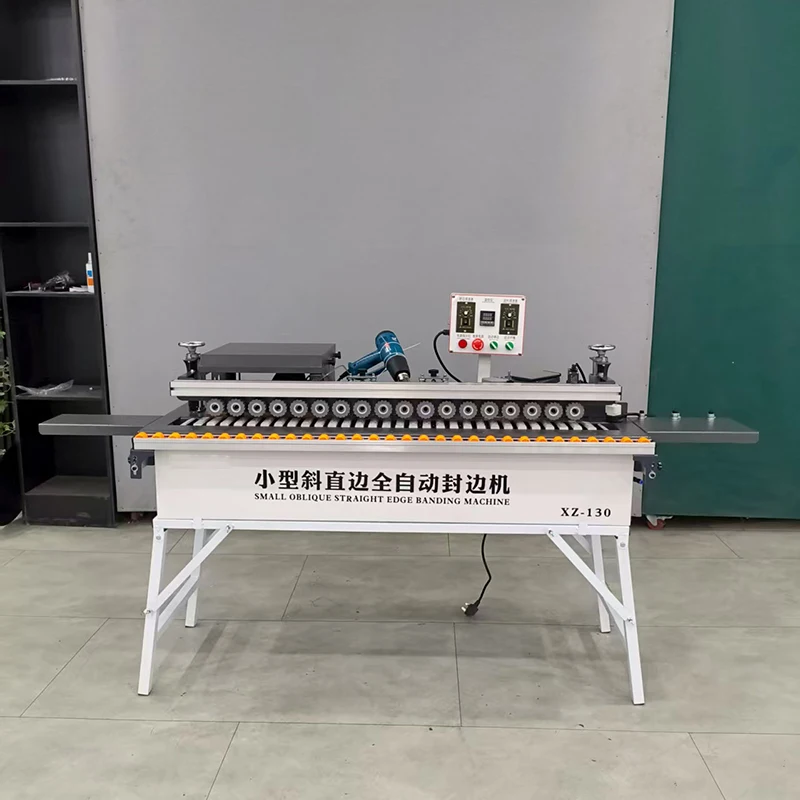
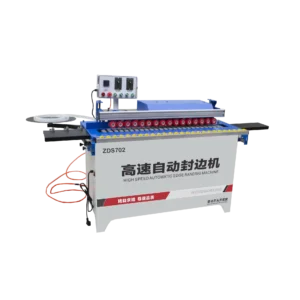
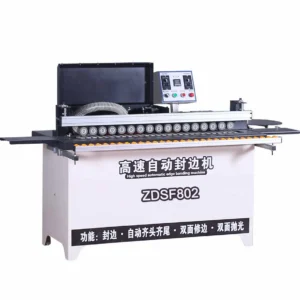
In-House Assembly With Four-Stage QC — Every edge banding unit leaves our Shandong workshop only after incoming material checks, in-process inspection, finished product verification, and a pre-shipment run on your actual panel stock.
Technical Specifications
| Parameter |
Value |
| Product Type |
Manual/Semi-Automatic Edge Banding Machine (Curved & Straight) |
| Standard Footprint |
139 cm × 52 cm × 61 cm |
| Plate Thickness Range |
18–25 mm |
| Maximum Strip Thickness |
1.2 mm |
| Rated Voltage |
220V |
| Glue Pot Capacity |
2000 ML |
| Heating Time |
5–10 minutes |
| Compatible Glue Type |
PUR Hot-Melt / Standard Hot-Melt |
| Edge Profile Coverage |
45° Slanted and Straight Edge |
| Pressure Beam Material |
Aluminum Alloy, Manually Adjustable |
| Belt Breaking Mechanism |
Automatic |
| Dust Extraction |
Self-Contained Vacuum Device |
| Key Features |
Automatic Plate Feeding, Slotting Edge Banding, Hot Air Heating, Elastic Profiling Trimming |
Application Suitability
| Application Scenario |
Material or Output |
| Cabinet door and carcass edge finishing |
PVC edge strips on MDF and particleboard panels |
| Custom furniture curved edge sealing |
Plywood and blockboard with radius contours |
| Small workshop angled edge treatment |
45° slanted edges on solid wood and composite panels |
| Moisture-resistant bonding for humid climates |
PUR hot-melt adhesive on kitchen and bathroom cabinetry substrates |
Why the Voltage Question Should Come Before the Price
Confirming your facility’s electrical supply before quoting prevents weeks of commissioning delay once an Edge Banding Machine factory ships the wrong configuration.
I remember a shipment to a Middle East cabinet shop years ago. The purchase order specified a 45-degree edge bander for PUR hot-melt work, everyone focused on glue temperature and feed mechanics, and nobody asked for a photo of the distribution board. The machine arrived rated for 440V and met a 380V supply. The breaker tripped on first start-up. The workshop sat idle for three weeks while a step-up transformer was sourced locally. [NEED_CITE: voltage and frequency standards by export market]
Since that project, my first request on any inquiry is a clear photo of the main panel nameplate. It takes the buyer two minutes and eliminates the single most common cause of dead-on-arrival machinery in cross-border equipment trade. An OEM edge bander manufacturer that does not ask about your grid before issuing a quotation is leaving a critical variable to chance.

How This Edge Bander Fits a Distributor’s Catalog
Distributors assembling a product mix for regional joinery workshops need a compact unit that covers both curved and straight edge work without requiring the customer to buy two separate machines. This model addresses that gap within a footprint of roughly 1.4 meters in length, making it viable for workshops where floor space limits the equipment lineup. An Edge Banding Machine factory building for OEM partners can apply private-label branding and match the control panel language to the destination market, so the local reseller presents a coherent product family under their own name.
Private-Label Customization Built Into the Production Flow
Logo placement, panel color, and documentation language are handled on the assembly line rather than added as afterthoughts. The voltage range spans from 110V to 440V, which means a single OEM edge bander manufacturer can supply the same mechanical platform to markets running North American, European, or Southeast Asian grid standards without redesigning the electrical cabinet. Multilingual control interfaces reduce the training burden on the distributor’s own service technicians when they commission units in the field. [NEED_CITE: CE machinery directive requirements for industrial equipment]
Reading the Specs That Actually Matter in the Workshop
The 18–25 mm plate thickness range covers the most common panel stock used in cabinet carcass and door production. If your market frequently runs 16 mm or 36 mm panels, you will need to discuss pressure beam adjustment limits with the factory before ordering. The 2000 ML glue pot capacity supports sustained runs through a standard production shift without frequent refilling, though PUR hot-melt adhesive requires more careful temperature management than standard EVA glue. The aluminum alloy pressure beam is manually adjustable, which keeps the purchase cost down but means operators must set clamping pressure by hand when switching between panel thicknesses. The self-contained vacuum device eliminates the need to duct the machine into a central extraction system — a practical advantage for small workshops where installing overhead ductwork is not feasible. The automatic belt breaking mechanism reduces waste at the end of each panel cycle by cutting the edge strip cleanly rather than relying on the operator to snap it manually.
The Cost of Skipping Pre-Shipment Verification
When a distributor accepts a machine without requesting a processing test on representative panel stock, the first sign of poor glue adhesion or visible trimming marks appears on the customer’s shop floor rather than in the factory. Resolving that remotely means shipping replacement trimming blades or sending a technician internationally, both of which erode the margin on the original sale. Voltage mismatches compound the problem because the machine may power on but run the feed motor at the wrong speed, producing edge banding that looks acceptable at first glance but fails during furniture assembly. [NEED_CITE: industrial machinery pre-shipment inspection standards]
Why Source This Edge Bander From Our Shandong Facility
Our assembly line runs proprietary cutting mechanisms with verified tolerance, so the trimming quality you see during a factory visit is the same quality your end customer receives. The four-stage QC process — incoming material, in-process, finished product, and pre-shipment verification — applies to every unit regardless of order volume. We support OEM partners with custom logo application, voltage adaptation across the 110V to 440V range, and control panel localization in the languages your market requires. Engineer-led configuration recommendations are delivered within 24 hours of receiving your panel specifications and production requirements, and factory visits or virtual audits are available at any stage before you commit to a bulk order.
Documentation & Verification
- CE declaration of conformity matched to the edge bander configuration you ordered
- Electrical schematic confirming voltage and frequency for your destination market
- Factory test record using your specified panel thickness and edge strip material
- Machine specification sheet with all dimensional and power data in one document
- Operation and maintenance manual in the language agreed at order confirmation
- Spare parts list covering trimming blades, glue pot components, and belt guides
Installation, Commissioning & Support
- 220V dedicated circuit with appropriate breaker rating for the glue pot heating element and feed motor combined
- Compact 139 × 52 × 61 cm footprint requires only a level concrete floor without special foundation work
- Self-contained vacuum device means no external ductwork connection during installation
- Glue pot filled and heated to PUR operating temperature during first commissioning run on your panel samples
- Manual pressure beam adjustment demonstrated across the full 18–25 mm plate thickness range
- Spare trimming blades and glue pot seals included in the initial shipment for early maintenance cycles
Before You Request a Quotation
Share the panel materials and thicknesses your customers most frequently process, along with the edge strip type — PVC, ABS, or veneer — and whether PUR hot-melt bonding is required for moisture resistance. Confirm the voltage and frequency at the destination facility by providing a photo of the electrical panel nameplate. Let us know if OEM branding, a specific control panel language, or private-label packaging is needed so these requirements enter the production schedule from day one.
Frequently Asked Questions
Q: What customization is available for OEM and private-label orders?
A: We accommodate custom logo placement on the machine body, panel color selection, voltage adaptation from 110V to 440V, and multilingual control panels. Private-label packaging and documentation branding are handled in-house. Each OEM configuration is confirmed with a formal specification sheet before production begins.
Q: How do you confirm the voltage matches our local grid before shipping?
A: We request a photo of your facility’s distribution board nameplate during the inquiry stage. The electrical schematic issued with your order documents the exact voltage and frequency configured for your machine, and a pre-shipment electrical test verifies the wiring before the crate is sealed.
Q: Can we send panel samples for a factory processing test before ordering?
A: Yes. Send your representative MDF, particleboard, or plywood panels along with the edge strip material you plan to use. We run a processing test on the production line and share photos and video of the finished edge quality, glue adhesion, and trimming result before you confirm the purchase order.
Q: How does this compact edge bander integrate with other machines in a small workshop?
A: Its footprint and feed height align with standard sliding table saws and boring machines used in joinery workshops. We review your existing equipment list and workshop layout to confirm material flow between stations, ensuring panels move from cutting to edge banding without height mismatches or bottlenecks.