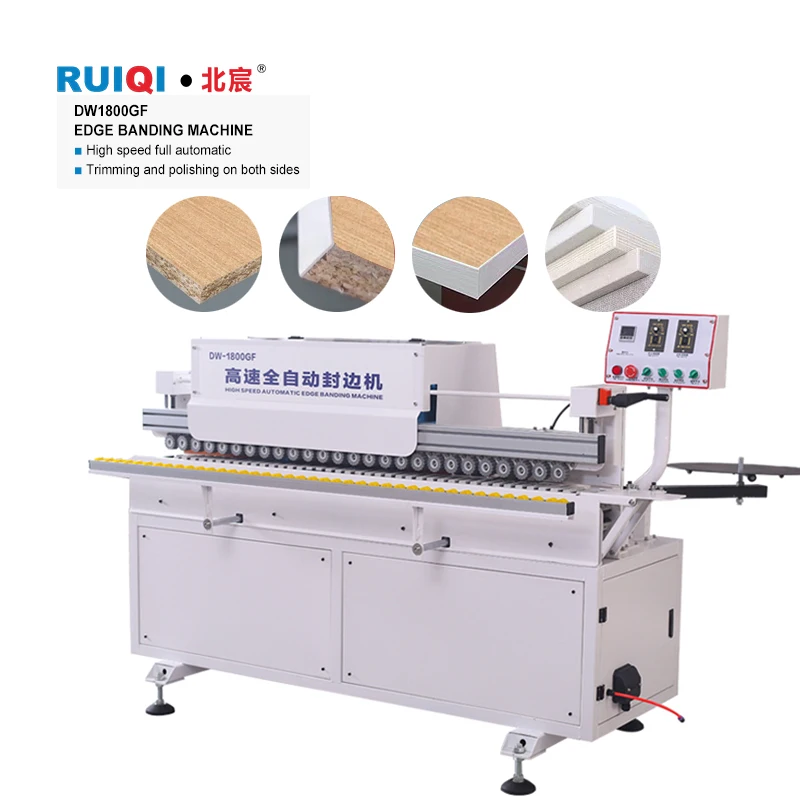
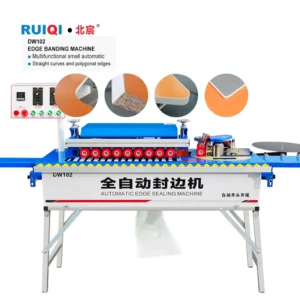
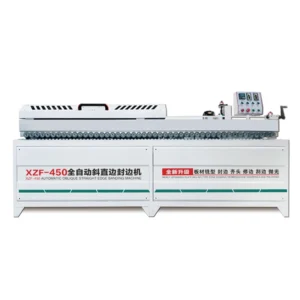
Verified Source Manufacturing — every DW1800 automatic edge banding machine leaves our Ningjin facility with confirmed voltage schematics, OEM branding options, and factory test records matched to your panel materials.
Technical Specifications
| Parameter |
Value |
| Model |
DW1800 |
| Product Type |
Automatic Edge Banding Machine |
| Total Power |
4.9 kW |
| Voltage Options |
380V / 220V / 415V (frequency to be confirmed) |
| Feed Speed |
0–14 m/min |
| Edge Banding Thickness |
0.3–3 mm |
| Edge Banding Height |
0–50 mm |
| Panel Thickness Range |
0–50 mm |
| Minimum Sheet Length |
200 mm |
| Minimum Sheet Width |
100 mm |
| Trimming Motor |
800 W × 2 at 24,000 r/min |
| Polishing Motor |
380 W × 2 |
| Glue Pot Capacity |
4000 ml |
| Air Source Pressure |
0.4–0.6 MPa |
| Vacuum Power |
550 W |
| Product Size |
220 × 65 × 125 cm |
| Product Weight |
320 kg |
| Key Features |
Double-sided gluing, top and bottom trimming, front and rear alignment, flexible edge scraping, top and bottom polishing, dust extraction port |
Application Suitability
| Application |
Material or Output |
| Custom cabinet door edging |
MDF and particleboard with PVC or melamine banding |
| Wardrobe side panel finishing |
Plywood and ABB boards with veneer or ABS edges |
| Office furniture panel production |
Particleboard and MDF up to 50 mm thickness |
| Solid wood furniture components |
Solid wood panels requiring profile tracking corner rounding |
| Decorative panel edging |
Organic glass plates and PVC panels within thickness range |
Why the Voltage Question Should Come Before the Price on Any Edge Banding Machine Factory Order
An edge banding machine that cannot connect to your local grid is dead weight on the workshop floor — voltage confirmation must precede every other commercial discussion.
I have watched container arrivals stall for weeks because the motor was wound for 380V/50Hz while the buyer’s facility ran on 415V/60Hz. The rewinding cost, the electrician call-outs, the idle operators standing around a silent machine — all of it traces back to a single unchecked line on the quotation. When an edge banding machine factory locks in the electrical specification before cutting steel, these losses disappear entirely [NEED_CITE: voltage and frequency standards by export market].

How OEM Partners Use the DW1800 Platform for Regional Markets
Distributors building a private-label woodworking line need more than a logo swap. The DW1800 supports custom branding on the machine body, control panel faceplate, and documentation covers, giving an OEM edge banding machine partner the visual identity required for regional resale. Voltage, plug type, and HMI language are configured at order level so the machine arrives ready for the end user without secondary modification.
Manufacturing Depth Behind the DW1800 Chassis
Our Ningjin facility handles precision grinding of feed chain tracks and pressure beam surfaces in-house, which means tolerance on edge trimming stays within the stated specification across production batches. The mobile workstations are extruded from high-strength aluminum alloy with oxidation-treated surfaces, resisting wear from continuous PVC and ABS dust exposure. Each unit passes through incoming material inspection, in-process assembly checks, finished product testing, and pre-shipment verification before crating [NEED_CITE: CE machinery directive requirements for industrial equipment].
What the Spec Sheet Numbers Actually Mean for Your Panels
The 0.3–3 mm edge banding thickness range covers everything from thin melamine tape for cabinet carcasses to 3 mm ABS for impact-resistant worktops. Trimming motors running at 24,000 r/min produce a clean shear cut rather than a tear, which directly affects whether the panel passes visual inspection at the assembly bench. The 0–50 mm panel thickness capacity means a single machine handles both 18 mm standard shelving and 50 mm solid-core doors without tooling changeover. Profile tracking rounds all four corners in the same pass, removing the sharp arris that causes edge lift during transport. Air pressure held between 0.4 and 0.6 MPa keeps the pressure beam force consistent, preventing the slight overhang variation that forces rework downstream.
The Hidden Cost of Skipping Pre-Shipment Electrical Verification
Machines that arrive with mismatched frequency ratings do not simply fail to start — they can run at incorrect motor speeds, burning out trimmer bearings within days or producing uneven glue application because the pot heater cycles wrong. Operators then blame the machine design when the root cause is a 50/60 Hz discrepancy that a simple pre-shipment test would have caught [NEED_CITE: motor speed variation under frequency mismatch in industrial equipment]. The cost of an emergency transformer, freight for replacement parts, and lost production time regularly exceeds the value of the verification step itself.
Why Distributors Source the DW1800 from This Edge Banding Machine Factory
Our in-house manufacturing means an OEM edge banding machine order is not outsourced to a second workshop after the deposit clears. The patented cutting mechanisms used in the trimming stations are built and tested on the same floor where assembly happens. We configure voltage from 110V to 440V as standard practice, not as a special request that delays the schedule. Four-stage QC with documented records accompanies every unit, so a regional distributor can show end buyers exactly what was verified before packing. Factory visits and sample runs on buyer-supplied panel stock are scheduled before order confirmation, not after.
Documentation & Verification
- CE declaration of conformity matched to the DW1800 model designation
- Electrical schematic confirming your specified voltage, frequency, and plug type
- Factory test record using your panel thickness and edge banding material
- ISO 9001 certificate covering manufacturing process scope
- Operation and maintenance manual in your chosen control language
Installation, Commissioning & Support
- Requires a dedicated 3-phase circuit matching the confirmed voltage and frequency rating
- Floor space of approximately 220 × 65 cm plus operator clearance on the infeed side
- Air line connection at 0.4–0.6 MPa with a dedicated regulator and moisture trap
- First-run parameter setting for glue temperature based on your specific banding material
- Trimming and polishing wheel adjustment calibrated to your panel thickness range
- Spare wear parts list covering feed chain pads, trimming cutters, and polishing buff wheels
What We Need to Quote Your DW1800 Configuration Accurately
Send us your local voltage and frequency, the plug standard required at your destination port, and the panel materials you will run most frequently. If you need the control panel in a language other than Chinese or English, specify it at inquiry stage. Tell us whether this unit will join an existing line or operate standalone so we can match feed direction and dust extraction routing to your current layout.
Frequently Asked Questions
Q: What OEM and private-label options are available on the DW1800?
A: We apply your logo to the machine body, control panel faceplate, and documentation covers. Voltage, plug type, and HMI language are set at order level. The entire unit ships under your brand identity with no reference to our factory name on customer-facing surfaces.
Q: How do you confirm voltage and plug type before the DW1800 enters production?
A: Our formal quotation lists the exact voltage, frequency, and plug standard. You sign off on this specification before steel is cut. The electrical schematic reflecting your confirmed values ships with the machine and is used during the pre-shipment test.
Q: Can we send our own panel material for a sample run before ordering?
A: Yes. Ship us a batch of your typical panels and edge banding stock. We run them through the DW1800 at our Ningjin facility, document the edge quality and trimming result, and share photos and video before you commit to a purchase order.
Q: What quality checkpoints does the DW1800 pass through before packing?
A: Incoming material inspection, in-process assembly checks, finished product functional testing, and a full pre-shipment run using panels that match your specification. Each stage is recorded in the factory test document that accompanies your shipment.