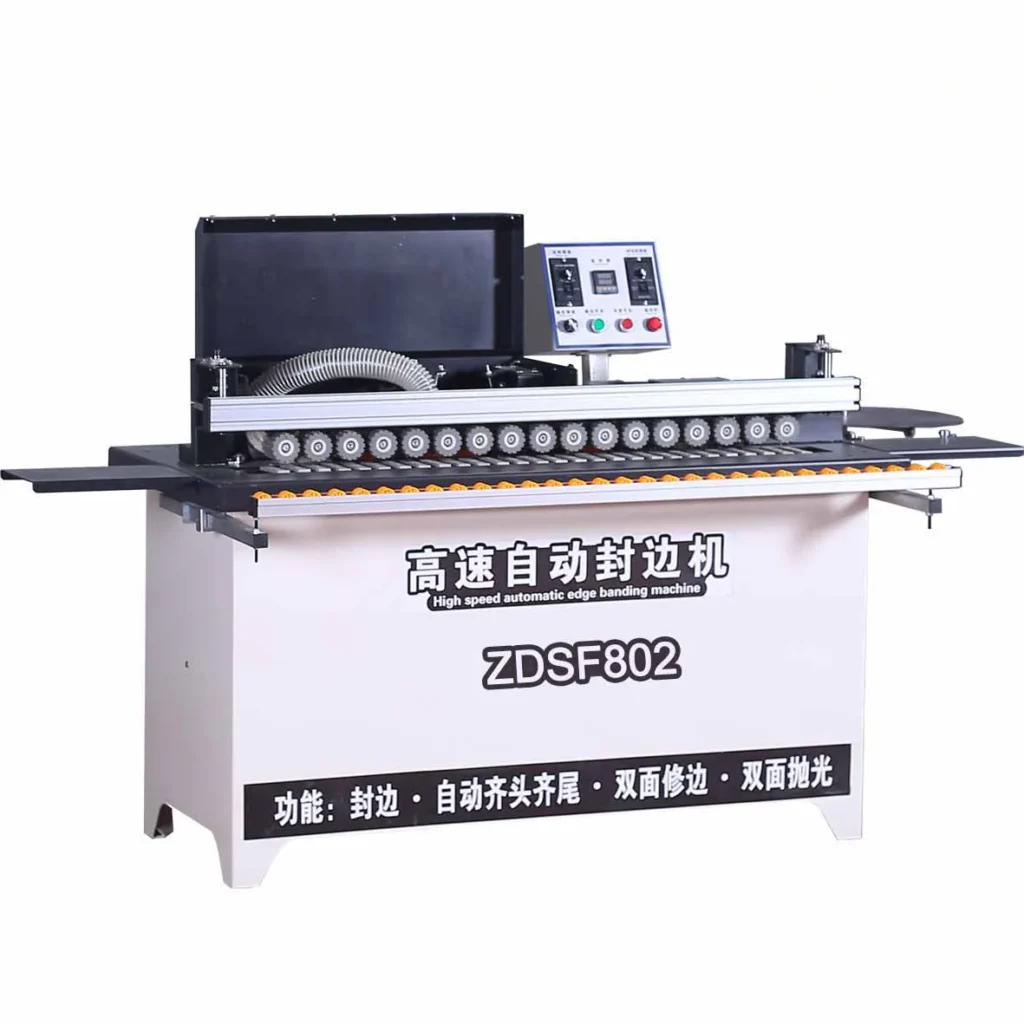
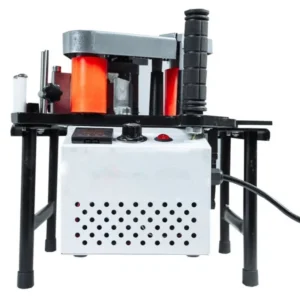
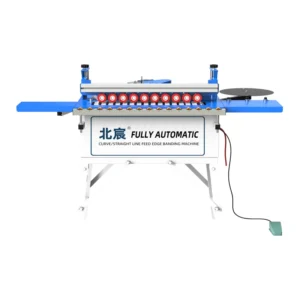
Precision Assembly Standards — Every ZDS802 unit undergoes a four-stage quality control protocol before leaving the Shandong facility, with pre-shipment verification documenting voltage, air pressure, and functional test results against specification.
Technical Specifications
| Parameter |
Value |
| Model |
ZDS802 |
| Product Type |
Automatic Edge Banding Machine |
| Rated Voltage |
220V (confirm 50Hz/60Hz with destination market) |
| Rated Power |
4 kW |
| Trimming Motor |
800W × 2 |
| Polishing Motor |
180W × 2 |
| Suction Power |
1200W |
| Glue Pot Heating Power |
1000W |
| Glue Pot Capacity |
4000 ml |
| Feed Speed |
0–10 m/min |
| Conveyor Belt Speed |
0–10 m/min |
| Edge Strip Thickness Range |
0.5–2.5 mm |
| Panel Thickness Range |
10–50 mm |
| Rated Air Pressure |
0.4–0.6 MPa |
| Overall Dimensions |
130 × 65 × 75 cm |
| Machine Weight |
150 kg |
| Control Panel |
Digital glue pot temperature display, independent switches |
| Pressure Beam |
Integrated, double-row pressure rollers, silicone conveyor belt |
| Belt Breaking Method |
Pneumatically controlled |
| Edge Type |
Straight line |
| Extended Support |
Extendable fluent strips for large panel stability |
Application Suitability
| Application |
Material or Output |
| Custom furniture panel edge banding |
MDF, particleboard, plywood |
| Cabinet door and carcass production |
PVC edge banding 0.5–2.5 mm |
| Small workshop straight-line finishing |
Solid wood panels up to 50 mm thickness |
| Semi-automated joinery operations |
Veneer edge banding on flat substrates |
Voltage Verification Before Production Begins
The ZDS802 automatic edge banding machine OEM process requires voltage and frequency confirmation before the electrical panel is wired, preventing on-site failures that idle production for weeks. Every unit ships with an electrical schematic matching the destination market standard, verified in writing during the quotation stage.
Sending a 220V/50Hz machine into a 60Hz market without adjusting motor winding specifications causes overheating and premature failure. Conversely, regions with unstable grid supply need voltage stabilizer recommendations factored into the installation plan. The time spent confirming these details during inquiry eliminates weeks of waiting for replacement components [NEED_CITE: voltage and frequency standards by export market].
Component Sourcing and Precision Assembly
The manufacturing sequence begins with component inspection at the incoming material stage. Pressure beam rollers, trimming motors, and the pneumatic belt-breaking cylinder each carry traceability documentation. For distributors sourcing an automatic edge banding machine OEM partner, this level of sourcing transparency enables confident technical conversations with end-user customers.
Four-Stage Quality Control Protocol
Production follows incoming inspection, in-process assembly checks, finished product functional testing, and pre-shipment verification. The glue pot undergoes a heat-up cycle to confirm the 1000W heating element reaches operating temperature within the expected window. Trimming motors run under load to verify the 800W × 2 configuration delivers clean cuts without chatter [NEED_CITE: CE machinery directive requirements for industrial equipment].
How Parameters Shape Edge Quality
The 10–50 mm panel thickness range determines which workshop applications this machine serves. Thinner stock below 10 mm requires different pressure beam geometry not present here. The 0–10 m/min feed speed range allows operators to dial back for veneer materials that demand slower travel, or increase for PVC banding on standard particleboard. The 4000 ml glue pot capacity supports extended production runs before refill, which matters when batching cabinet components where stopping mid-run risks cold joints on the next panel.

What Happens When Electrical Specs Are Assumed
Workshops that receive equipment with mismatched voltage face immediate operational paralysis. The inverter or contactor fails on first energization. Replacement parts ship from the factory, but the machine sits idle through the transit window. Customers lose confidence in the equipment brand and in the distributor who supplied it [NEED_CITE: industrial equipment voltage mismatch failure consequences].
Why Distributors Choose This Manufacturing Partner
In-house production with patented cutting mechanisms means the factory controls the assembly sequence end to end. Full product range within one brand family allows a distributor to supply entry-level and higher-tier machines without managing multiple OEM relationships. Voltage and language customization happens as standard practice rather than special request. The pre-shipment test record accompanies every unit, documenting performance against specification before crating.
Documentation & Verification
- Factory test record confirming glue pot temperature stability and trimming quality on specified panel thickness
- CE declaration of conformity included in shipment documentation package
- Electrical schematic showing confirmed voltage and frequency for destination market
- Operation manual translated into buyer’s agreed language with complete spare parts list
- Pre-shipment photographs documenting machine condition and packing configuration
Installation, Commissioning & Support
- Requires 0.4–0.6 MPa clean dry air supply with dedicated regulator near the machine location
- 4 kW rated power needs a dedicated circuit breaker sized per local electrical code
- Machine arrives fully assembled; place on level floor and connect power, air, and dust extraction
- Digital temperature display requires operator calibration check during first heat-up cycle
- Silicone conveyor belt inspection and tension adjustment scheduled after initial break-in period
- Extendable fluent strips require clearance space on both infeed and outfeed sides
Preparing Your Inquiry
Share the panel materials you process most frequently, typical board thickness and edge strip type, and your workshop’s available floor space for machine placement. Confirm the local voltage and frequency standard, preferred control panel language, and whether you need sample processing results before committing to a production order.
Frequently Asked Questions
Q: What OEM and private-label options exist for the ZDS802?
A: Custom logo placement on the machine body, branded packaging, color specification, and control panel faceplate branding are all configurable. Distributors typically select private-label branding to build their own market identity. Specify these requirements during the quotation stage so tooling and printing are prepared before production begins.
Q: How is voltage confirmed for my destination market?
A: The inquiry process includes a formal voltage and frequency confirmation step documented in the quotation. The electrical schematic provided with shipment reflects this confirmed specification. This prevents on-site failures from mismatched grid standards and eliminates the assumption that "standard" voltage applies universally across export markets.
Q: What does pre-shipment verification cover?
A: Each unit runs through a functional test cycle covering glue pot heat-up, feed motor operation, trimming quality, and pneumatic system response. The test record documents results and ships with the machine. Distributors can request video documentation of their specific unit running before it enters the packing stage.
Q: Can we visit the factory before placing a bulk order?
A: Factory visits are welcomed and can include observation of assembly processes, quality control checkpoints, and sample edge banding runs using your specified materials. For buyers unable to travel, sample processing tests can be conducted and results documented with photographs and video for remote evaluation.
Q: What technical support is available for distributor service teams?
A: The operation and maintenance manual includes troubleshooting procedures and adjustment specifications. Spare parts lists identify consumable and replacement components with part numbers. Distributors can arrange technical training for their service personnel to handle common adjustments and component replacement independently.