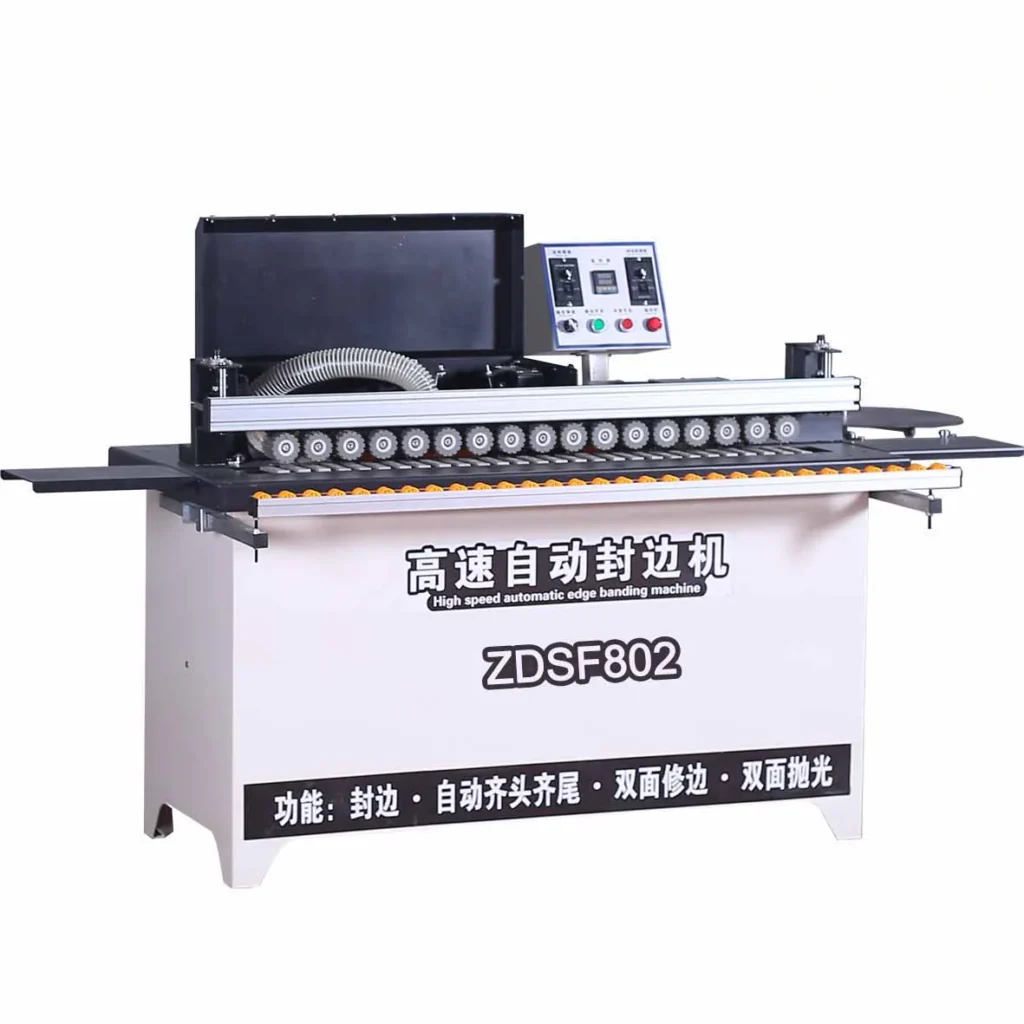
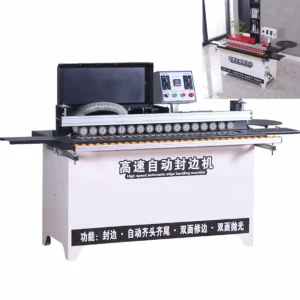
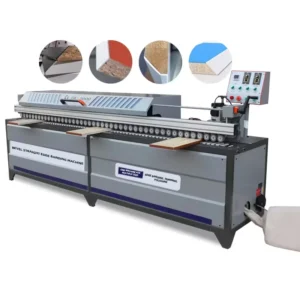
Zds802 Automatic Edge Banding Machine for Furniture – OEM Available
Built In-House From Casting to Calibration — Every Zds802 Automatic Edge Banding Machine leaves the line only after four-stage verification covering incoming material, in-process assembly, finished output, and pre-shipment tolerance checks.
Technical Specifications
| Parameter |
Value |
| Model |
ZDS802 |
| Product Type |
Automatic Edge Banding Machine |
| Rated Voltage |
220V (configurable from 110V to 440V) |
| Feed Speed |
0-10 m/min |
| Panel Thickness Range |
10-50 mm |
| Strip Thickness |
0.5-2.5 mm |
| Trimming Power |
800W × 2 |
| Polishing Power |
180W × 2 |
| Heating Power |
1000W (heat-up 5-10 min) |
| Suction Power |
1200W |
| Rated Power |
4 kW |
| Glue Pot Capacity |
4000 ml |
| Rated Air Pressure |
0.4-0.6 MPa |
| Overall Dimensions |
1300 × 650 × 750 mm |
| Machine Weight |
150 kg |
| Edge Type |
Straight line |
| Key Features |
Automatic plate feeding, end cutting, head and tail trimming, upper and lower polishing, integrated dust collector |
Application Suitability
| Application |
Material or Output |
| Custom cabinet door production |
MDF and particleboard with PVC edge banding |
| Office furniture panel edging |
Plywood and melamine-faced chipboard |
| Workshop-scale joinery output |
Solid wood panels with veneer banding |
| Small-batch shelving and carcass work |
Laminated board with 0.5-2.5 mm strip thickness |
Why Voltage Confirmation Must Precede Every Other Specification
A machine wired for the wrong grid is dead iron on arrival — no amount of build quality compensates for an electrical mismatch.
I once watched a Zds802-class edge bander sit idle in a South American workshop for three weeks because the voltage confirmation step was skipped during ordering. The factory built it for 380V/50Hz; the site ran 220V/60Hz. The electrical cabinet had to be rebuilt on-site before the machine could power up. That delay cost the buyer more in lost production than the machine itself [NEED_CITE: voltage and frequency standards by export market]. This is why the Zds802 Automatic Edge Banding Machine ships with voltage configurable from 110V to 440V, and why the electrical schematic is confirmed before production begins — not after.
Component Sourcing and Assembly Discipline
The Zds802 Automatic Edge Banding Machine is assembled from precision-ground components that pass multi-stage inspection before they reach the main frame. Trimming motors rated at 800W each handle the initial head and tail cuts, while 180W polishing motors follow to clean the edge profile. Each station is independently mounted so that wear on one does not shift alignment on another.
Manufacturing Depth Behind the Price Tag
Distributors evaluating this ZDS802 for OEM partnership will find that the cutting mechanism is proprietary, not sourced from a third-party catalog. The glue pot holds 4000 ml — enough for extended production runs without interrupting the feed to refill. Pneumatically controlled belt breaking ensures the edge strip severs cleanly at the panel boundary rather than tearing or leaving overhang [NEED_CITE: edge banding adhesive behavior under varying feed speeds].
How the Specification Sheet Translates to Panel Output
The 10-50 mm panel thickness range covers most furniture-grade substrates, from thin 10 mm MDF shelving to 50 mm solid-wood worktops. Feed speed is adjustable from 0 to 10 m/min, which lets the operator slow the conveyor for difficult substrates like veneer that can lift at higher speeds. The 1000W heating element brings the glue pot to working temperature within 5 to 10 minutes, reducing idle time at the start of each shift. Dust extraction at 1200W pulls trimming debris away from the glue roller before it can embed in the bond line, keeping edge adhesion consistent across varying board densities.

What Happens When the Machine Does Not Match the Line
A single ZDS802 bought without checking feed height against existing conveyors creates a bottleneck that no amount of operator skill can fix. Panels jam at the infeed, glue sets unevenly because the operator is forced to hand-feed at inconsistent speeds, and the polishing station cannot keep up [NEED_CITE: common integration faults in panel processing lines]. The result is edge quality that varies from board to board, defeating the reason for buying an automatic machine in the first place.
Why Buyers Source This Model Directly From the Factory
The ZDS802 is manufactured entirely in-house, from frame welding to final calibration, so specification changes do not require negotiating with sub-suppliers. Voltage, control-panel language, and logo placement are confirmed during the quotation stage, not discovered as limitations at shipment. A factory test record is generated on the buyer’s actual panel thickness range before the machine is crated. CE declaration and ISO 9001 certification accompany every unit, and the four-stage QC process means the tolerance you see on the test record is the tolerance the machine delivers on your shop floor.
Documentation & Verification
- CE declaration of conformity matched to the ZDS802 configuration shipped
- ISO 9001 certificate covering the manufacturing process of this unit
- Electrical schematic confirming voltage and frequency for your local grid
- Factory test record on your specified panel thickness and edge material
- Operation manual in the operator’s language with annotated diagrams
- Spare parts list with part numbers for trimming cutters and glue roller
Installation, Commissioning & Support
- Requires a dedicated circuit matching the confirmed voltage and a 0.4-0.6 MPa compressed air supply
- Overall footprint of 1300 × 650 mm fits standard workshop aisles without special flooring
- Glue pot pre-heat cycle completes in 5-10 minutes before first panel enters the feed
- Feed belt tension and pressure beam height calibrated on-site to your 10-50 mm panel range
- Trimming and polishing stations aligned during commissioning using your actual edge material
- Dust collector ducted to central extraction or operated standalone via the 1200W integrated fan
What to Include With Your Inquiry
Send your typical panel material, thickness range, and edge strip specification so the engineer can confirm the ZDS802 configuration matches your output. State your local voltage and frequency, along with the control-panel language your operators read. If you are integrating this machine into an existing line, provide the infeed height and conveyor type of the upstream saw so feed compatibility is verified before production.
Frequently Asked Questions
Q: How can I verify edge banding tolerance before the machine ships?
A: A factory test record is produced using your specified panel thickness and edge material. The record documents trimming accuracy and polish finish across a production-length sample run. You may also arrange a factory visit to witness the pre-shipment test in person and inspect the output before the machine is crated for dispatch.
Q: Can the ZDS802 be built for a 60Hz power supply?
A: Yes. Voltage and frequency are confirmed during the quotation stage and can be set anywhere from 110V to 440V. The electrical schematic is reviewed with you before production starts, ensuring the motor ratings, heating element, and control transformer all match your site supply exactly.
Q: Is private-label branding available on this edge bander?
A: OEM logo placement, custom color schemes, and private-label documentation are handled in-house. Branding details are agreed during the specification confirmation stage so they are applied during assembly rather than added after the fact.
Q: What does the four-stage QC process actually cover?
A: Incoming material inspection verifies component dimensions before assembly begins. In-process checks confirm station alignment during build. Finished-product testing runs the machine under load, and pre-shipment verification repeats the tolerance test on your material specification before crating.
Q: How are spare parts identified and ordered after delivery?
A: Every ZDS802 ships with a spare parts list that includes part numbers for consumables such as trimming cutters, polishing wheels, and glue-pot seals. Reorders reference these numbers directly, and the factory maintains stock of high-wear items for dispatch.