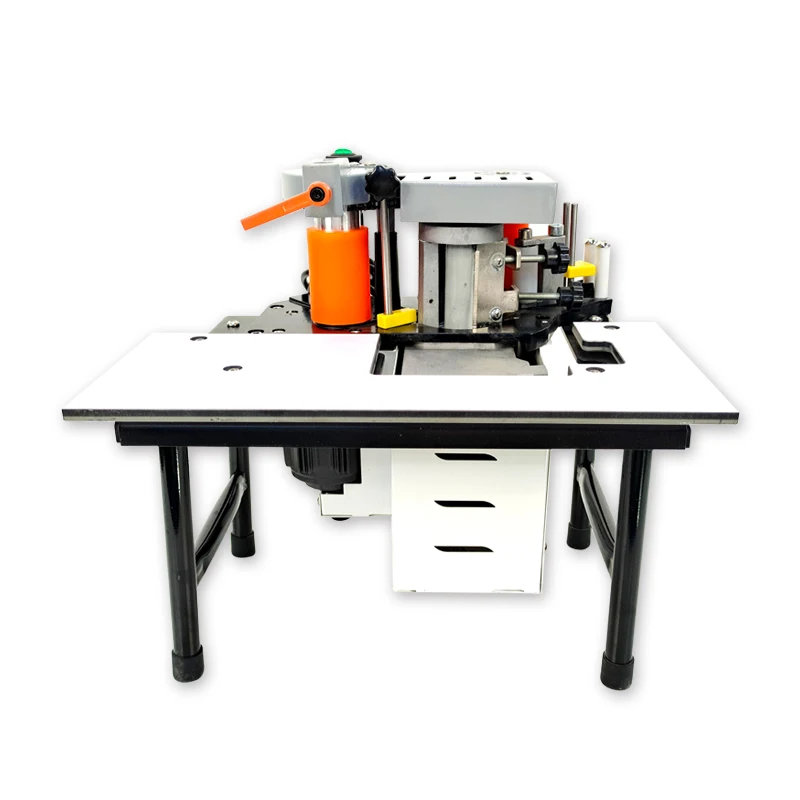
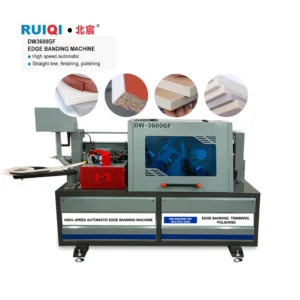
OEM branding as standard — Ruiqi confirms your logo placement, custom voltage, and panel language before cutting the first sheet metal for the ST-30 portable edge banding machine.
Technical Specifications
| Parameter |
Value |
| Model |
ST-30 |
| Product Type |
Portable Edge Banding Machine |
| Total Power |
1000W |
| Voltage |
220V / 380V / Customization |
| Edge Banding Thickness Range |
0.3–3mm |
| Edge Banding Height Range |
0–50mm |
| Minimum Sheet Length |
250mm |
| Minimum Sheet Width |
30mm |
| Edge Power |
20W |
| Air Source Pressure |
0.5–0.8MPa |
| Glue Pot Capacity |
1000ml |
| Suitable Edge Banding Materials |
ABS, PVC, Melamine, Veneer |
| Edge Type |
Straight and Curved Edge |
| Product Dimensions (L×W×H) |
380×350×350mm |
| Net Weight |
12kg |
| Control Panel Language Options |
Chinese, English, Spanish, French, Customizable |
| Plug Options |
EU, USA, AU, UK |
Application Suitability
| Application |
Material or Output |
| Small-scale cabinet and furniture workshops |
MDF, plywood, and particleboard panels with PVC or melamine edging |
| On-site interior decoration and joinery |
Solid wood panels and veneer edge banding on curved profiles |
| Startup operations transitioning to machine-assisted production |
ABS and melamine edge banding on straight and irregular panel shapes |
| Auxiliary edge banding alongside larger production lines |
Veneer and PVC edging for custom-shaped components |
Why Voltage Confirmation Must Happen Before the Order Is Cut
A portable edge banding machine manufacturer that skips electrical verification is handing you a machine you cannot plug in.
When a batch of edge banders arrives at a port with 380V motors and the local workshop only has 220V single-phase supply, the machines sit idle while transformers are sourced locally. The Portable Edge Banding Machine ST-30 is configured to your confirmed voltage and plug type before assembly starts, because rewinding a motor after it has left the factory is neither practical nor affordable [NEED_CITE: voltage and frequency standards by export market]. Operators in South America and Southeast Asia frequently encounter this exact stall when suppliers treat voltage as a footnote rather than a contract line item.
Private-Label Configuration for Regional Distributors
An OEM partner evaluating a portable edge bander needs more than a sticker on the chassis. The ST-30 supports custom logo placement on the machine body and packaging, along with control panel overlays printed in the target market’s language. This means a distributor in a Spanish-speaking territory receives units with Spanish-language button labels and documentation, eliminating operator confusion at the point of sale. Each private-label run begins with engineering drawings that specify logo position, color codes, and packaging artwork before the production run is scheduled.
Four-Stage Verification Before the Crate Is Sealed
Every ST-30 unit moves through incoming material inspection, in-process assembly checks, finished-product functional testing, and a final pre-shipment verification. The glue pot heats to operating temperature, the edge feed mechanism runs ABS and PVC stock through both straight and curved paths, and the air pressure circuit is checked at 0.5–0.8MPa before the unit is approved for crating [NEED_CITE: CE machinery directive requirements for industrial equipment]. Factory test records document these checks and ship with the machine, giving distributors a verifiable quality trail for their own customers.

What the Specs Mean for Actual Workshop Output
The 0.3–3mm edge banding thickness range covers the materials most small workshops handle daily — thin melamine tape for cabinet carcasses and thicker ABS for exposed furniture edges. A glue pot capacity of 1000ml provides enough adhesive volume for intermittent production throughout a shift without constant refilling, which suits the stop-start workflow of a custom joinery shop rather than a continuous high-volume line. The minimum sheet width of 30mm allows narrow edging strips and small offcut pieces to be processed, a common requirement when fitting shelving inserts or drawer components [NEED_CITE: typical edge banding material specifications for panel furniture]. Curved edge capability at up to 50mm height means shaped table tops and rounded cabinet doors do not require a separate full-size machine.
The Cost of Skipping Pre-Shipment Electrical Checks
When a portable edge bander arrives with the wrong plug type or unconfirmed frequency rating, the end user faces delays that cascade through their installation schedule. A 60Hz motor running on a 50Hz supply will overheat and degrade over weeks of operation, often failing just outside the warranty window. Sourcing a compatible plug adapter locally introduces an unsafe connection point that may not meet the workshop’s electrical code. These are not theoretical risks — they appear repeatedly in service calls logged after the machine crosses borders.
Manufacturing Depth Behind an Entry-Level Machine
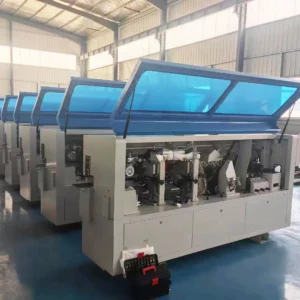
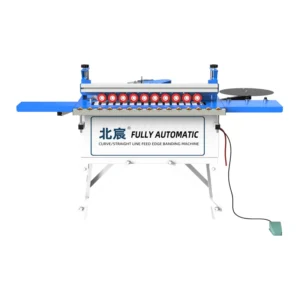
Ruiqi’s facility produces the ST-30 with the same precision-ground components and multi-stage inspection applied to its full-size automatic edge banders. Custom voltage winding is handled in-house rather than outsourced to a third-party motor shop, keeping the electrical configuration under direct quality control. OEM partners receive engineering drawings for approval before tooling begins, ensuring logo placement and panel artwork match brand guidelines. The 12kg net weight and compact 380×350×350mm footprint allow efficient container loading alongside larger machines in consolidated shipments.
Documentation & Verification
- CE declaration of conformity referencing the ST-30 portable edge bander
- Factory test record showing glue pot temperature and edge feed verification
- Electrical schematic confirming your ordered voltage and plug configuration
- Operation manual printed in your specified operator language
- Spare parts list with ABS and PVC feed roller part numbers
Installation, Commissioning & Support
- Connect to confirmed 220V or 380V single-phase supply with a dedicated 10A circuit breaker
- Supply clean compressed air at 0.5–0.8MPa for the edge feed and trimming mechanism
- Table-top placement requires a stable workbench rated for the 12kg unit weight
- First-run glue pot heat-up and edge feed calibration performed per included manual
- Replacement glue pot and feed rollers available as standard spare parts inventory
What We Need to Build Your Batch
Send your target market voltage and frequency, preferred plug type, and the control panel language your operators will read. Confirm whether you need OEM branding with custom logo placement and packaging artwork. Specify your typical edge banding materials — ABS, PVC, melamine, or veneer — and the panel thickness range you process most often.
Frequently Asked Questions
Q: How does the OEM process work for logo placement and custom packaging?
A: After you provide your brand artwork, our engineering team produces drawings showing logo position, color specifications, and packaging layout for your approval. Production begins only after you sign off on these drawings, ensuring every ST-30 unit in your order matches your brand identity and market positioning.
Q: How do you confirm voltage and plug type for different export markets?
A: Your order confirmation includes a technical specification sheet listing the exact voltage, frequency, and plug type for your destination market. This document is signed by both parties before production starts, so the motor winding and electrical cabinet are built to match your local supply from the first unit.
Q: What documentation is included with each unit for customs and end-user setup?
A: Each ST-30 ships with a CE declaration of conformity, factory test record, electrical schematic matching your ordered voltage, operation manual in your chosen language, and a spare parts list. These documents support customs clearance and give your customers everything needed for commissioning.
Q: Can I order sample units for evaluation before committing to a full production run?
A: Sample units are available built to your specified voltage, language, and OEM configuration. This allows you to test the exact specification your customers will receive, verifying edge quality on your typical materials before authorizing the full batch.
Q: What is the typical lead time for an OEM production run?
A: Lead time depends on order quantity and the complexity of customization, including packaging artwork and any non-standard voltage configurations. A formal timeline is provided with your quotation after we review your branding requirements and destination market specifications.