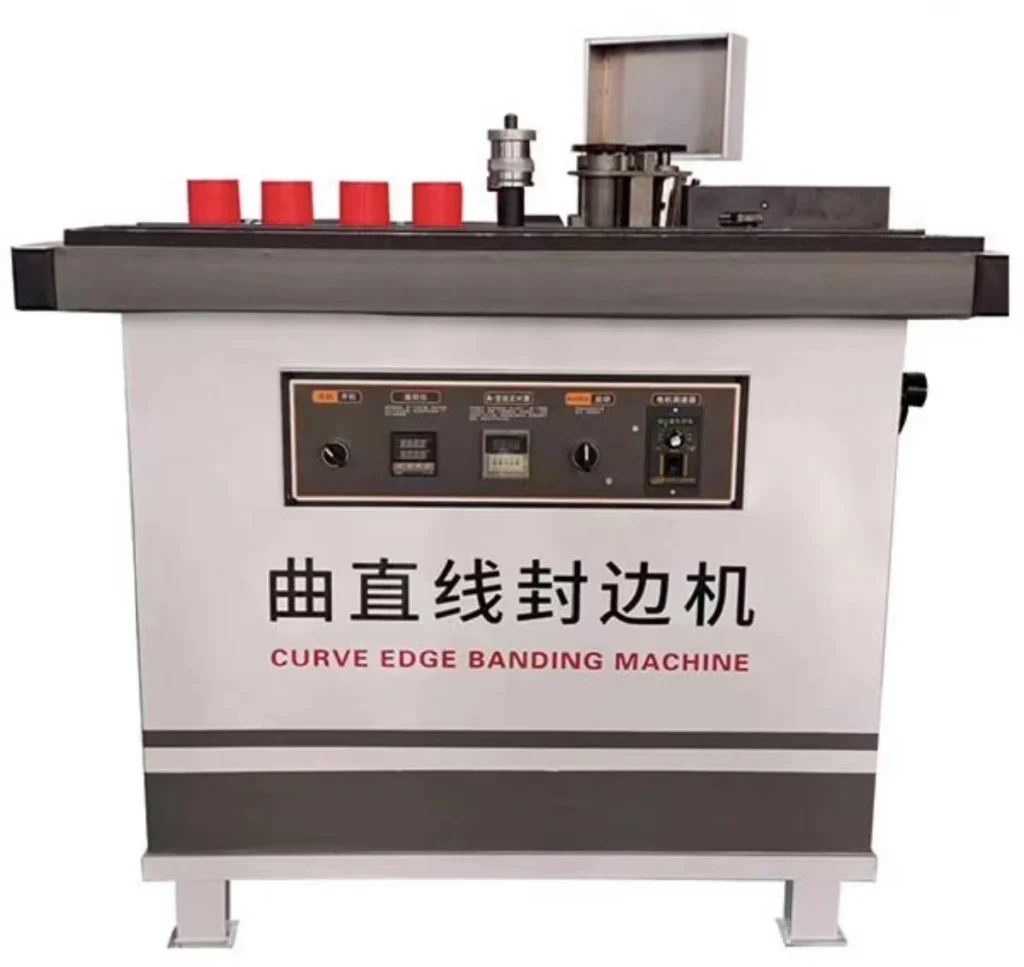
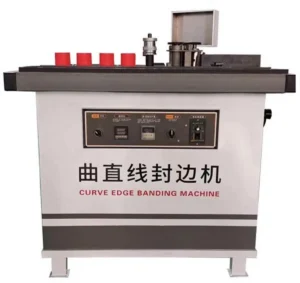
Verified Precision Assembly — every ZDS702 manual edge banding machine OEM factory build undergoes four-stage quality control with pre-shipment test records that distributors can review before the crate leaves Shandong.
Technical Specifications
| Parameter |
Value |
| Model |
ZDS702 |
| Product Type |
Manual Edge Banding Machine |
| Rated Voltage |
220V |
| Rated Power |
1.4kW |
| Trimming Height |
10-50mm |
| Rated Air Pressure |
0.6-0.8 MPa |
| Glue Pot Capacity |
2000ml |
| Overall Dimensions |
100×75×95cm |
| Machine Weight |
120kg |
| Control System |
Manual operation with time memory function |
| Edge Banding Type |
Curved & Straight dual-purpose |
| Gluing Method |
Double sides gluing |
| Belt Breaking |
Automatic breaking belt |
| Applicable Edge Materials |
PVC, Wood Veneer, Melamine, Plastic |
| Assembly State |
Fully assembled |
| Warranty |
1 year |
Application Suitability
| Application |
Material or Output |
| Small workshop straight edge sealing |
MDF and particleboard panels with PVC or melamine edge banding |
| Curved contour edge banding |
Plywood and solid wood panels shaped for custom furniture components |
| Low-volume custom cabinet production |
Wood veneer and plastic edge materials on cabinet doors and carcass panels |
| On-site joinery edge finishing |
Solid wood and plywood boards requiring portable or benchtop edge sealing |
| Prototyping and sample runs |
Mixed substrate batches where flexible curved and straight capability is required |
Why Voltage Confirmation Must Happen Before the Manual Edge Banding Machine OEM Factory Ships
A machine rated at one electrical standard cannot simply be plugged into another market’s supply without consequences.
I shipped a curve-capable edge bander to a cabinet factory in Riyadh years ago without locking down their 220V/60Hz requirement. The unit sat silent on the workshop floor for three weeks while the owner sourced a step-up transformer. That failure was entirely preventable. When sourcing a manual edge banding machine OEM factory must confirm the destination voltage and frequency before production begins, because the motor winding, control transformer, and heating element in the glue pot are all specified to the supply standard of the end market. A mismatch does not just delay commissioning — it can damage the glue pot heater element or cause the motor to run at the wrong speed, affecting feed consistency and trim quality [NEED_CITE: voltage and frequency standards by export market].

Manufacturing Depth That Distributors Can Audit
The ZDS702 is built entirely within Ruiqi’s manufacturing facility, not assembled from outsourced sub-contractors. Component sourcing, precision grinding of the trimming mechanism, and final electrical assembly all happen under one roof. For a distributor evaluating a manual edge banding machine OEM factory partnership, this matters because it means you can audit the production floor, inspect the incoming material inspection records, and watch pre-shipment testing in person rather than relying on secondhand assurances.
Private-Label Scope Beyond a Sticker
OEM customization on the ZDS702 extends past a logo plate. Voltage can be configured from 110V to 440V to match the target market’s electrical infrastructure, control panel overlays can be produced in the language your end customers operate in, and packaging can be specified to your brand standards. This level of configuration is only feasible because the manual edge banding machine OEM factory controls the production process end to end, not because it relabels a generic unit purchased from a third party [NEED_CITE: CE machinery directive requirements for industrial equipment].
How the Specs Translate to Workshop Reality
The 2000ml glue pot capacity is sized for the manual-feed rhythm of a small joinery shop — large enough to sustain a batch run of cabinet panels without frequent refills, yet small enough that adhesive does not degrade from prolonged heating between jobs. The 0.6-0.8 MPa air pressure requirement drives the automatic belt-breaking mechanism and the pressure roller engagement; workshops need a clean, dry compressed air supply at that range or the belt break will stutter and leave excess material on the panel edge. The 10-50mm trimming height covers the standard panel thickness range used in furniture carcass and door production, from thin 10mm back panels up to 50mm solid wood worktops. Double-sides gluing ensures adhesive coverage on both the panel edge and the banding strip, which is critical when working with porous substrates like particleboard where single-side application can leave dry spots and visible glue-line gaps after trimming.
The Hidden Cost of Skipping Pre-Shipment Verification
Distributors who accept a machine without reviewing the pre-shipment test record sometimes discover tolerance problems only when their end customer reports assembly failures. Panels edged on a machine with misaligned trimming cutters will not close properly in cabinet carcase joints, and the fault gets blamed on the distributor rather than the manufacturer. A manual edge bander that arrives without verified test documentation leaves the importer carrying all the warranty risk [NEED_CITE: furniture panel assembly tolerance requirements].
Why This Sourcing Channel Works for Distributors
Factory visits are welcomed and encouraged, so you can inspect the precision grinding setup and the four-stage QC process firsthand rather than depending on catalog claims. OEM customization covers logo, voltage, language, and packaging as standard scope, not as special-request extras that delay production. Pre-shipment test records accompany every unit, giving your technical team documentation to reference during installation. The product family spans from this manual bander through fully automatic models, so your regional catalog can grow without changing supplier. Engineer-led configuration support means your sales team gets a formal quotation with correct electrical specifications within one working day.
Documentation & Verification
- Factory test record on your specified panel thickness range and edge material before dispatch
- CE declaration of conformity available for European market customs clearance
- ISO 9001 certificate provided for distributor compliance and tender submissions
- Electrical schematic confirming configured voltage and frequency for local electrician reference
- Operation and maintenance manual in the language agreed during order confirmation
- Packing photographs showing crate condition and machine securing before container loading
Installation, Commissioning & Support
- Requires a level floor space of approximately 100×75cm with clear access on the feed side for panel handling
- Dedicated 220V circuit with appropriate breaker rating to support the 1.4kW rated power draw without shared-load voltage drop
- Machine ships fully assembled — position, connect compressed air at 0.6-0.8 MPa, and power on for commissioning
- First-run glue pot heating and temperature stabilization verified against your chosen PVC, melamine, or wood veneer edge material
- Operator training covers the time memory function setup for repeat batch runs to minimize adhesive waste
- Spare parts list with recommended consumables provided for local stock planning by the distributor service team
What to Include in Your Inquiry
Provide your target market’s voltage and frequency standard so the machine can be configured correctly from the start. Specify the edge banding materials your customers most commonly use — PVC, wood veneer, melamine, or plastic — so the glue pot temperature range and roller pressure can be validated against those materials. If you are building a regional product mix, share which automatic models you also need so the line can be quoted as a coordinated package.
Frequently Asked Questions
Q: What does the OEM and private-label scope cover for the ZDS702?
A: The scope includes custom logo placement on the machine body, voltage configuration from 110V to 440V to match your market, multilingual control panel overlays, and branded packaging to your design specifications. Each of these is handled in-house during production rather than applied as aftermarket additions.
Q: Can Ruiqi support territory exclusivity and spare-part backup for distributors?
A: Territory arrangements and spare-part supply programs are discussed based on the distributor’s market coverage and projected volume. Having spare parts available locally is essential for supporting end customers, and the spare parts list provided with each machine allows distributors to plan their inventory accordingly.
Q: How does the four-stage QC process work for this manual edge bander?
A: Incoming material inspection verifies component quality before assembly begins. In-process checks cover precision grinding and sub-assembly alignment. Finished product testing runs the machine with actual edge banding material. Pre-shipment verification produces the test record that accompanies your unit, documenting performance against specification before dispatch.
Q: What lead time should distributors plan for on OEM orders?
A: Lead time depends on the order quantity and the extent of customization requested. A single stock-configured unit can be prepared relatively quickly, while larger OEM runs with custom voltage, language, and packaging requirements follow a longer production schedule. Your engineer contact will confirm the timeline at quotation stage.
Q: Does the factory train a distributor’s own service and after-sales team?
A: Technical training is available for distributor service teams, covering machine operation, routine maintenance, and common fault diagnosis. This ensures your local technicians can support end customers without needing to escalate every issue back to the factory, which reduces response time and builds customer confidence in your regional support capability.