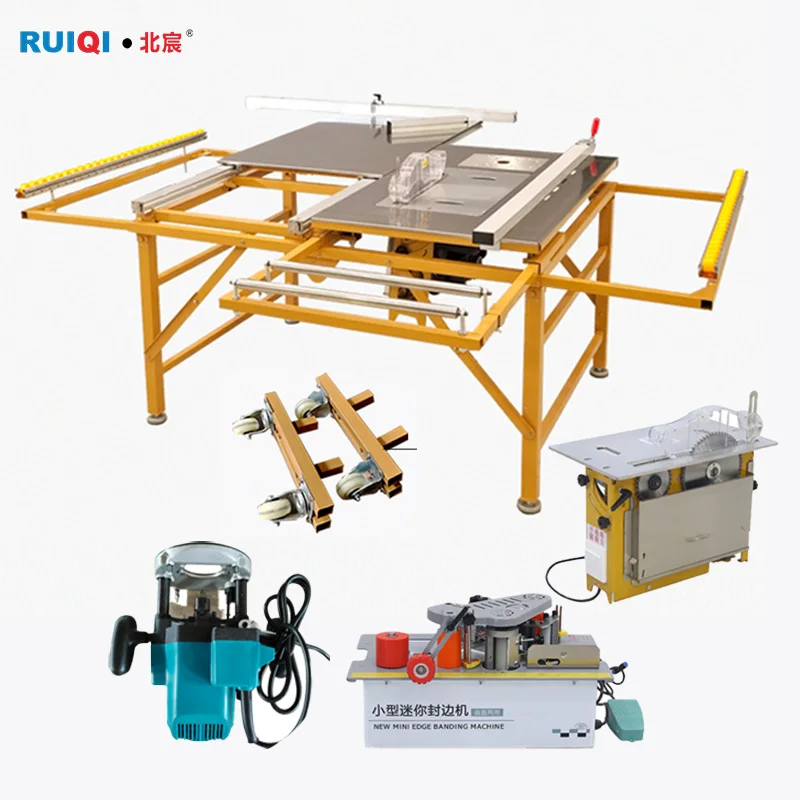
Precision-Engineered Saw Mechanisms — Every JT160 unit is verified against your actual board density and thickness before dispatch, ensuring the dual male/female saw system delivers clean cuts on your specific substrate from day one.
Technical Specifications
| Parameter |
Value |
| Model |
JT160 |
| Product Type |
Portable Folding Panel Saw with Male/Female Saw Unit |
| Total Power |
6200W |
| Main Saw Power and Speed |
3000W, 3800 r/min |
| Sub Saw Power and Speed |
2000W, 13000 r/min |
| Main Saw Diameter |
20 cm |
| Vacuum Cleaner Power |
1200W |
| Maximum Cutting Length |
2.44 m |
| Maximum Cutting Thickness |
4 cm |
| Track Configuration |
8 cm × 100 cm double track |
| Cutting Angle |
45° / 90° |
| Product Weight |
55 kg (saw table) + 22 kg (male/female saw) |
| Folded Saw Table Size |
100 × 72 × 30 cm |
| Expanded Saw Table Size |
250 × 205 × 75 cm |
| Male and Female Saw Size |
50 × 30 × 38 cm |
| Voltage Options |
220V / 380V / customization available |
| Plug Options |
EU, USA, AU, UK |
| Flip Plate Material |
Aluminum alloy |
| Motor Type |
Copper wire motor |
| Dust Extraction |
Integrated aluminum alloy chip collection with dust protection cover |
| Language Options |
Chinese and English standard; other languages customizable |
Application Suitability
| Application |
Material or Output |
| On-site cabinet and furniture panel sizing |
MDF, particleboard, plywood |
| Workshop joinery for custom furniture |
Solid wood panels, melamine-faced board |
| Installer and contractor cutting stations |
Laminated panels for kitchen and wardrobe fitting |
| Small workshop transition from manual to machine operation |
Standard sheet materials up to 4 cm thickness |
Why the Voltage Question Must Precede the Order
A portable folding panel saw that arrives with mismatched voltage is dead weight on your warehouse floor.
I once saw a distributor receive a container of panel saws wired for 380V three-phase, only to find their target market ran single-phase 220V in most workshops. The entire batch had to be rewired locally at considerable cost and delay. With the JT160, voltage and plug type are confirmed at the quotation stage, not discovered at commissioning. Every Portable Folding Panel Saw factory OEM manufacturer order ships with an electrical schematic matching the destination market’s standard [NEED_CITE: voltage and frequency standards by export market]. The copper wire motor is wound to your specified voltage, and the plug is fitted before crating — eliminating the need for adapters or on-site electrical rework.

Manufacturing Depth That Supports Private Label Programs
The JT160 platform is built entirely in-house, from the precision-ground aluminum alloy track to the copper wire motor assembly. This level of component control means a Portable Folding Panel Saw factory OEM manufacturer can accommodate private label requests — including custom logo placement, color-matched housings, and branded control panels — without depending on third-party suppliers who may delay or dilute specification changes. Distributors evaluating this machine for regional branding can verify every production stage through factory audit visits and sample processing tests on their own material samples.
Production Consistency Across Batch Runs
When a distributor commits to a container order, consistency between the first unit and the last becomes a reputation question. The four-stage QC process on the JT160 covers incoming material inspection, in-process verification during assembly, finished product testing under load, and pre-shipment validation with documented test records [NEED_CITE: ISO 9001 quality management requirements for machinery manufacturing]. Each saw is run against test panels at its designated voltage before packing, and the results are photographed and logged. This protocol ensures that a distributor’s service team receives machines that perform identically out of the crate, reducing warranty callbacks and field service costs.
How Dual Saw Speeds Affect Edge Quality on Laminated Panels
The 3000W main saw at 3800 r/min handles the primary cut through the panel core, while the 2000W sub saw at 13000 r/min scores the underside before the main blade engages. This speed differential is critical when cutting melamine-faced particleboard or veneered MDF — the high-speed sub saw severs the brittle surface layer cleanly, preventing chip-out on the bottom face. Without this scoring action, the main blade tears through the laminate from below, leaving visible damage that rejects the panel at assembly. The 20 cm main saw diameter provides adequate tooth engagement across the full 4 cm maximum cutting thickness, maintaining feed stability even on high-density substrates. The aluminum alloy flip plate holds its 45° and 90° positions without drift, which matters when repeat cuts must match within tight joinery tolerances. The integrated dust collection cover channels chips away from the cutting line, keeping the track clean and preventing debris from affecting subsequent cuts [NEED_CITE: dust extraction requirements for panel saw operations].
What Happens When Specifications Are Assumed Rather Than Confirmed
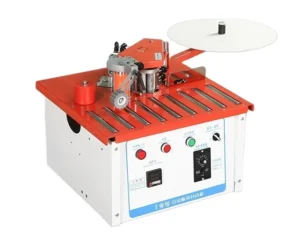
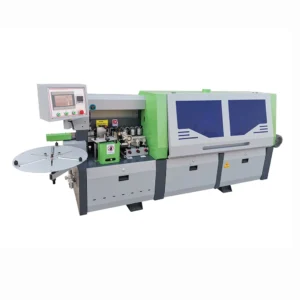
A distributor once ordered a batch of portable saws based on a catalog listing that showed "suitable for all panel materials." When their customers began cutting high-density fiberboard at full depth, the motor bogged down and the cut quality degraded within hours. The machine was not underpowered — it was simply configured for lighter substrates, and nobody had asked what the end users would actually cut. The JT160 avoids this by requiring material and thickness confirmation before production begins. The 6200W total power and dual motor configuration are adequate for standard furniture panels, but if a distributor’s market includes unusually dense engineered boards, the factory can adjust the gear ratio or recommend the JT160 PRO variant with edge banding capability to create a complete processing cell.
Why Distributors Source This Platform for Regional Markets
The JT160 is manufactured with full OEM and private label capability, meaning a distributor can brand the machine, customize the control panel language, and specify voltage and plug type for their territory — all from a single production line. The four-stage QC process provides documentation that satisfies import compliance requirements in most markets. Custom specifications are handled as standard rather than as exceptions, so a distributor serving multiple countries can order mixed-voltage batches within one container. The aluminum alloy construction keeps shipping weight manageable — 55 kg for the table and 22 kg for the saw unit — reducing freight costs on less-than-container-load shipments. Factory visits are welcomed at any stage, allowing distributors to witness assembly, testing, and packing before committing to volume orders.
Documentation & Verification
- CE declaration of conformity issued against the JT160 portable saw configuration
- Electrical schematic confirming voltage, frequency, and plug type for destination market
- Factory test record showing cut quality on specified panel material and thickness
- Operation and maintenance manual supplied in the agreed language for end-user operators
- Spare parts list with part numbers matching the as-built configuration
- Packing photographs documenting crate condition and machine securing before dispatch
Installation, Commissioning & Support
- Expanded table footprint of 250 × 205 × 75 cm requires a clear, level floor area for assembly
- 220V single-phase models draw significant current — a dedicated circuit is recommended over shared workshop outlets
- Saw unit weighs 22 kg and mounts to the aluminum alloy track without specialized lifting equipment
- First cut should be verified against a sample panel to confirm blade alignment and sub saw scoring depth
- Copper wire motor requires no break-in procedure but initial runs should monitor for unusual vibration
- Integrated dust extraction connects to the 1200W vacuum unit — hose routing should avoid the operator’s path
Preparing Your Inquiry for Accurate Quotation
To receive a specification that matches your market, share the panel materials your customers typically cut — including density range and maximum thickness — along with the voltage and frequency standard in your territory. If you operate a private label program, provide your branding requirements and preferred control panel language. Let us know whether you need sample processing on your own material before committing to volume, and we will prepare a configuration proposal with formal quotation within one business day.
Frequently Asked Questions
Q: What OEM customization options are available for the JT160?
A: Logo placement, housing color, control panel language, and voltage with plug type are all configurable as standard. Custom specifications beyond the baseline — such as modified track length or alternative motor ratings — can be evaluated through engineering consultation. Every customization is documented on the electrical schematic and reflected in the factory test record that ships with each unit.
Q: How does the four-stage QC process work for distributor orders?
A: Incoming materials are inspected before assembly, sub-assemblies are verified during build, finished units undergo load testing, and pre-shipment inspection includes a test cut on representative panel material. Inspection records and packing photographs are provided for each unit, giving distributors full traceability from component receipt through to dispatch.
Q: Can the JT160 be bundled with additional machines for a regional product line?
A: Yes. The JT160 PRO variant pairs the saw with a compact edge banding machine to form a two-station cutting and banding cell. Distributors building a broader product offering can combine the JT160 with other machines from the same factory, consolidating production, testing, and shipment into a single container order with unified documentation.
Q: What is the process for sampling and factory visits before a bulk order?
A: Distributors can send representative panel samples to the factory for processing tests, or visit in person to witness production and testing on their material. Sample results are documented with cut quality photographs and dimensional verification. Factory visits can be arranged at any production stage to audit assembly, QC procedures, and packing standards before committing to volume.
Q: How are spare parts and technical support handled after delivery?
A: A detailed spare parts list with matching part numbers ships with every unit. The operation manual includes maintenance schedules and troubleshooting guidance in the agreed language. Technical support is available through the distributor’s own service team, who can receive training at the factory or through remote guidance during initial commissioning of the JT160 in their market.