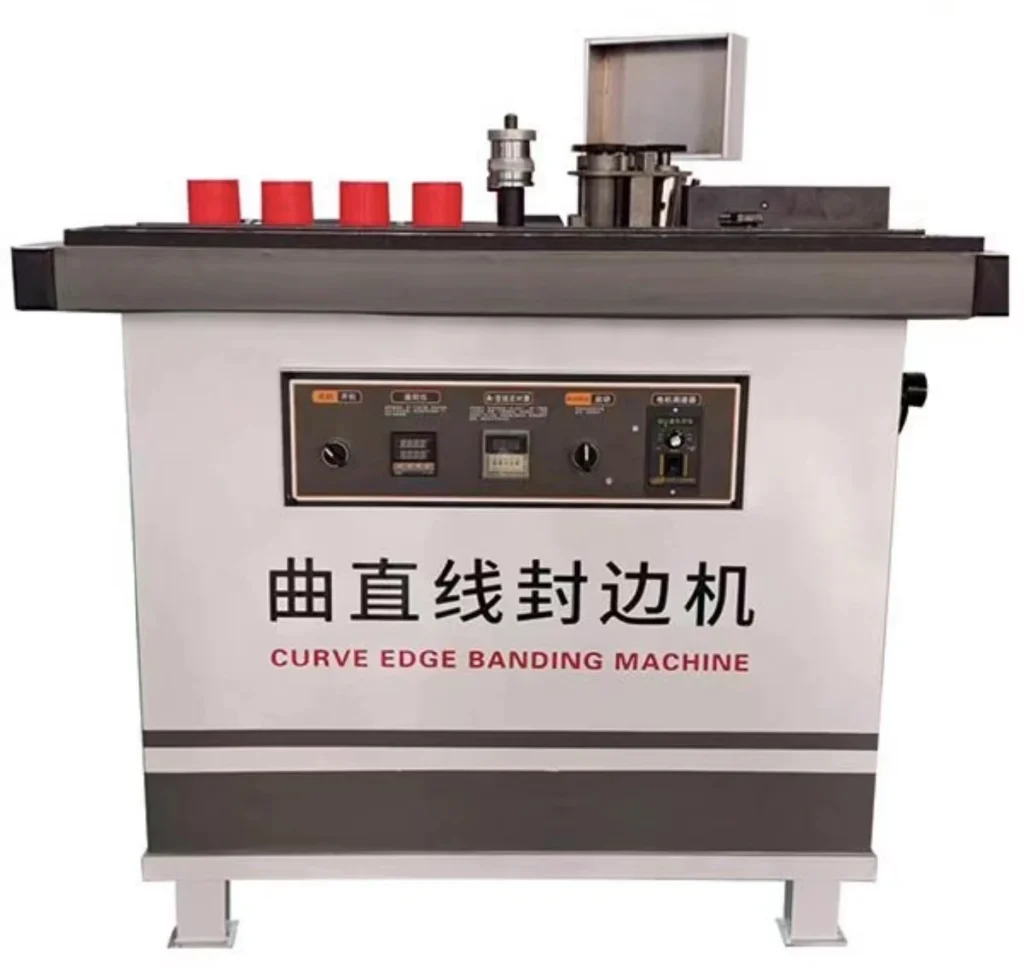
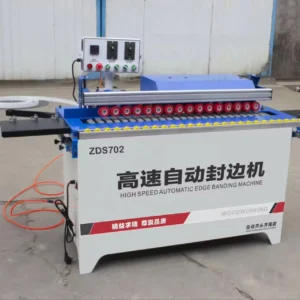
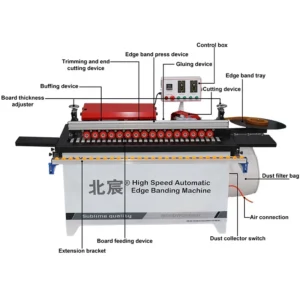
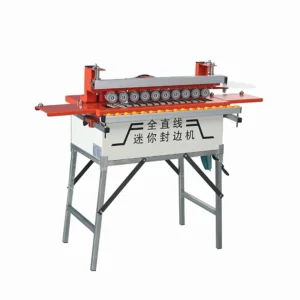
Four-Stage QC With Pre-Shipment Verification — Every ZDS702 portable curved & straight edge bander undergoes incoming material inspection, in-process checks, finished product review, and final dispatch verification before it leaves our facility.
Technical Specifications
| Parameter |
Value |
| Model |
ZDS702 |
| Product Type |
Portable Curved & Straight Edge Banding Machine |
| Rated Voltage |
220V |
| Rated Power |
1.4kW |
| Trimming Height |
10–50mm |
| Rated Air Pressure |
0.6–0.8 MPa |
| Glue Capacity |
2000ml |
| Gluing Method |
Double-sided gluing |
| Belt Breaking |
Automatic |
| Control Features |
Time memory function |
| Edge Banding Type |
Curved & straight dual-purpose |
| Compatible Banding Materials |
PVC, wood veneer, melamine, plastic |
| Molding Table |
One-time molding table for stability |
| Overall Dimensions |
100×75×95 cm |
| Machine Weight |
120kg |
| Assembly State |
Requires assembly |
Application Suitability
| Application |
Material or Output |
| Custom furniture panel edge finishing |
MDF and plywood with PVC or wood veneer banding |
| Small-batch curved panel processing |
Particleboard with melamine edge strips |
| On-site joinery and cabinet trimming |
Solid wood panels with plastic banding |
| Compact workshop edge preparation |
Mixed substrates for bespoke furniture runs |
Why Voltage Confirmation Must Come Before the Order Goes to Production
A portable edge banding machine that cannot run on local power is a 120kg paperweight sitting on a workshop floor.
I once shipped a compact edge bander to a Vietnam workshop without double-checking the facility’s three-phase supply. The machine was wired for 220V single-phase, and the shop ran 380V three-phase. The breaker tripped on the first test. The production line sat idle while the owner sourced a step-down converter, losing weeks of scheduled work. For distributors and OEM partners sourcing a Portable Edge Banding Machine factory order, the electrical schematic must be reviewed and locked before production begins — not after the container is sealed [NEED_CITE: voltage and frequency standards by export market]. This ZDS702 unit is rated at 220V, and voltage adaptation from 110V to 440V is available as a standard customization option when confirmed at the quotation stage. Skipping this step is the single most preventable cause of commissioning failure I have encountered in the field.

Precision-Ground Components Behind Compact Edge Banding Equipment
The ZDS702 is built on a one-time molding table that provides a stable reference surface for both curved and straight edge paths. This construction approach matters because any table deflection under clamping pressure translates directly into inconsistent glue line thickness along the workpiece. Our facility precision-grinds critical contact surfaces in-house, which means tolerance is verifiable through factory test records rather than claimed on a spec sheet. When evaluating a Portable Edge Banding Machine factory for OEM or private label production, the depth of in-house machining is what separates machines that hold specification after six months of daily use from those that drift within the first quarter.
OEM and Private Label Scope for Regional Distributors
Building a product line around portable edge banding equipment requires more than slapping a logo on a shipping carton. Our OEM capability covers custom branding, voltage adaptation across the 110V–440V range, and multilingual control panel configuration so that operators in different markets can read and adjust settings without translation barriers. The ZDS702’s time memory function, for instance, can be labeled in the operator’s working language to reduce setup errors during repeat production runs. For distributors evaluating manufacturing partners, this level of specification control — from electrical design to interface language — determines whether a Portable Edge Banding Machine factory can genuinely support your regional market requirements [NEED_CITE: CE machinery directive requirements for industrial equipment].
How Trimming Height and Glue Capacity Shape Daily Output
The 10–50mm trimming height range on the ZDS702 defines the panel thickness envelope you can process in a single setup. Panels outside this range require reconfiguration or a different machine class entirely, so confirming your typical substrate thickness against this window is essential before ordering. The 2000ml glue capacity governs how long the machine can run between refills — a practical constraint that affects workflow planning in small workshops running continuous edge banding sessions. Double-sided gluing ensures adhesive coverage on both the panel edge and the banding strip, which directly influences bond strength on curved profiles where single-sided application tends to starve the outer radius. The automatic belt breaking feature eliminates a manual step that introduces variability when operators of different skill levels handle the machine, and the 0.6–0.8 MPa air pressure requirement means the unit needs a clean, regulated compressed air supply to function correctly.
The Hidden Cost of Specifying Banding Machines Without Process Verification
Ordering portable edge banding equipment on price alone — without confirming how the machine performs on your specific substrate and banding material combination — leads to visible glue lines, banding delamination on curved sections, and panel rejects that only surface during final assembly. I have seen workshops blame the operator when the real problem was an edge bander that could not maintain consistent adhesive transfer on their chosen veneer stock [NEED_CITE: edge banding adhesion failure modes on curved profiles]. The ZDS702’s double-sided gluing and time memory function address these issues at the equipment level, but only if the machine is tested against your actual materials before it ships. Factory sample processing runs exist precisely to catch these mismatches early.
Why Distributors Source This Machine Line From Our Facility
In-house manufacturing with proprietary cutting mechanism patents means tolerances are built into the machine, not adjusted after assembly. The four-stage QC process — incoming material, in-process, finished product, and pre-shipment verification — produces documented inspection records that you can review before the machine leaves our floor. Voltage, language, and specification customization are treated as standard options, not special requests, which keeps lead times predictable for scheduled production runs. Factory visits are welcomed so that distributor teams can inspect precision-ground components and assembly procedures firsthand. Engineer-led configuration recommendations are delivered with a formal quotation within 24 hours, so your procurement cycle does not stall waiting for technical clarification.
Documentation & Verification
- CE declaration of conformity for portable edge banding machinery
- ISO 9001 certificate covering manufacturing and QC processes
- Machine specification sheet confirming ZDS702 rated voltage and power
- Electrical schematic with voltage adaptation details for target market
- Factory test record on your specified banding material and panel substrate
- Operation and maintenance manual in the agreed operator language
Installation, Commissioning & Support
- Requires a 220V dedicated circuit rated for the 1.4kW draw to prevent shared-line tripping
- Compressed air supply must deliver 0.6–0.8 MPa clean and regulated to the pneumatic fittings
- Machine arrives requiring assembly; confirm floor space against the 100×75×95 cm footprint
- Glue pot first-fill and time memory calibration performed during initial commissioning
- PVC and wood veneer banding test strips supplied for operator familiarization
- Spare parts list included with wear items identified for reorder planning
Requesting a Configuration Proposal
To receive a matched specification for your market, provide your target workshop voltage and frequency, the banding materials you plan to stock (PVC, veneer, melamine, or plastic), the typical panel thickness range your customers process, and your preferred control panel language. If you are planning OEM or private label production, include your branding requirements and target order volume so the quotation can reflect the full customization scope.
Frequently Asked Questions
Q: What customization is available for OEM and private label orders of this portable edge bander?
A: Custom logo application, voltage adaptation from 110V to 440V, multilingual control panel configuration, and tailored specifications are all available. You can start with a single-unit sample to verify the configuration before committing to a full production run. Electrical schematics are provided for review before manufacturing begins.
Q: How is manufacturing precision verified before the machine ships?
A: Every unit passes through four QC stages covering incoming materials, in-process assembly, finished product inspection, and pre-shipment verification. Factory test records are generated on your specified panel and banding materials and are available for review. Precision-ground components are inspected at multiple stages during assembly.
Q: What voltage and language options are available for different export markets?
A: Voltage is configurable from 110V to 440V based on your destination market’s electrical standards. Control panels can be configured in multiple languages so that operators can read settings and error messages directly. Electrical schematics and voltage confirmation documents are included with every shipment.
Q: How does precision grinding affect long-term reliability of this edge banding machine?
A: Critical contact surfaces are precision-ground in-house to maintain tolerance over the machine’s service life. This reduces wear-induced drift on the molding table and gluing mechanism, which directly affects edge quality consistency. Component sourcing and machining records are traceable through our QC documentation.
Q: What is the minimum order for OEM production versus a sample unit?
A: Single-unit sample orders are accepted for configuration verification and market testing. Larger OEM production runs follow after the sample is approved. Lead times and pricing scale with volume, and full customization — including private label branding and voltage adaptation — applies from the first unit onward.