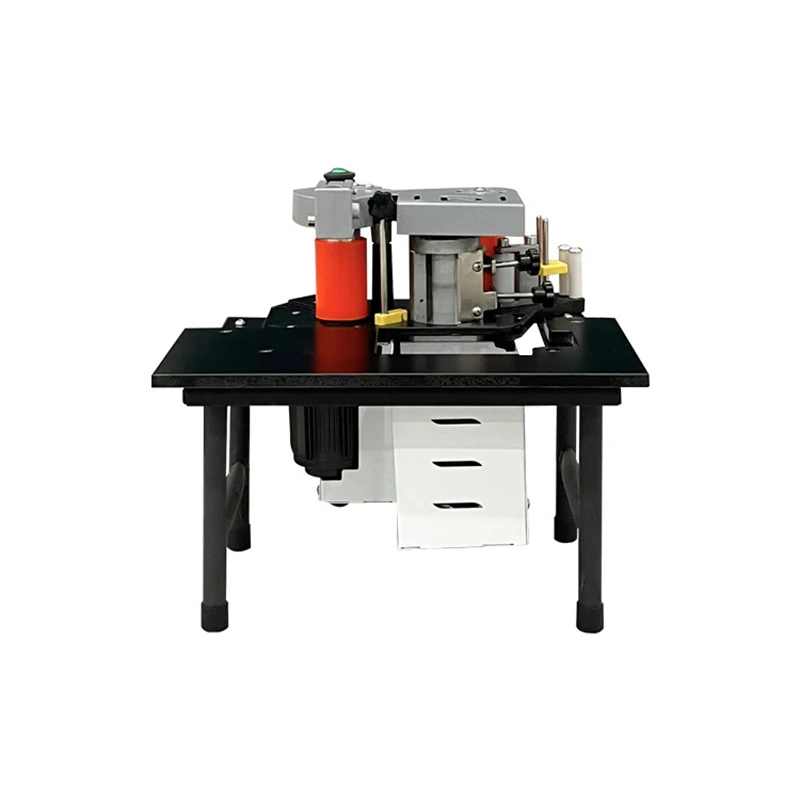
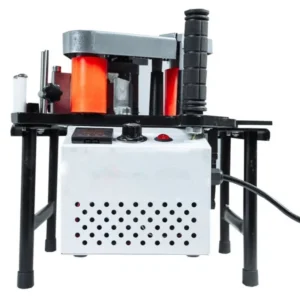
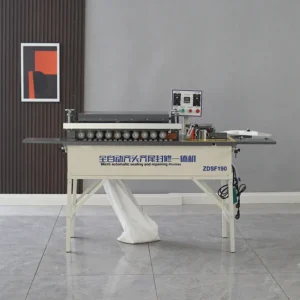
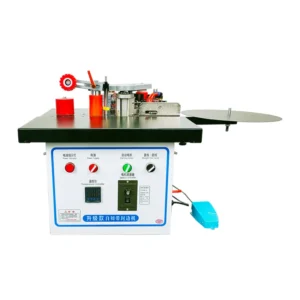
OEM-ready portable production — every unit assembled under a four-stage QC protocol within our 10,000㎡ woodworking machinery facility, verified before it leaves the factory floor.
Technical Specifications
| Parameter |
Value |
| Product Type |
Portable Edge Banding Machine |
| Shape of Edge-banding Plates |
Curved, Straight and Special-shaped Sheet |
| Edge Thickness Range |
0.3–3mm |
| Edge Sealing Speed |
0–6 m/min |
| Edge Sealing Height |
7–60mm |
| Gluing Method |
Double-sided gluing |
| Glue Pot Volume |
1000ml |
| Machine Weight |
14kg |
| Voltage & Frequency |
Configurable — confirm local voltage and frequency before order |
| Plug Options |
EU / AU / UK / USA / CN |
| Assembly State |
Requires assembly; user manual and video teaching provided |
| Logo Customization |
Available |
| Warranty |
One year (factory defect spare parts replacement) |
Application Suitability
| Application |
Material or Output |
| Custom furniture edge banding in small workshops |
MDF, plywood, particleboard with PVC or veneer strips |
| On-site joinery and field installations |
Solid wood panels requiring curved or shaped edge treatment |
| Low-volume bespoke cabinet production |
Melamine-faced board with 0.3–3mm edge banding material |
| Prototype and sample runs before full-line investment |
Mixed substrates for testing glue adhesion and edge finish |
Why the Voltage Question Must Come Before the Portable Edge Banding Machine Order
Confirming local voltage and frequency before production starts prevents a machine that cannot run on arrival.
I watched a distributor lose three weeks on a return shipment because a batch of edge banders was wired for 220V/50Hz while the destination country runs 110V/60Hz. The motors overheated within the first hour of operation, and the glue pot never reached bonding temperature. Portable Edge Banding Machine factory OEM orders carry the same electrical risk as any fixed-line equipment. Voltage mismatches are not warranty issues — they are specification failures that sit squarely on whoever should have asked the question first [NEED_CITE: voltage and frequency standards by export market].

How the Double-Sided Gluing Mechanism Serves Distributor Markets
The double-sided gluing method applies adhesive to both the panel edge and the banding strip simultaneously, which matters when your end customers work with porous substrates like raw particleboard. A single-sided glue application often starves the edge on absorbent materials, leading to peeling within days of installation. For a distributor stocking this portable edge banding machine across multiple workshop customers, consistent adhesion reduces the callback volume that erodes territory reputation.
OEM Branding and Market-Ready Packaging
Private-label packaging, custom logo placement, and region-specific plug configuration allow distributors to present this equipment as their own product line without investing in separate tooling. The 14kg weight keeps shipping costs manageable for single-unit air freight samples, and the available EU, AU, UK, USA, and CN plug options mean you can pre-configure inventory for each market you serve. OEM partners evaluating manufacturing depth can verify component sourcing, precision assembly processes, and quality checkpoints during a factory visit before committing to a container load [NEED_CITE: OEM manufacturing agreements for woodworking equipment].
Reading the Specs That Actually Determine Edge Quality
The 7–60mm edge sealing height range dictates which panel thicknesses this unit can handle — a workshop cutting 18mm MDF shelving and 40mm solid wood worktops will find both within range, but anything beyond 60mm requires a different machine class. The 0–6 m/min sealing speed is a manual-feed envelope, meaning the operator controls feed rate and must maintain consistent pressure on curves; this is not an automated feed system. Edge thickness capacity of 0.3–3mm covers standard PVC and thin veneer strips but excludes the thicker solid wood lipping some joinery shops apply to hardwood edges. The 1000ml glue pot volume supports extended work sessions without frequent refills, which matters on production days where a custom furniture maker is edging dozens of cabinet carcasses.
The Hidden Cost of Skipping the Sample Test
Ordering portable edge banders in bulk without running a sample unit through the actual materials your customers use is how distributors end up with dead stock. A machine that bonds PVC cleanly to melamine-faced MDF may struggle with veneer on raw plywood if the glue temperature profile is not matched to the substrate. I have seen edge banders of this class sit in distributor warehouses for months because the first container arrived configured for the wrong edge material, and by the time the issue surfaced, the return window had closed [NEED_CITE: edge banding adhesion testing standards for different substrates].
Why Distributors Source This Equipment from Our Factory
In-house manufacturing means every portable edge banding machine leaves with a documented QC trail — incoming material inspection, in-process checks, finished product verification, and pre-shipment testing under load. OEM and private-label customization covers logo, manual language, plug type, and packaging, handled as standard rather than as a special request. The four-stage QC protocol catches voltage and frequency mismatches at the assembly stage, not at the destination port. Factory visits are open to distributors who want to inspect precision grinding stations, assembly lines, and the cutting mechanism patents that hold the ±0.02mm tolerance claim. Engineer-led configuration support ensures each unit matches the target market’s electrical standards and the end user’s actual panel materials.
Documentation & Verification
- CE declaration of conformity applicable to this portable model
- ISO 9001 certificate covering the manufacturing facility
- Electrical schematic with confirmed voltage and frequency for your market
- Factory test record run on your specified panel thickness and edge material
- Operation and maintenance manual in your agreed language
Installation, Commissioning & Support
- Assembly required on arrival — manual and video teaching provided for the 14kg unit
- Power supply must match confirmed voltage and frequency; use a dedicated circuit
- Glue pot requires initial heat-up cycle before first edge banding pass
- Plug option (EU/AU/UK/USA/CN) pre-fitted at factory to match destination market
- One-year warranty covers factory defect spare parts replacement
What We Need to Configure Your Sample or Bulk Order
Provide the edge banding material you stock most often — PVC, melamine, or veneer — along with the typical panel thickness range your workshop customers process. Confirm the local voltage, frequency, and plug standard for each market you intend to supply. If you need custom branding or multilingual manuals, specify the languages and artwork files at inquiry stage so we can quote accurately and prepare pre-shipment samples.
Frequently Asked Questions
Q: What can be customized under OEM and private-label arrangements?
A: Logo placement on the machine body, custom packaging design, plug type selection from EU, AU, UK, USA, or CN standards, manual language, and voltage configuration are all included. We handle artwork approval and packaging proofs before production begins so your branding is consistent across every unit shipped.
Q: How does the factory ensure correct voltage and frequency for each market?
A: We confirm the destination country’s electrical standards at the inquiry stage and build each portable edge banding machine to that specification. The electrical schematic included with every shipment documents the configured voltage and frequency, and the unit is tested under load at those settings during pre-shipment verification.
Q: What does the spare parts supply arrangement look like for distributors?
A: A complete spare parts list ships with every unit, identifying wear items like glue pot seals and feed rollers. Replacement components are available directly from the factory with standard international shipping. Distributors typically stock a regional buffer of high-turnover parts based on their installed base.
Q: Can my service team receive technical training at the factory?
A: On-site factory training covers assembly procedures, common fault diagnosis, and adjustment techniques specific to the double-sided gluing mechanism. We walk your technicians through the precision assembly stations and QC checkpoints so they understand what to inspect when servicing units in the field.
Q: Is it possible to order a sample unit before committing to bulk?
A: Yes, single-unit sample orders are standard for distributor evaluation. We recommend running the sample through your actual panel materials and edge banding stock to verify adhesion and finish quality. A factory visit can be arranged alongside the sample order for a complete manufacturing assessment.