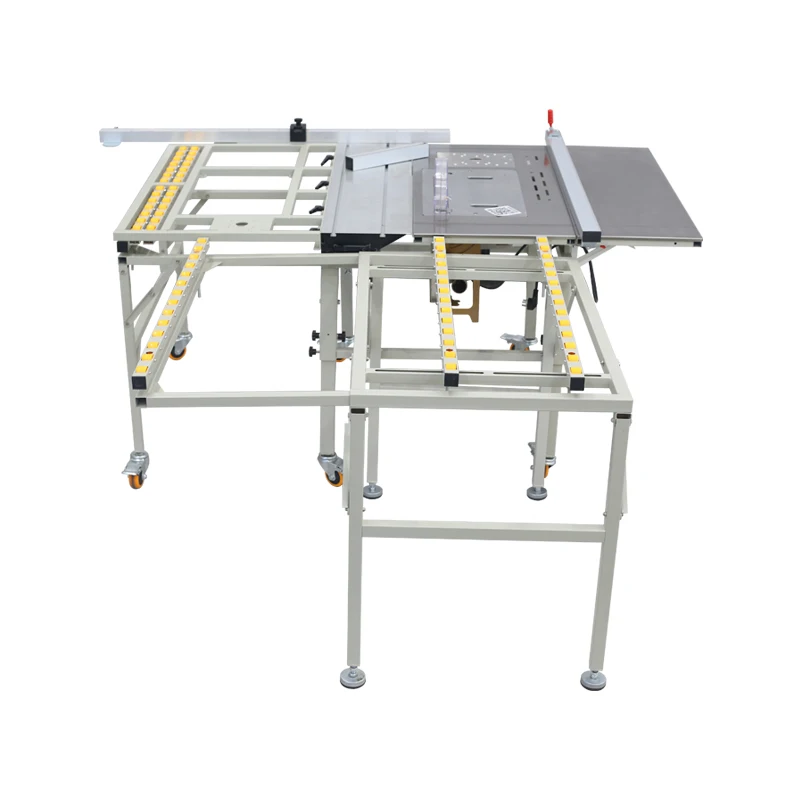
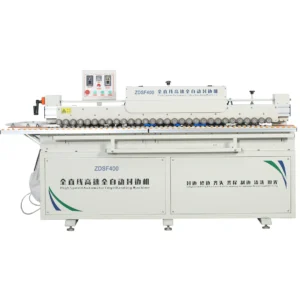
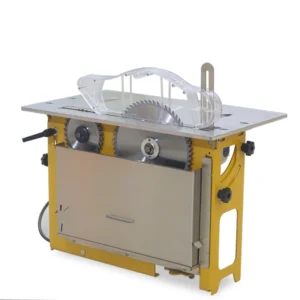
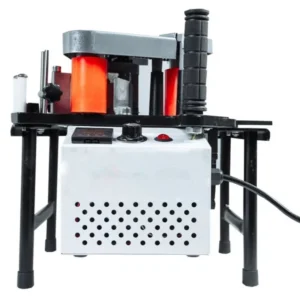
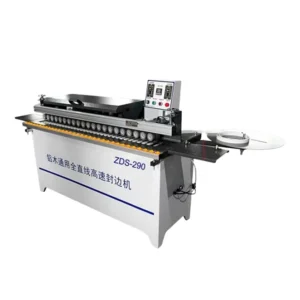
Four-Stage QC — Every JT-550S sliding table saw is verified through incoming material, in-process, finished product, and pre-shipment inspection stages before dispatch to your market.
Technical Specifications
| Parameter |
Value |
| Model |
JT-550S |
| Product Type |
Precision Sliding Table Saw |
| Table Material |
Stainless steel with aluminum alloy flip plate |
| Angle Adjustment |
45° and 90°, no manual adjustment required |
| Motor Type |
Copper wire motor |
| Saw Configuration |
Integrated sub and master saw with aluminum alloy chip design |
| Sliding Guide |
Sliding roller extension bracket |
| Dust Protection |
Dust protection cover with integrated dust absorption system |
| Control |
Independent switch |
| Bearing Type |
Imported bearing |
| Plug Options |
EU / USA / AU / UK |
| Control Panel Language |
Customizable (English / Spanish / other) |
| Voltage & Frequency |
Configurable from 110V to 440V (confirm local voltage and frequency before ordering) |
| Rated Power (kW) |
(basis to be confirmed) |
| Feed Speed |
(basis to be confirmed) |
| Panel Thickness Range |
(basis to be confirmed) |
| Tolerance |
(basis to be confirmed) |
Application Suitability
| Application |
Material or Output |
| Small to medium woodworking workshops |
MDF, particleboard, plywood, and solid wood panel sizing |
| Custom furniture and cabinet making |
Angled and straight cross-cuts for carcass and door components |
| Joinery workshops transitioning to automation |
Panel sizing replacing manual cutting operations |
| OEM and private-label deployment |
Regional distributor branding with local voltage and language configuration |
Why the Voltage Question Must Come Before the Quotation
A sliding table saw wired for the wrong frequency will destroy its motor within hours, not weeks.
I spent four days in a workshop outside Guadalajara waiting for a rewired motor because the machine left the factory set for 380V/50Hz while the site ran 440V/60Hz. The Precision Sliding Table Saw factory process now flags voltage and frequency confirmation as a hard gate before production begins, not an afterthought at the packing stage. When a distributor receives a container of machines that cannot power on, the cost goes far beyond the rewiring — it is the lost installation schedule, the idle crew, and the eroded trust with your own downstream buyers. [NEED_CITE: voltage and frequency standards by export market]

Building for the Distributor’s Brand, Not Just the End User
Regional distributors evaluating a Precision Sliding Table Saw OEM partner need more than a logo swap. The JT-550S is configured from the production floor for private-label packaging, custom color schemes, and branded documentation that carries your company identity through to the operator’s manual. Each batch runs through the same four-stage QC protocol regardless of whether it ships under our name or yours.
Manufacturing Depth That Survives a Factory Audit
When an importer visits a woodworking machinery plant, they are looking for evidence that precision is built into the process rather than inspected into the product. The JT-550S assembly line uses precision-ground components, imported bearings, and proprietary cutting mechanisms that hold tolerance under sustained daily load. [NEED_CITE: CE machinery directive requirements for industrial equipment] This is the depth that separates a factory willing to host audits from one that prefers to keep buyers at arm’s length.
How the Specifications Translate on the Workshop Floor
The aluminum alloy flip plate on the JT-550S eliminates manual angle adjustment when switching between 45° and 90° cuts — a detail that matters when an operator is running batch after batch of cabinet carcass panels and cannot afford drift. The integrated sub and master saw with aluminum alloy chip design scores the laminate layer before the main blade passes through, which is what prevents chip-out on melamine-faced particleboard. Imported bearings in the sliding guide assembly keep the carriage tracking true across thousands of cycles, and the copper wire motor handles sustained load without the thermal degradation common in aluminum-wound alternatives. Dust protection is handled through a dedicated cover and integrated absorption system, keeping the cutting zone clear and protecting operator lungs from fine MDF dust.
The Real Cost of Skipping Configuration Verification
A sliding table saw that arrives with a control panel in a language your operators cannot read will sit idle while someone jury-rigs a translation. A machine specified without confirming the panel thickness range your workshop actually processes will either bog down on thick stock or chatter on thin sheets, producing edge tear-out that shows up in the finished furniture. These are not warranty claims — they are specification failures that land squarely on whoever approved the purchase order. [NEED_CITE: machinery specification verification for import compliance]
Why Sourcing This Saw Through Our Factory Floor
In-house manufacturing means the same team that grinds the components also runs the pre-shipment test — there is no trading company buffer between your specification sheet and the machine on the floor. Voltage customization from 110V to 440V is confirmed in writing before production starts, matching destination market requirements. OEM logo application, private-label packaging, and multilingual control panels are written into the production order, not negotiated after the machine is built. Every unit ships with a factory test record specific to that serial number. Engineer-led configuration recommendations are formalized in a quotation typically returned within one working day.
Documentation & Verification
- CE declaration of conformity and ISO 9001 certificate available per shipment
- Factory test record documenting voltage, angle accuracy, and cut quality for your JT-550S serial number
- Electrical schematic matching confirmed destination voltage and plug type
- Operation and maintenance manual in agreed language for operator reference
- Spare parts list with part numbers for reorder without factory callback
Installation, Commissioning & Support
- Dedicated circuit matching confirmed JT-550S voltage and frequency before first power-on
- Level foundation required for sliding roller extension bracket to track without drift
- Sub and master saw alignment verified on-site after transit settling
- Dust extraction port connected to workshop system matching required airflow
- Operator training on 45/90° flip plate and independent switch sequence
- Imported bearing inspection interval defined in maintenance manual
What to Include with Your Inquiry
To match the JT-550S configuration to your market, specify the destination voltage and frequency, the control panel language your operators require, and the branding or packaging requirements for your distribution channel. If you are evaluating manufacturing depth before committing to volume, request a factory visit schedule or a sample unit for your own testing protocol.
Frequently Asked Questions
Q: What OEM and private-label options are available for the JT-550S?
A: Logo application, custom machine color, private-label packaging, and branded documentation are all confirmed in writing before mass production begins. Each customization point is documented in the production order so the finished machine matches your market identity from the nameplate to the operator manual.
Q: How is destination voltage confirmed before the machine is built?
A: Voltage and frequency are locked during the specification confirmation stage, before raw materials enter production. The electrical schematic provided with your shipment reflects the exact configuration built into your JT-550S, matching your local supply standard.
Q: Can I review the QC records before my shipment leaves the factory?
A: The four-stage QC process covers incoming material, in-process assembly, finished product testing, and pre-shipment verification. The factory test record for your specific unit is available for review before dispatch, documenting actual performance against specification.
Q: Is the control panel available in languages beyond English and Chinese?
A: Spanish and other languages are configured on request during the order process. The control panel language is confirmed alongside voltage and plug type so the machine arrives ready for your operators without third-party translation work.
Q: Can I visit the factory or order a sample before placing a distributor volume order?
A: Factory visits are welcomed and can be arranged to observe the assembly line, QC stations, and pre-shipment testing firsthand. Sample units can be configured to your specification for independent evaluation in your own workshop environment.