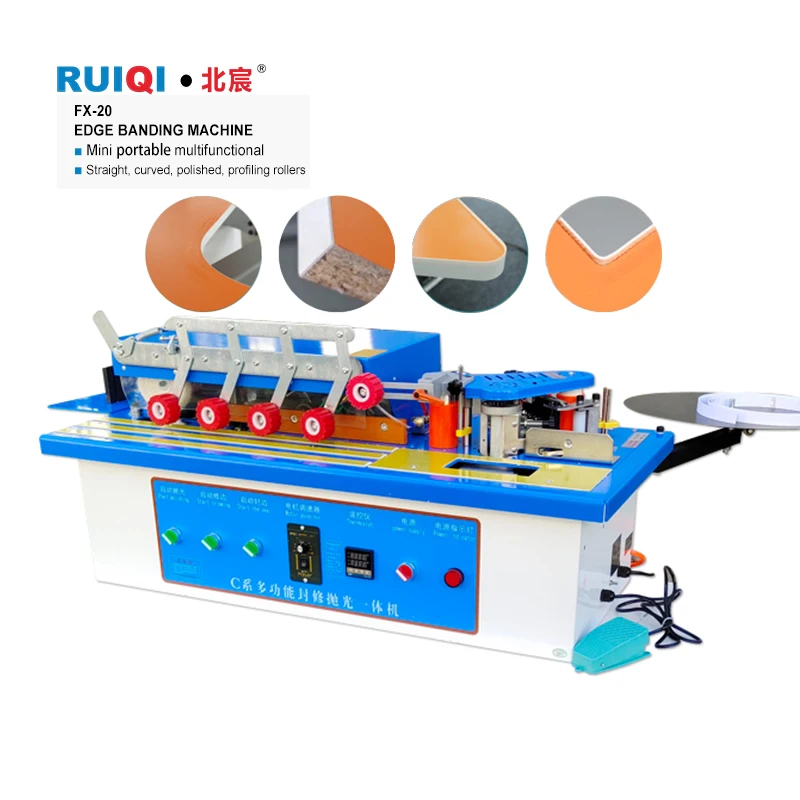
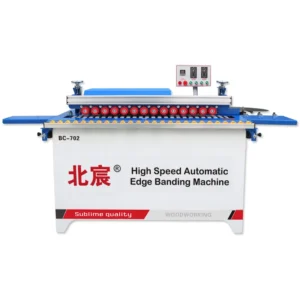
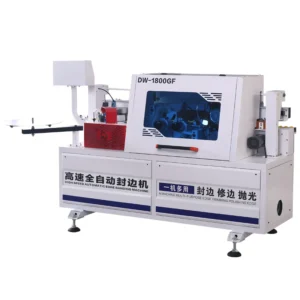
Factory-direct OEM capability — FX-20 portable edge banding machine supports private-label production with full voltage and control panel customization from a single unit onward.
Technical Specifications
| Parameter |
Value |
| Product Type |
Portable Edge Banding Machine |
| Total Power |
2500W |
| Voltage |
220V / 380V / customization available |
| Trimming Power |
650W × 2 |
| Polishing Power |
180W × 2 |
| Edge Banding Height |
0–50 mm |
| Edge Banding Thickness |
0.3–3 mm |
| Minimum Sheet Length |
25 cm |
| Minimum Sheet Width |
10 cm |
| Glue Pot Capacity |
1000 ml |
| Air Source Pressure |
0.5–0.8 MPa |
| Machine Dimensions |
100 × 46 × 41 cm |
| Machine Weight |
44 kg |
| Control Panel Language |
Chinese / English / customization available |
| Assembly State |
Portable / Tabletop |
Application Suitability
| Application |
Material or Output |
| Custom furniture door edge sealing |
MDF, particleboard, plywood panels up to 50 mm thick |
| Small-batch curved edge banding |
PVC and wood veneer strips 0.3–3 mm thick |
| Home decoration workshop production |
Ecological board and solid wood board for interior joinery |
| Compact workshop upgrade from manual banding |
Straight and curved profiles on cabinet and door components |
Why the Voltage Question Must Come Before the Quotation
Confirming local voltage and frequency before production prevents a machine that arrives unusable.
I once shipped a compact edge bander to a workshop in the Middle East. The buyer had focused entirely on the banding thickness range and feed method during our early conversations. When the container arrived, their facility ran on a different voltage standard than what the machine was wired for. The motor would not start, and the glue pot heater could not reach working temperature. That edge banding machine factory order sat idle for weeks while a local electrician rewired the control box — a cost and delay that a single question during the inquiry stage would have avoided [NEED_CITE: voltage and frequency standards by export market]. The FX-20 is configurable from 220V to 380V with further customization available, but that flexibility only matters if the specification is locked down before the build begins.

OEM Branding and Private-Label Production
For distributors and importers building their own product line, the FX-20 supports OEM logo application and private-label documentation. The machine ships with the buyer’s branding on the nameplate, packaging, and operation manual. This OEM portable edge banding machine program covers single-unit sample orders through to volume production runs, allowing a regional reseller to test market response before committing to a container load.
Multi-Language Control Panels for Operator Readiness
A control panel the operator cannot read delays commissioning and invites incorrect parameter settings. The FX-20 ships with Chinese and English interfaces as standard, with additional languages available on request. Whether the end user speaks Spanish, Arabic, or Russian, the panel labels and error messages are configured before dispatch [NEED_CITE: CE machinery directive requirements for operator interface language]. This is particularly relevant for the FX-20’s tabletop deployment, where a small workshop may not have a dedicated technician to interpret foreign-language fault codes.
How Banding Thickness and Glue Pot Capacity Shape Daily Output
The 0.3–3 mm edge banding thickness range covers both thin PVC for cabinet carcasses and thicker wood veneer for visible door edges. A 1000 ml glue pot is sized for intermittent production typical of a small workshop — enough adhesive for a batch of door panels before a refill is needed, without the thermal degradation that occurs when a large glue pot sits hot during long idle periods. The dual 650W trimming motors provide sufficient torque to cleanly remove overhang on particleboard and MDF without chipping the substrate edge. Combined with the 0.5–0.8 MPa air pressure requirement, the trimming and polishing stations produce a finished edge ready for assembly without secondary hand-work.
The Cost of Mismatched Machine Class and Production Volume
When a buyer selects a portable edge bander based on price alone and then runs it at volumes it was never designed for, the pressure rollers lose grip and the glue application becomes uneven. I have seen edge banders of this class pushed into daily production shifts where the small glue pot and manual feed plate cannot sustain consistent output. The result is intermittent de-bonding that only shows up after the panel reaches the customer [NEED_CITE: common failure modes in undersized edge banding equipment]. The FX-20 is engineered for small-batch and custom door work — workshops running higher volumes should evaluate a full-function pre-milling model instead.
Manufacturing Depth Behind Every FX-20
In-house precision grinding of feed and trimming components ensures the banding edge sits flush within the tolerance range of the machine class. The four-stage quality control process — incoming material, in-process, finished product, and pre-shipment verification — means each FX-20 is tested on actual panel stock before crating. Patented cutting mechanisms in the trimming station reduce tear-out on melamine-faced particleboard. Voltage and language customization is handled on the production line rather than retrofitted after assembly. Factory visits are welcomed so buyers can inspect component sourcing and assembly methods directly.
Documentation & Verification
- CE declaration of conformity covering the FX-20 electrical and mechanical safety scope
- ISO 9001 certificate linked to the production batch
- Factory test record on buyer-specified panel thickness and edge banding material
- Electrical schematic with confirmed voltage and frequency for destination market
- Operation and maintenance manual in the agreed language with spare parts list
Installation, Commissioning & Support
- 220V or 380V supply with dedicated circuit rated for 2500W continuous draw
- Level benchtop or portable stand required; machine footprint is 100 × 46 × 41 cm
- Air compressor delivering 0.5–0.8 MPa connected before first glue pot heat cycle
- Glue pot temperature and trimming motor offset calibrated on buyer’s actual panel stock
- Operator training covers curved and straight banding mode changeover and glue refill procedure
- Wear parts list with trimming cutters and polishing pads identified for first reorder
What We Need to Quote Accurately
To recommend the correct voltage configuration and confirm the FX-20 fits your production scope, share the panel materials and thicknesses you work with most often, your local supply voltage and frequency, and the languages your operators require on the control panel. If you are evaluating this machine for OEM resale, indicate your target market and whether private-label documentation is needed.
Frequently Asked Questions
Q: Does the factory support OEM branding and private-label production on the FX-20?
A: Yes. OEM logo placement, custom nameplates, and private-label packaging are available. This covers the machine body, shipping carton, and documentation set. Orders from a single sample unit through to full container quantities are accepted, and the branding specification is confirmed before production starts.
Q: Can voltage and plug type be customized for different destination markets?
A: The FX-20 is available in 220V and 380V configurations with further voltage customization on request. Plug type and power cable specification are matched to the destination country standard. The voltage and frequency are confirmed during the quotation stage and verified again during pre-shipment testing.
Q: Is the control panel available in languages other than English?
A: Chinese and English are standard. Additional languages can be configured for the control panel interface, error messages, and the printed operation manual. The required language is specified at order confirmation so the panel firmware and documentation are prepared before assembly.
Q: Can the FX-20 be manufactured to custom drawings or modified specifications?
A: Specification modifications such as adjusted banding height range or non-standard glue pot capacity can be evaluated against the base FX-20 platform. The engineering team reviews the requested changes and confirms feasibility and lead time within 24 hours of receiving the detailed requirement.