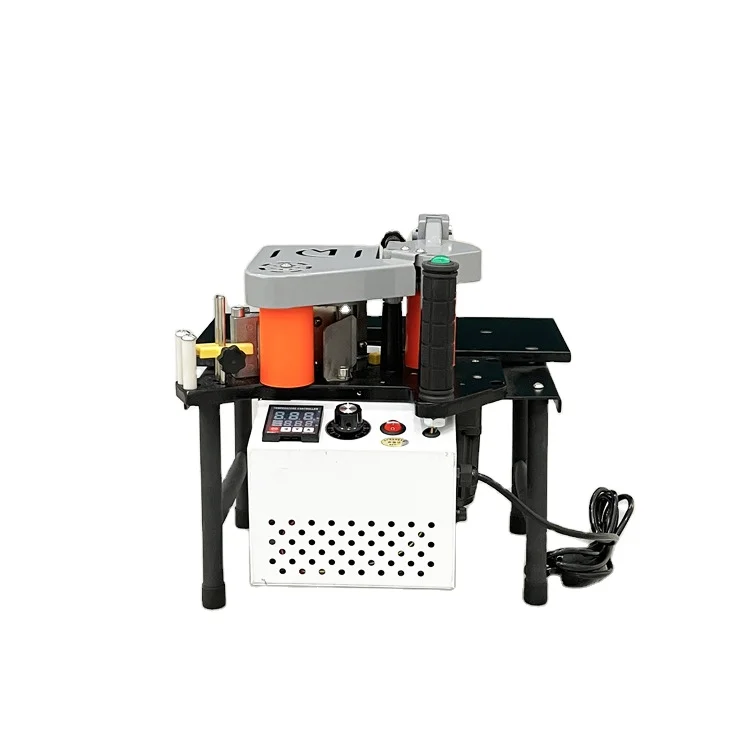
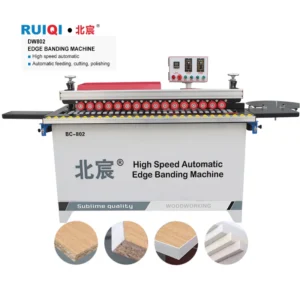
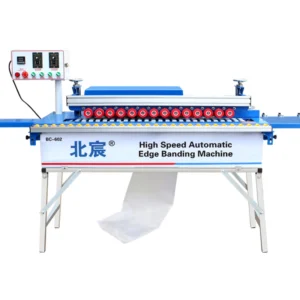
Precision-Built Portable Edge Bander — double-sided gluing verified on curved and straight substrates before each unit leaves our Ningjin workshop.
Technical Specifications
| Parameter |
Value |
| Product Type |
Portable Edge Banding Machine |
| Voltage |
220V |
| Rated Power |
1000W |
| Shape of Plates |
Curved & Straight plates |
| Edge Thickness Range |
0.3–3mm |
| Board Thickness Range |
7–60mm |
| Gluing Method |
Double-sided gluing |
| Glue Pot Capacity |
800ml |
| Net Weight |
14kg |
| Plug Options |
EU / AU / UK / USA / CN |
| Logo Customization |
Available |
Application Suitability
| Application |
Material or Output |
| Office furniture shaped edge banding |
MDF and plywood with PVC or thin wood veneer on curved profiles |
| Small workshop manual edge finishing |
Particleboard and solid wood panels up to 60mm thickness |
| On-site cabinet edge repair |
Straight and curved components where fixed machinery is impractical |
| Complement to automated edge banding lines |
Short-run or irregularly shaped pieces diverted from main production flow |
Why the Plug Shape Should Be Settled Before the Crate Is Nailed
Voltage and plug standard must be confirmed against the destination market before production starts, not discovered at uncrating.
I spent years on the assembly floor here in Ningjin before moving into technical coordination for overseas orders, and one mistake comes back more than any other: a machine built for one electrical standard shipped to a market running another. With a manual edge bander of this class, the motor and heating element are tuned to a specific voltage and frequency. When those do not match the workshop supply, the glue pot fails to reach temperature or the feed motor runs at the wrong speed, producing poor adhesion on the very first panel. [NEED_CITE: voltage and frequency standards by export market]
A portable edge banding machine OEM order compounds this risk because the distributor often stocks units for resale across several countries with different plug types. Every unit we build for export goes through an electrical specification confirmation step where the buyer signs off on the exact voltage, frequency, and plug format before the build begins.

Component Sourcing and Assembly Discipline
Every portable edge banding machine leaving our facility starts with precision-ground components inspected across our four-stage QC sequence. The glue pot, feed roller bearings, and edge guide mechanisms are sourced against defined tolerances, then assembled by technicians who have worked through every station on the floor. For OEM partners requesting private-label branding, the customization happens at the housing and control panel level without altering the mechanical assembly that determines edge quality.
Manufacturing Depth for Distributor Partnerships
Distributors evaluating a manual edge bander factory need to see beyond the spec sheet. We welcome factory visits where you can walk the production floor, inspect the component inventory, and watch pre-shipment testing on actual panel samples. [NEED_CITE: CE machinery directive requirements for industrial equipment] When a regional distributor commits to stocking our portable edge banders, they are not just buying hardware — they are building a service reputation in their market, and our role is to make sure every unit that arrives supports that reputation.
Reading the Specification Sheet Against Real Workshop Conditions
The board thickness range of 7–60mm and edge thickness range of 0.3–3mm define the working envelope of this machine. When a workshop primarily processes 18mm particleboard with 0.4mm PVC edge banding, the machine operates well within its capacity, producing consistent adhesion on both straight and curved profiles. Move to 40mm solid wood panels with 2mm veneer edging, and the glue pot must maintain temperature over a longer contact surface while the feed roller applies uniform pressure across a heavier workpiece. The double-sided gluing method applies adhesive to both the panel edge and the banding strip simultaneously, which becomes particularly important on curved profiles where single-sided application leaves visible glue gaps on the inner radius. The 800ml glue pot capacity provides sufficient volume for sustained manual operation without frequent refilling interruptions.
What Happens When Specifications Are Ignored at Order Stage
When a buyer orders without specifying the actual panel materials and edge banding types their customers use, the machine may arrive configured for a different application entirely. The glue temperature suitable for PVC does not transfer directly to thin wood veneer, and a unit set up for straight panels will struggle with curved profiles if the feed roller pressure was never adjusted for radius work. I recall an office furniture customer who ran standard test pieces successfully during commissioning, then spent a full week recalibrating when their actual production involved curved components with thin veneer. [NEED_CITE: thermal properties of wood veneer versus PVC edge banding adhesives] These delays cost the distributor credibility with the end user and consume technical support resources that a simple pre-order material sample would have prevented.
What Our Factory Delivers Beyond the Machine
Our in-house manufacturing means every portable edge bander can be traced back to the technician who assembled it, with factory test records generated on the buyer’s specified panel material before dispatch. Four-stage quality control covers incoming material inspection, in-process verification during assembly, finished product testing, and pre-shipment confirmation. OEM and private-label capability extends to logo placement, housing color, control panel language, and packaging format. Voltage configuration from 110V to 440V is matched to each destination market with a formal electrical schematic issued for every order. We provide engineer-led configuration recommendations with formal quotation within 24 hours of receiving complete application details.
Documentation & Verification
- CE declaration of conformity covering electrical safety and machinery directives for portable edge banders
- ISO 9001 certificate documenting quality management across our manufacturing process
- Electrical schematic and voltage confirmation specific to each destination market
- Factory test record generated on buyer-supplied panel and edge banding samples
- Operation and maintenance manual delivered in the buyer’s agreed language
Installation, Commissioning & Support
- 220V dedicated circuit required, with stable supply verified before first connection
- 14kg unit requires a stable flat workbench surface for consistent manual feed control
- Initial glue temperature calibration performed on buyer’s actual panel and edge materials
- Double-sided gluing mechanism inspected and adjusted for specified edge thickness range
- Curved profile feed technique demonstrated during commissioning for shaped furniture components
- Spare parts list provided covering glue pot, feed rollers, and edge guide wear components
What We Need From You Before Quoting
Share the specific panel substrates, edge banding materials, and typical profile shapes your end users process so we can configure the machine correctly. Confirm the destination market’s voltage, frequency, and plug standard along with the control panel language your operators require. If you are evaluating this unit for distributor stock, let us know your territory coverage and preferred OEM branding specifications so the quotation reflects your market positioning.
Frequently Asked Questions
Q: What OEM customization is available for distributor private-label orders?
A: We configure logo placement, housing color, control panel language, and packaging format per order. Each portable edge banding machine OEM build receives a dedicated specification sheet signed off before production. The mechanical assembly remains factory-standard to maintain edge quality consistency across all branded variants in your inventory.
Q: How do you confirm voltage and plug configuration for each destination market?
A: Before production begins, we issue an electrical schematic showing voltage, frequency, and plug type for your written confirmation. The manual edge bander factory build is then assembled with components matched to your specified standard. Units ship with a voltage confirmation document and plug installed to match the destination country.
Q: What component quality controls apply to this portable edge bander?
A: Components pass incoming material inspection before assembly, with precision-ground parts verified against defined tolerances. In-process checks occur during assembly, followed by finished product testing and pre-shipment verification. The four-stage QC sequence ensures every portable edge banding machine meets factory standards before packing.
Q: How do you support distributors after the machine reaches the end user?
A: We provide spare parts lists, operation manuals in the local language, and technical training for your service team. Distributor partners can arrange factory visits to deepen their technical knowledge. Our engineer-led support covers troubleshooting on curved and straight edge banding applications encountered in your territory.
Q: What is the typical lead time for OEM orders at different quantities?
A: Single-unit sample orders follow our standard production schedule, while larger distributor batches are scheduled into dedicated production runs. Lead time depends on current order volume and the complexity of customization requested. We provide a confirmed production timeline with every formal quotation after reviewing your quantity and specification requirements.