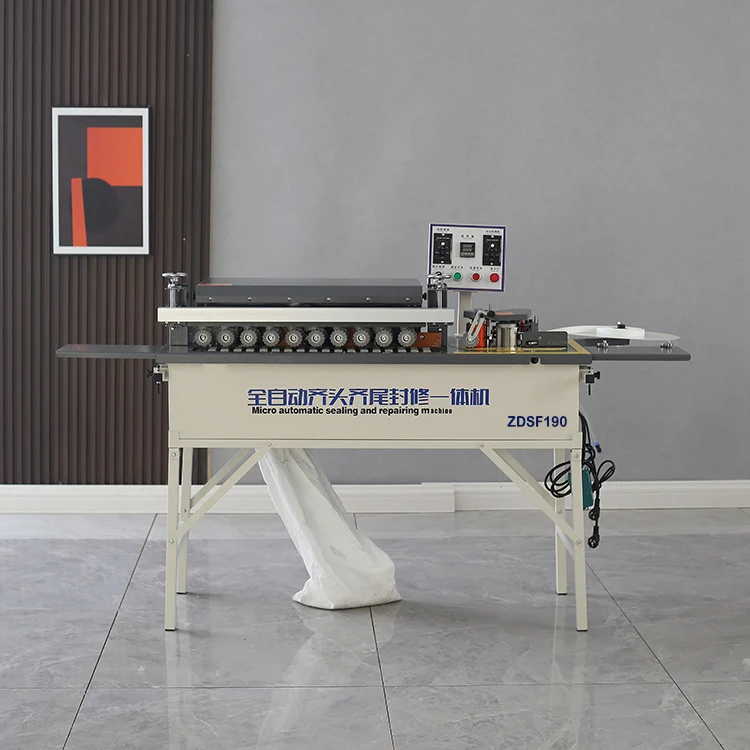
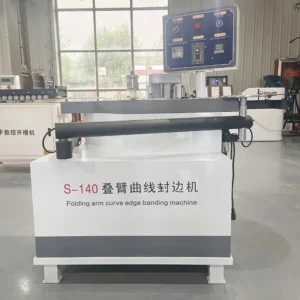
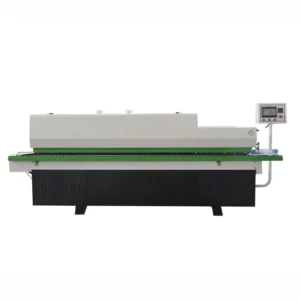
Precision-ground mechanisms — The ZDSF190 curved and straight edge bander is manufactured in-house with a proprietary 4-edge arc-shaped alloy cutter head, assembled under a four-stage QC protocol from incoming steel inspection through pre-shipment verification.
Technical Specifications
| Parameter |
Value |
| Model |
ZDSF190 |
| Product Type |
Automatic Curved and Straight Edge Banding Machine |
| Edge Type |
Both curved and straight lines |
| Rated Power |
4 kW |
| Voltage & Frequency |
220V 50Hz (configurable from 110V to 440V) |
| Feed Speed |
0–14 m/min |
| Panel Thickness Range |
10–50 mm |
| Edge Strip Thickness Range |
0.5–2.5 mm |
| Glue Pot Capacity |
1000 ml |
| Gluing Method |
Double-sided gluing |
| Trimming Power |
800W × 2 |
| Polishing Power |
180W × 2 |
| Heating Power |
800W |
| Suction Power |
1200W |
| Rated Air Pressure |
0.4–0.6 MPa |
| Transmission Type |
Crawler transmission with steel rod slide rails |
| Pressure Beam |
Adjustable aluminum alloy |
| Control Panel |
Multi-function button operation |
| Edge Strip Cutting |
Pneumatically controlled |
| Overall Dimensions (L×W×H) |
1900 × 560 × 1300 mm |
| Net Weight |
120 kg |
| Key Features |
Automatic plate feeding, automatic belt breaking, upper and lower trimming and polishing, large diameter surrounding vacuum |
Application Suitability
| Application |
Material or Output |
| Custom furniture and cabinet workshop edge banding |
MDF, plywood, and particleboard panels with PVC or veneer strips |
| Shaped component finishing for joinery shops |
Solid wood panels and contoured MDF with curved edge profiles |
| Small to mid-scale production runs |
Flat and shaped panel components requiring both straight and curved banding |
| Prototyping and short-batch processing |
Mixed material runs switching between veneer and PVC edge strips |
Why the Voltage Question Should Come Before the Price on Any Edge Banding Machine Manufacturer OEM Order
Electrical mismatch is the single most preventable reason a newly installed edge bander sits idle on a factory floor.
I spent years flying to Middle East sites for OEM line installs, and one job in Saudi Arabia still stings. We shipped an automatic edge bander to a furniture plant where the local grid ran 380V/60Hz, but the order paperwork never confirmed it. The VFD tripped on day one, and the entire line sat dead for three weeks while a transformer retrofit was sourced locally [NEED_CITE: voltage and frequency standards by export market]. That experience reshaped how I approach every Edge Banding Machine manufacturer OEM inquiry — electrical specs get locked before steel is cut, not after the crate is opened.

How OEM Partnerships Reshape the Specification Process
When a distributor or importer evaluates an Edge Banding Machine manufacturer OEM arrangement, the conversation extends beyond logo placement. Voltage customization from 110V to 440V, multilingual control panel overlays, and region-specific safety labeling all need to be defined at the quotation stage. The ZDSF190 supports these modifications as standard configuration options rather than afterthoughts, which matters when a regional partner needs to stock machines for multiple export markets with different grid standards.
Manufacturing Depth That Distributors Can Verify
OEM buyers need to see beyond the brochure. The ZDSF190 is assembled from precision-ground components with proprietary cutting mechanisms developed in-house, and the factory welcomes on-site inspections of the machining floor, assembly stations, and QC checkpoints. Distributors evaluating manufacturing depth can review component sourcing records, observe the four-stage inspection sequence, and request sample processing tests on their own panel stock [NEED_CITE: CE machinery directive requirements for industrial equipment]. Private label branding extends to machine color, documentation language, and packing format.
Reading the ZDSF190 Specs Against Real Workshop Demands
The 10–50 mm panel thickness range covers the majority of MDF, plywood, and particleboard stock used in custom furniture, but workshops running thicker solid wood panels should verify clearance before ordering. The 0–14 m/min variable feed speed lets operators slow down for tight curved profiles and open up for straight-run batch work, which is critical when a single machine handles both shaped cabinet doors and flat shelving components. Double-sided gluing through a 1000 ml glue pot supports consistent adhesion on both the panel edge and the strip backing, reducing the visible glue line issues that plague single-sided systems on porous substrates. The 4-edge arc-shaped alloy cutter head on the upper and lower trimming stations produces a clean radius on PVC and veneer strips, directly affecting how panels fit together during downstream assembly. Dust extraction through the large diameter surrounding vacuum keeps the trimming zone clear, which matters for shops without centralized dust collection infrastructure.
The Hidden Cost of Skipping Electrical and Configuration Verification
A machine quoted on price alone, without confirming local voltage, frequency, and operator language, creates downstream costs that erase any upfront savings. The control panel becomes unreadable to the operator, commissioning stalls, and a simple fault turns into a multi-week downtime event while replacement electrical components ship overseas [NEED_CITE: common causes of commissioning delays in exported woodworking machinery]. For distributors, this means warranty claims and reputational damage in the territory they are trying to build. Configuring the ZDSF190 with the correct voltage and a readable control language before production eliminates this entire failure chain.
Why This Factory Supports Serious OEM Commitments
In-house manufacturing with patented cutting mechanisms means specification changes are handled on the production floor, not negotiated through a trading intermediary. The four-stage QC protocol — incoming material, in-process, finished product, and pre-shipment verification — generates documented records that OEM partners can include in their own compliance files. Voltage, language, and specification customization are treated as standard order parameters rather than special requests. Factory visits are open for distributors who want to audit precision grinding processes and assembly procedures firsthand. Engineer-led configuration recommendations with formal quotations issued within 24 hours keep the OEM partner’s own sales pipeline moving.
Documentation & Verification
- CE declaration of conformity covering the ZDSF190 curved and straight edge bander
- ISO 9001 certificate available for the manufacturing facility
- Electrical schematic with confirmed voltage and frequency for the destination market
- Factory test record run on buyer-specified panel thickness before dispatch
- Operation and maintenance manual produced in the agreed operator language
- Packing photographs and customs documentation support provided before shipment
Installation, Commissioning & Support
- Requires a dedicated 4 kW circuit at the confirmed voltage and frequency with appropriate breaker rating
- 1900 × 560 mm footprint fits standard workshop aisles; allow clearance for curved panel infeed
- Pneumatic supply at 0.4–0.6 MPa needed for edge strip cutting and pressure beam adjustment
- Multi-function button control panel configured in operator language before first power-on
- Initial trimming calibration on the 4-edge arc-shaped cutter head verified with buyer’s panel stock
- Glue pot and heating element maintenance intervals documented in the supplied manual
What to Include in Your Inquiry
Provide your local voltage and frequency, the panel materials and thickness range you process most often, and whether your workload involves predominantly curved profiles, straight runs, or a mix of both. If you are evaluating this machine as part of an OEM or distributor arrangement, specify the branding, control panel language, and documentation requirements for your target market so the quotation covers full configuration.
Frequently Asked Questions
Q: What OEM and private label customization options are available for the ZDSF190?
A: Customization covers machine logo and color, voltage from 110V to 440V, control panel language, and specification tailoring to your market requirements. Private label documentation, packing format, and branded spare parts lists are available. Each OEM configuration is confirmed in the formal quotation before production begins.
Q: How does the factory confirm voltage compatibility before building the machine?
A: The buyer’s local voltage and frequency are captured during the inquiry stage and written into the specification sheet. An electrical schematic reflecting those values is provided for approval before assembly. The pre-shipment test then runs the machine at the confirmed voltage to verify motor, heating, and VFD performance under correct power conditions.
Q: What inspections are performed before the ZDSF190 ships?
A: The four-stage QC process covers incoming material checks, in-process assembly inspection, finished product testing, and pre-shipment verification. A factory test record documenting trimming quality, feed stability, and gluing performance on the agreed panel range is generated. Packing photographs are shared before the crate is sealed.
Q: Can I arrange a factory visit or request sample panels processed on the ZDSF190?
A: Factory visits are welcomed, and distributors can inspect component sourcing, precision grinding stations, and the assembly line. If travel is not practical, buyers can send their own panel stock and edge strip material for a sample processing test, with finished pieces and video documentation returned for evaluation.
Q: How are spare parts and technical training handled for distributor partners?
A: A spare parts list is included with every shipment, covering wear items like cutter heads, polishing wheels, and glue pot components. Distributors can arrange technical training for their local service teams, covering routine maintenance, trimming calibration, and electrical troubleshooting specific to the configured voltage.