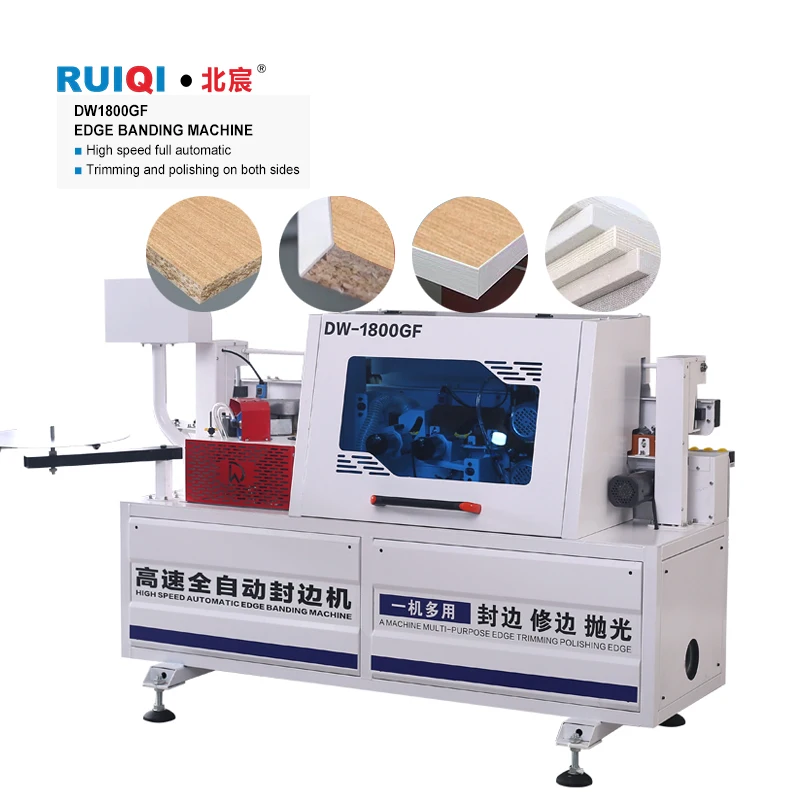
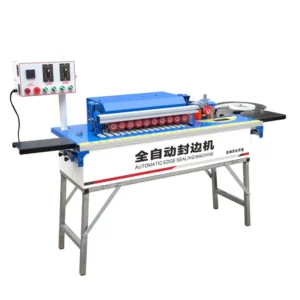
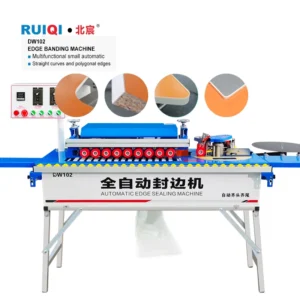
Precision-Ground Assembly — Every DW1800 leaving our Ningjin line is trial-run on your actual substrate and edge banding stock before the crate is sealed, eliminating the tolerance surprises that plague container-load purchases.
Technical Specifications
| Parameter |
Value |
| Model |
DW1800 |
| Product Type |
Automatic Edge Banding Machine |
| Total Power |
4.9 kW |
| Voltage Options |
380V / 220V / 415V (basis not stated in source — confirm frequency and phase) |
| Feed Speed |
0–14 m/min |
| Edge Banding Height |
0–50 mm |
| Edge Banding Thickness |
0.3–3 mm |
| Minimum Sheet Length |
20 cm |
| Minimum Sheet Width |
10 cm |
| Glue Pot Capacity |
4000 ml |
| Trimming Motors |
800 W × 2 at 24,000 r/min |
| Vacuum Motor |
550 W |
| Polishing Motors |
380 W × 2 |
| Air Source Pressure |
0.4–0.6 MPa |
| Machine Dimensions |
220 × 65 × 125 cm |
| Machine Weight |
320 kg |
| Control Language |
Chinese, English (configurable to Spanish or other languages) |
| Plug Options |
EU, USA, AU, UK |
Application Suitability
| Application |
Material or Output |
| Custom cabinet door edging |
MDF and melamine-faced particleboard with 0.4–2 mm PVC banding |
| Wardrobe panel finishing |
Plywood panels up to 50 mm thick with veneer or ABS edge strips |
| Office furniture components |
Chipboard worktops requiring pre-milling and flexible scraping |
| Retail fixture production |
Acrylic and organic glass plates with thin decorative banding |
| Small-batch joinery |
Solid wood panels with 3 mm thick timber edging at reduced feed speed |
Why the Voltage Question Must Come Before the Quotation
We lock in your local electrical standard during the configuration stage, not at the packing bench.
I have watched containers arrive at foreign ports only for the buyer to discover the motor windings were wound for 380V/50Hz while the workshop runs on 440V/60Hz. The contactor chatters, the glue pot never reaches temperature, and the trimming motors overheat within the first shift. A distributor who absorbed that return freight cost told me the loss exceeded the margin on the entire shipment. Every DW1800 we build starts with a signed electrical confirmation sheet that records voltage, phase, and frequency before the first component is pulled from stock [NEED_CITE: voltage and frequency standards by export market].

How We Build an Edge Bander for Resale Under Your Brand
Our OEM workflow treats your logo placement, control panel silkscreen, and documentation language as engineering line items rather than afterthoughts. When a distributor in South America required Spanish HMI labels and 220V/60Hz motors for their regional market, we reprogrammed the PLC string table and sourced the correct stator windings before production began. The result was a machine that looked and behaved as if it had been designed in their own warehouse.
What Four-Stage QC Actually Catches on the Assembly Floor
Incoming inspection rejects out-of-tolerance guide rails before they reach the mounting jig. In-process checks verify that each trimming spindle runs true under load, not just at idle. Finished-product testing runs the DW1800 through a complete cycle with weighted panels to confirm feed consistency. Pre-shipment verification opens the electrical cabinet and photographs every terminal torque mark so the buyer has a baseline for future service calls [NEED_CITE: ISO 9001 quality management system requirements for machinery].
Reading the Specs That Matter Most to Your Operators
The 24,000 r/min trimming speed is the figure that determines whether you get a clean shear cut on melamine or a ragged tear that requires hand-scraping downstream. Slower spindles simply cannot produce a fracture-free edge on brittle laminates at 14 m/min feed. The 4000 ml glue pot holds enough EVA adhesive for continuous runs without temperature swings caused by frequent refills, which directly affects bond consistency across a batch. Air pressure at 0.4–0.6 MPa is non-negotiable; below that range the pressure rollers fail to seat the banding uniformly, leaving visible glue lines on porous substrates.
The Cost of Ignoring Substrate-Specific Trial Runs
When a buyer orders a machine rated only on MDF samples and then feeds it high-density particleboard with coarse PVC edging, the trimming cutters dull prematurely and the scraper leaves chatter marks. The operator blames the machine; the real culprit is a configuration that was never validated against the actual material stack. We have seen entire production batches rejected because the glue temperature suited melamine but scorched veneer. Every parameter shift between substrates demands a fresh trial, and skipping that step transfers the cost directly to rework and customer claims [NEED_CITE: edge adhesion failure modes in panel processing].
Why Distributors Source This Machine From Our Floor
In-house patented cutting mechanisms mean we replace worn components with our own geometry, not generic replacements that drift from tolerance. Voltage customization from 110V to 440V is standard configuration, eliminating the transformer workarounds that void motor warranties. Four-stage QC with pre-shipment photographic records gives your service team a reference baseline before the crate is opened. Factory visits are open so you can watch precision grinding on the guide rails yourself. Engineer-led configuration proposals arrive within one working day, so your quotation pipeline does not stall waiting for factory feedback.
Documentation & Verification
- CE declaration of conformity listing the DW1800 under the Machinery Directive
- ISO 9001 certificate covering our woodworking machinery production scope
- Factory test record run on your specified panel thickness and banding material
- Electrical schematic confirming voltage, phase, and circuit protection ratings
- Operation and maintenance manual translated into your agreed language
Installation, Commissioning & Support
- Requires a level concrete floor with 220 cm clearance for the full machine length
- Dedicated 380V or confirmed alternative circuit with earth leakage protection rated for 4.9 kW
- Arrives on a single pallet; guide rail and glue pot are pre-assembled at factory
- First-run commissioning includes feed speed calibration and trimming depth setting on your panels
- Wear items such as trimming inserts and scraper blades listed in the spare parts sheet
Before You Send the Inquiry
Tell us the exact substrate and edge banding thickness range your customers run most often, your local voltage and frequency, and whether the control panel needs a specific language. If you plan to private-label the machine, send your logo artwork and packaging color codes so we can include them in the initial configuration drawing.
Frequently Asked Questions
Q: What OEM branding options do you offer on the DW1800?
A: We apply your logo to the machine body, silkscreen your brand name on the control panel, and print your company details on the operation manual and packaging. Custom color schemes for the sheet metal are available when order volume justifies a dedicated powder-coat batch.
Q: How does the four-stage QC process work before shipment?
A: Incoming materials are dimensionally checked, assemblies are verified under load during build, the finished machine runs a full cycle on test panels, and a pre-shipment audit photographs electrical connections and mechanical fasteners. All records accompany the shipping documents.
Q: Can you provide documentation for my local customs and certification body?
A: Yes. We supply the CE declaration of conformity, ISO 9001 certificate, commercial invoice with HS code, packing list with photographs, and the electrical schematic showing confirmed voltage and frequency for your market.
Q: What spare parts should a distributor stock locally?
A: We recommend keeping trimming cutter inserts, flexible scraper blades, pressure roller covers, and glue pot heating elements on hand. A detailed spare parts list with part numbers and recommended quantities is included with every machine.
Q: Do you train our service technicians at the factory?
A: Visiting technicians can observe assembly, participate in trial runs, and receive hands-on instruction for common service procedures. We schedule training sessions around your team’s travel dates and provide reference documentation in your preferred language.