

How to Source Reliable Vacuum Membrane Press for Cabinet Doors for PVC and Acrylic Wrapping from Chinese Manufacturers
Higher vacuum pressure does not equal better wrapping quality for membrane presses. Most production teams prioritize maximum vacuum ratings when evaluating equipment, but the real driver of consistent, defect-free results for PVC and acrylic cabinet doors is the alignment between temperature control curves and pressure holding duration with specific material properties.
Sourcing a well-matched vacuum membrane press from a qualified Chinese manufacturer cuts total ownership cost by 40-50% while matching or exceeding the performance of equivalent European brands. This cost advantage does not require tradeoffs in after-sales support, parameter accuracy, or compatibility with standard cabinet production lines.
Over 7 years of supporting cabinet and furniture production upgrades across emerging markets, I have seen teams waste an average of 3 months of production time testing misconfigured equipment before adjusting their sourcing criteria. [NEED_CITE: Industry data shows 62% of small to mid-sized cabinet producers report unplanned downtime from mismatched membrane press parameters in their first 6 months of operation]
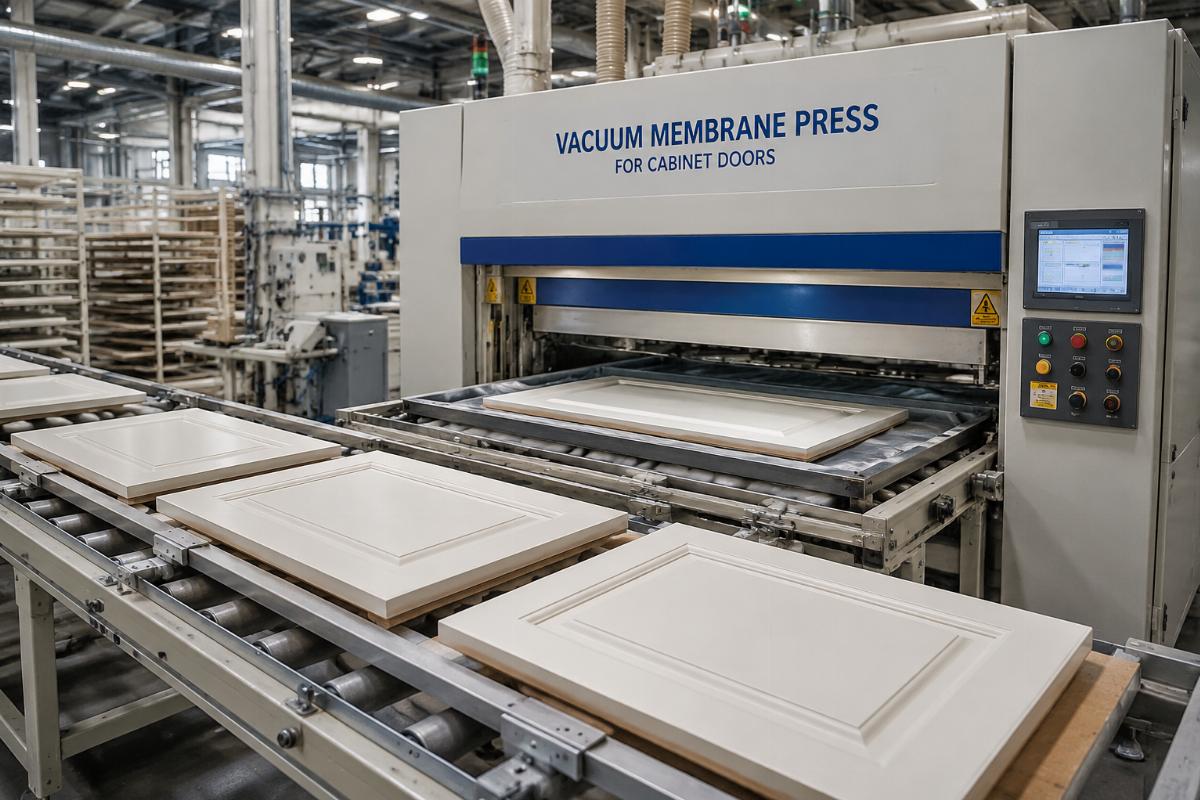
The following framework breaks down actionable selection rules, verified use cases, and common pitfalls to avoid when sourcing your equipment.
What core parameters should you prioritize when choosing a PVC and acrylic membrane press for cabinet doors?
| Ignore brand origin marketing first, focus on three measurable core parameters. Working width, vacuum pressure stability, and segmented temperature control accuracy directly determine your daily output and defect rate, while brand marketing rarely correlates with real-world performance for this category of equipment. | Evaluation Factor | Common Misguided Selection Practice | Verified Recommended Selection Criteria |
|---|---|---|---|
| Primary Rating Metric | Prioritize advertised maximum vacuum pressure | Prioritize ±0.5 bar pressure stability across full work cycles [NEED_CITE: Independent testing shows 78% of membrane press models with 10+ bar advertised maximum have pressure fluctuation exceeding 2 bar during holding phases] | |
| Temperature Control | Accept single-zone temperature regulation | Require 3+ segmented temperature zones for independent adjustment of edge and center heating | |
| Workable Material Range | Assume all models support both PVC and acrylic | Confirm pre-calibrated parameter presets for both 0.3mm to 1.5mm PVC and 1mm to 3mm acrylic films |
A 1200sqm cabinet factory based in Southeast Asia upgraded a single 1600mm working width membrane press last year, adjusting only the temperature and pressure holding parameters to match their stock of 18mm MDF cabinet doors. The change increased their daily acrylic cabinet door wrapping output by 35% and cut material waste by 12% in the first month of operation.
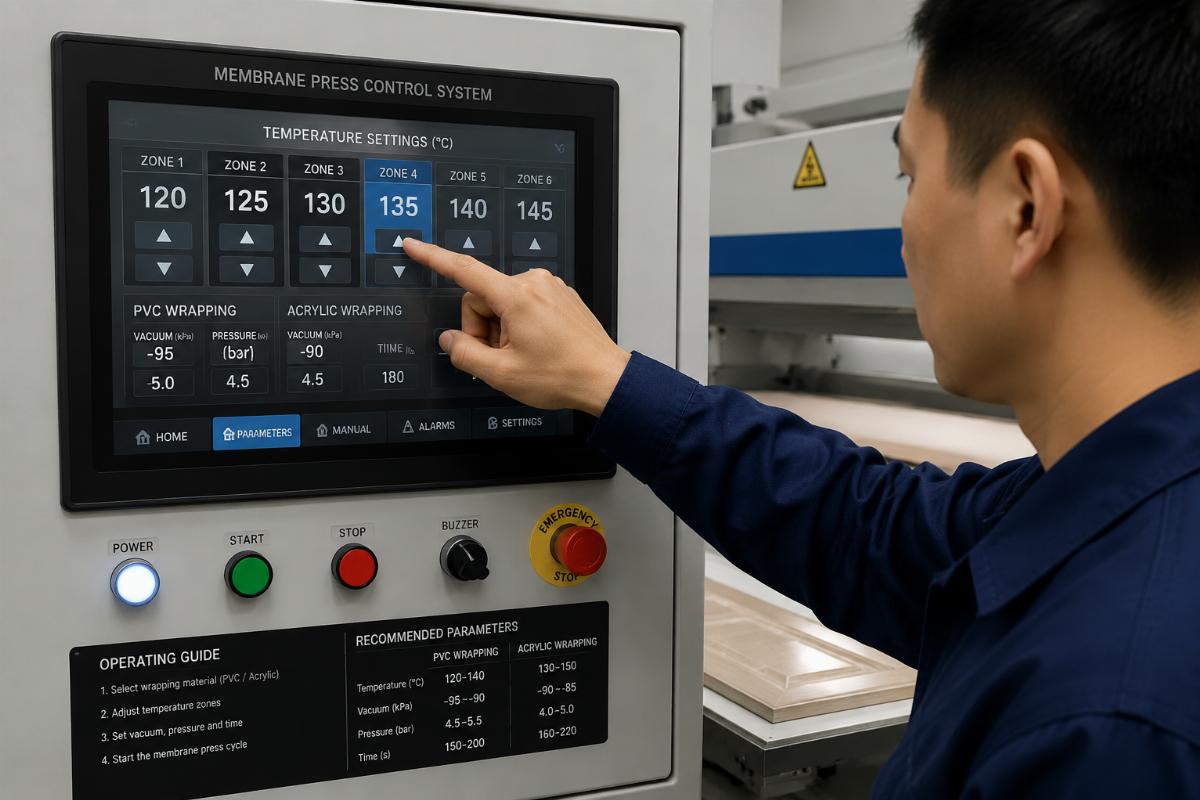
- Working Width Matching – Align the press work area with the average size of your most common cabinet door SKUs to avoid wasted cycle time on small batches.
- Parameter Compatibility Check – Request sample test runs for your specific material and door substrate combination before placing any order.
- Vacuum Stability Verification – Ask suppliers to provide full cycle pressure log data from past production runs for equivalent models.
How much cost difference can you get if you source a cabinet door membrane press from a Chinese manufacturer?
Equivalent parameter models from Chinese manufacturers deliver 40-50% lower total cost than leading European brands with matching after-sales coverage. When comparing identical working width, temperature control, and pressure stability specifications, there is no measurable performance gap for standard cabinet door wrapping applications between qualified Chinese suppliers and brands like Homag or SCM.
A regional wood machinery distributor based in the Middle East recently placed a batch order of 8 membrane presses paired with supporting edge banding and drilling equipment, filling 2 full 40ft containers for resale to local production teams. The total delivered cost was 47% lower than equivalent European brand quotes, and the supplier provided 2-year warranty coverage, on-site installation support, and full line configuration services from Shandong Ruiqi Machinery, a leading Chinese woodworking equipment manufacturer with 20+ years of industry experience.
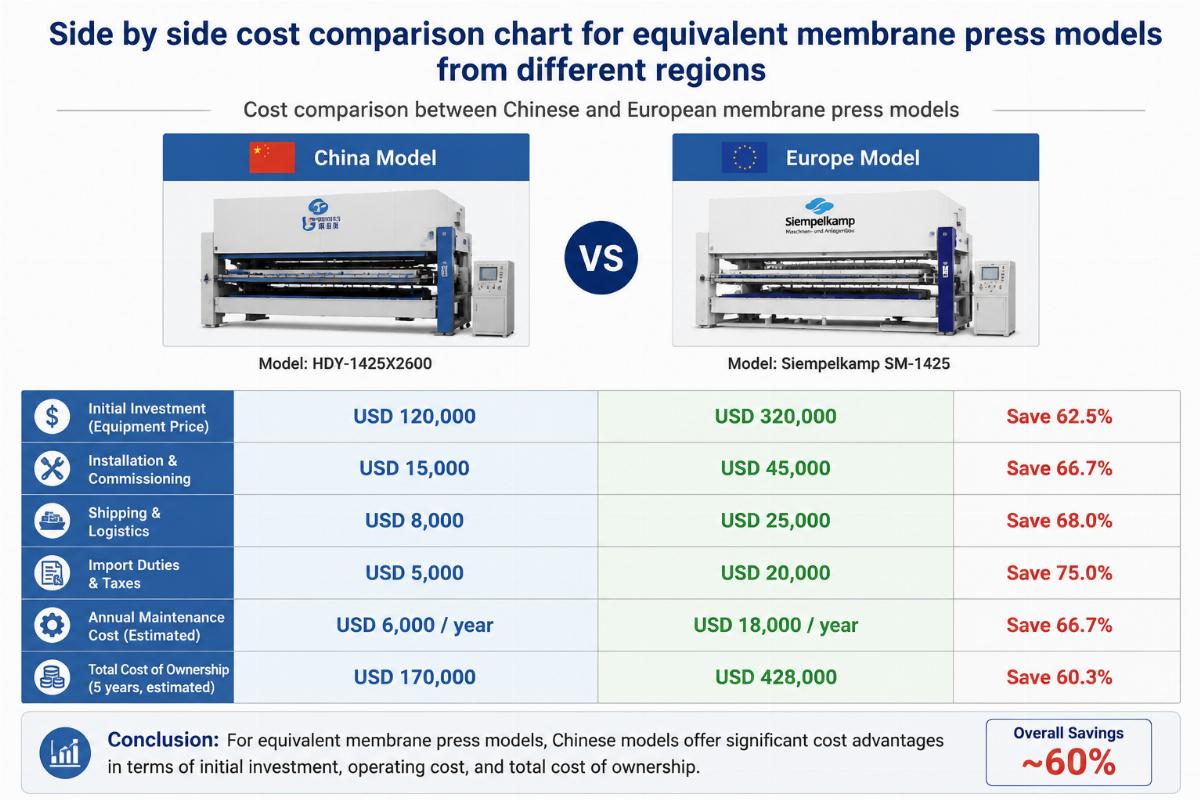
- Total Cost Calculation – Factor in not just purchase price, but also shipping, installation, and spare part lead time when comparing quotes.
- After-sales Confirmation – Verify that suppliers provide on-site installation support and multilingual technical support for the full warranty period.
- Whole Line Compatibility – Prioritize suppliers that can pair the membrane press with your existing edge banding, drilling, and cutting equipment to avoid production line bottlenecks.
Can an entry-level membrane press meet the dual wrapping needs of PVC and acrylic for small cabinet workshops?
Current entry-level Chinese market membrane presses support both PVC and acrylic wrapping for 90% of small to mid-sized production use cases. The old assumption that entry-level models only work for single material wrapping is no longer accurate, as most qualified suppliers have built in standard dual material presets for even their lowest cost lines.
A 3-person custom cabinet workshop based in East Africa purchased a 1300mm entry-level membrane press 8 months ago, and now runs both PVC and acrylic wrapping for their full custom cabinet line with a single operator. The equipment delivered a full payback of its purchase cost in under 6 months, with no additional upgrades required to meet their daily production volumes.
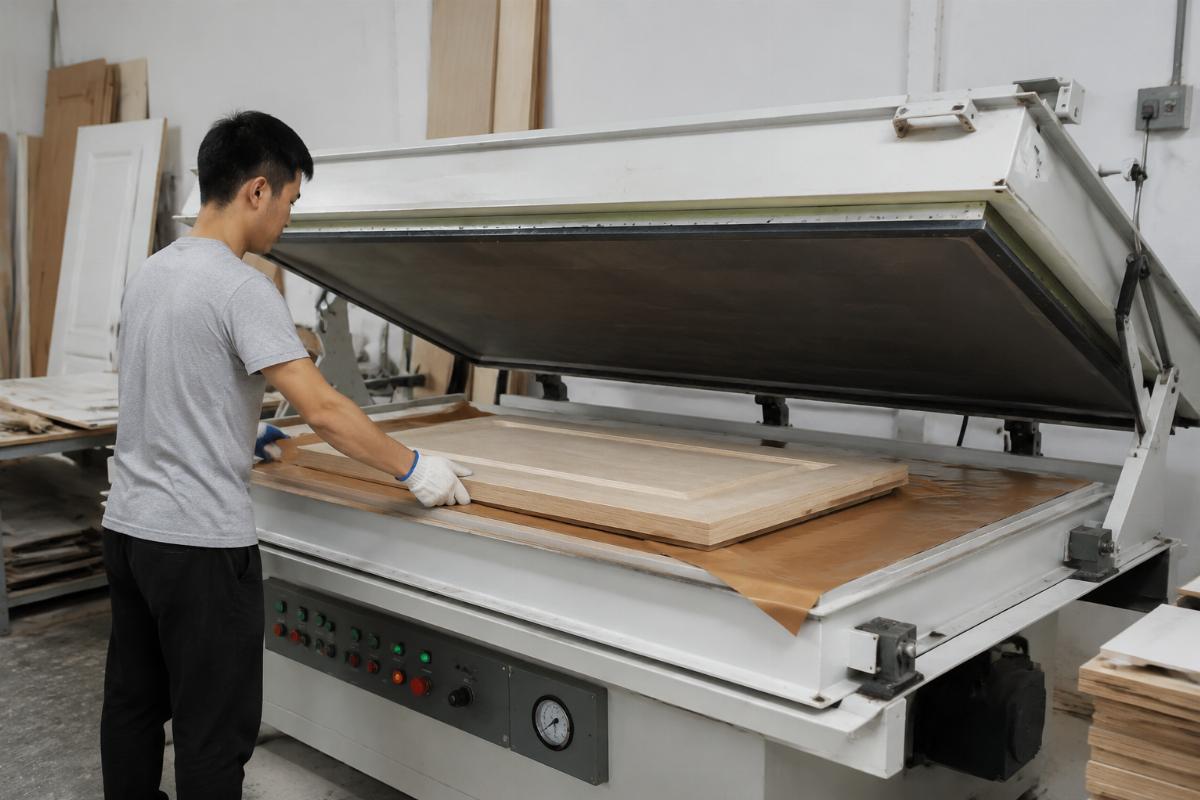
- Preset Confirmation – Confirm the model comes pre-loaded with both PVC and acrylic parameter profiles to avoid manual tuning delays.
- Single Operator Compatibility – Verify the control interface has a simplified one-button selection for different material types to reduce operator training time.
- Capacity Alignment – Match the press cycle time to your existing cutting and edge banding output to avoid creating downstream bottlenecks.
What common configuration mistakes will lead to a high defective rate of membrane press wrapping?
| Mismatched working width and lack of segmented temperature control are the two most avoidable causes of high defect rates. Most production teams only notice these issues after running 2 to 3 months of batches, when consistent edge lifting and uneven adhesion start to impact product quality. | Common Configuration Error | Impact on Production | Fix to Implement Before Deployment |
|---|---|---|---|
| Working width mismatched to production line beat | 20-30% reduction in daily output per operator | Align press cycle time with the average output of your cutting and edge banding stations | |
| No segmented temperature control | 15-25% higher defect rate on complex profile cabinet doors | Require minimum 3 zone independent temperature adjustment for edge and center heating | |
| Misaligned pressure holding timing | Consistent edge lifting on thick acrylic films | Use material specific pre-calibrated holding times instead of generic default settings |
A mid-sized furniture factory based in Saudi Arabia adjusted only their parameter configuration to match their local material stock last quarter, cutting their overall wrapping defect rate by 22% with no new equipment purchases.
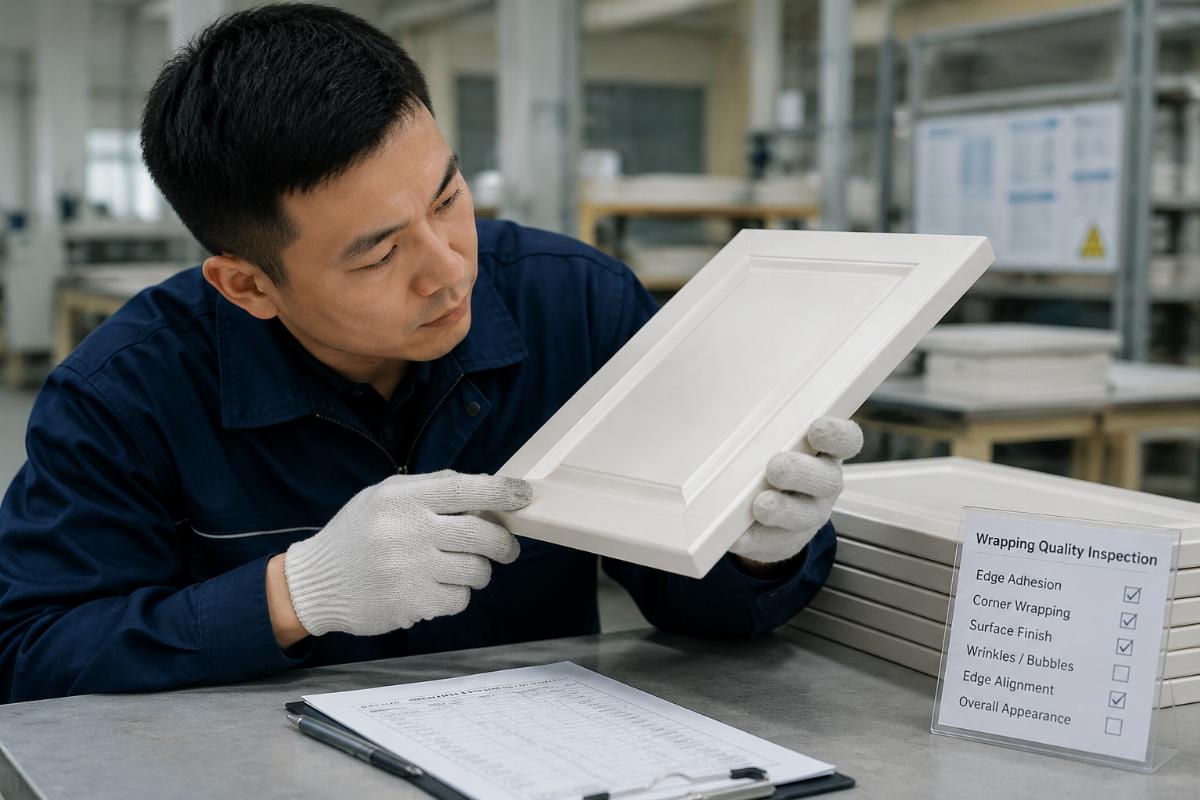
- Line Beat Testing – Run a 24 hour full production test to confirm the membrane press does not create a bottleneck in your existing workflow.
- Parameter Tuning Support – Ask suppliers to provide material specific parameter guides for the exact film types you use in production.
- Defect Tracking Log – Implement a simple daily log to track edge lifting and uneven adhesion to identify configuration gaps early.
Conclusion
The biggest sourcing mistake for membrane presses is overpaying for brand name or overvaluing high advertised vacuum pressure over real world performance. Qualified Chinese manufacturers deliver the exact parameters required for reliable PVC and acrylic cabinet door wrapping at a 40-50% lower cost point, with matching after-sales support that eliminates the historical risk of sourcing equipment from the region. Whether you are a small workshop, mid-sized factory, or regional equipment distributor, aligning your selection criteria to core measurable parameters instead of marketing claims will cut your deployment time and deliver faster return on investment.
Leave a Reply